


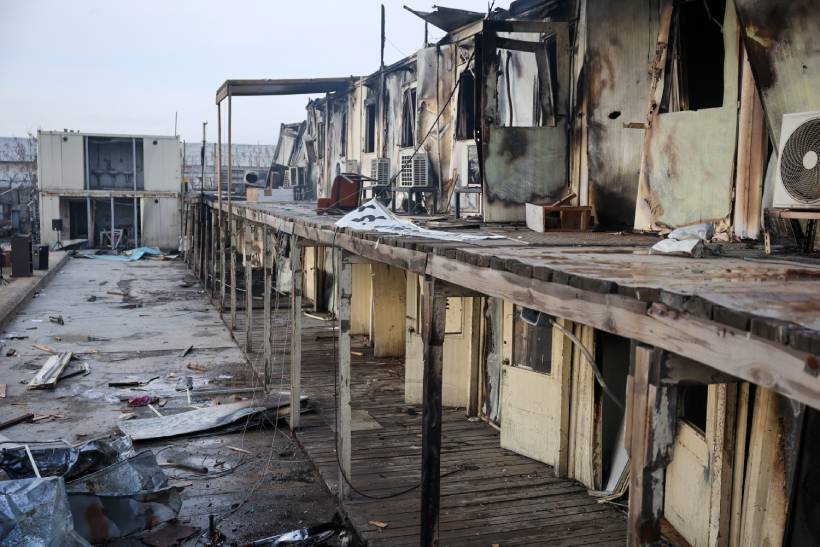
At least 13 people, including 11 children, were killed after Pakistani military airstrikes targeted locations in Afghanistan’s Kunar, Khost, and Paktika provinces, according to Afghan Taliban spokesperson Zabihullah Mujahid. Taliban authorities said another 14 people, mostly women and children, were injured when civilian homes were hit during the attacks.
Pakistan has not officially commented on the operation. However, Pakistani security officials told Reuters that the strikes targeted hideouts and facilities allegedly used by Pakistani militant groups operating from Afghan territory.
The latest incident reflects a long-running dispute between Islamabad and Kabul over cross-border militancy. Pakistan has repeatedly accused the Taliban government of allowing militant groups, particularly the Tehreek e Taliban Pakistan (TTP), to use Afghan territory as a base for planning and launching attacks inside Pakistan. The Taliban administration has consistently rejected these accusations, arguing that Pakistan’s security challenges are domestic issues.
The strikes come despite a fragile ceasefire reached in March after intense clashes earlier this year. China has been attempting to mediate between the two neighbours to prevent further deterioration in relations.
Stay ahead of the geopolitical week.
MD Briefing delivers expert analysis across five global fronts — the Indo-Pacific, energy, geoeconomics, European security, and the Middle East — every Monday morning. Free.
Why It Matters
The airstrikes risk reigniting one of South Asia’s most volatile security flashpoints. Relations between Pakistan and Afghanistan have steadily worsened since the Taliban returned to power in 2021, largely because of disagreements over border security and militant activity.
The incident could undermine the already fragile ceasefire and increase the likelihood of retaliatory measures by Afghan authorities or affiliated groups. Escalation would not only threaten border stability but also complicate regional counterterrorism efforts.
The strikes also raise humanitarian concerns. Reports of civilian casualties, particularly children, could fuel anti-Pakistan sentiment inside Afghanistan and strengthen hardline voices within the Taliban movement that oppose engagement with Islamabad.
For Pakistan, the operation reflects growing frustration over persistent militant attacks inside its territory. Islamabad faces mounting domestic pressure to curb insurgent violence, especially in Khyber Pakhtunkhwa and Balochistan, where security forces have been targeted repeatedly.
The crisis also has broader regional implications. Any prolonged confrontation between Pakistan and Afghanistan could affect trade routes, refugee management, border security cooperation, and regional connectivity projects linking South Asia with Central Asia.
Key Stakeholders
- Pakistan Government – Seeking to curb cross-border militant threats and improve domestic security.
- Pakistan Military – Leading counterterrorism operations and border security efforts.
- Afghan Taliban Government – Responsible for maintaining sovereignty and responding to allegations of harbouring militants.
- Tehreek e Taliban Pakistan (TTP) – The central militant group at the heart of the dispute between Islamabad and Kabul.
- Border Communities – Civilians living along the Pakistan-Afghanistan border who face the greatest risks from military escalation.
- China – A key regional mediator seeking stability to protect economic and security interests.
- Regional Security Partners – Including Central Asian states and neighbouring countries concerned about terrorism and instability.
- Humanitarian Organizations – Monitoring civilian casualties, displacement, and humanitarian conditions resulting from renewed conflict.
Future Outlook
The immediate question is whether the Taliban government will respond militarily, diplomatically, or through international channels. Kabul is likely to condemn the strikes strongly and may seek regional support to pressure Islamabad.
Pakistan, meanwhile, may continue targeted operations if it believes militant groups are operating from Afghan territory. This raises the possibility of further cross-border incidents despite the March ceasefire.
China’s mediation efforts are expected to become more important in the coming weeks as both sides attempt to prevent a return to the large-scale clashes witnessed earlier this year. Beijing has a strong interest in preserving regional stability and protecting trade and infrastructure initiatives linked to its broader economic strategy.
In the longer term, the core dispute over militant sanctuaries remains unresolved. Unless Pakistan and Afghanistan establish effective security coordination mechanisms and rebuild trust, sporadic military confrontations are likely to continue, keeping tensions elevated along one of the region’s most sensitive borders.
With information from Reuters.
