


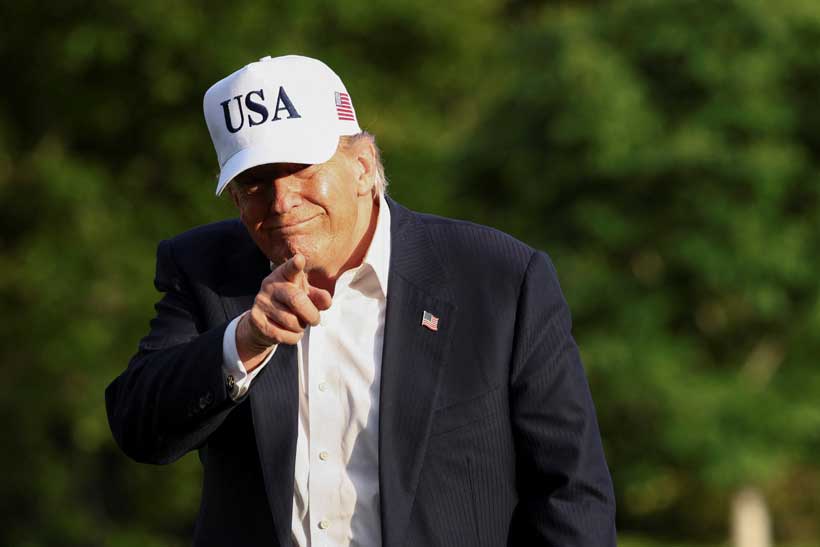
A Reuters investigation found that crypto ventures linked to President Donald Trump and his family generated an estimated $2.3 billion in profits while investors collectively lost a similar amount. The analysis examined four major Trump affiliated crypto projects, including the $TRUMP meme coin, World Liberty Financial, American Bitcoin, and AI Financial Corp.
According to Reuters, the ventures followed a similar pattern: the Trump family provided branding, promotion, and political visibility while assuming relatively little financial risk. Investors, meanwhile, bought into the projects amid expectations that Trump’s support for the cryptocurrency industry and his position in government would help drive long term value.
Many retail investors interviewed by Reuters said they purchased the assets because they believed Trump’s political influence and business reputation would translate into strong returns. Instead, most of the projects experienced steep declines in value after initial surges fueled by publicity and market enthusiasm.
Why It Matters
The findings raise broader questions about the intersection of political power, personal business interests, and financial markets. Unlike traditional political controversies involving lobbying or campaign fundraising, the Trump family’s crypto activities involve products directly accessible to ordinary investors, many of whom suffered significant losses.
Stay ahead of the geopolitical week.
MD Briefing delivers expert analysis across five global fronts — the Indo-Pacific, energy, geoeconomics, European security, and the Middle East — every Monday morning. Free.
The report also highlights the speculative nature of much of the cryptocurrency sector. Several of the Trump backed projects generated substantial revenue through token sales and branding agreements regardless of whether investors ultimately profited. This reflects a business model increasingly common in parts of the crypto industry, where project creators can earn large sums upfront while market risks are borne primarily by buyers.
From a governance perspective, critics argue that the family’s involvement in an industry influenced by federal regulation creates potential conflicts of interest. Ethics experts cited by Reuters described the situation as unprecedented because government policies affecting cryptocurrency markets could indirectly influence businesses linked to the president’s family.
At the same time, supporters argue that investors voluntarily participated in highly speculative assets that carried clear disclosures about risks and should have understood the possibility of losses.
Stakeholders
- President Donald Trump and the Trump family
- Retail cryptocurrency investors
- World Liberty Financial and affiliated crypto ventures
- U.S. regulators overseeing digital assets
- Cryptocurrency exchanges and industry participants
- Institutional investors with exposure to crypto related assets
- Ethics watchdogs and government accountability groups
Future Outlook
The Trump family’s crypto businesses are likely to remain under scrutiny as their influence within the digital asset sector continues to grow. Regulatory debates surrounding cryptocurrency, conflicts of interest, and political involvement in private financial ventures could intensify, particularly if these projects continue attracting large numbers of retail investors.
For investors, the controversy serves as a reminder that political branding and celebrity endorsement do not necessarily translate into investment success. The performance of these ventures will ultimately depend less on political visibility and more on whether they can create sustainable products and value beyond initial hype.
More broadly, the case may become a defining example of how political influence, digital finance, and speculative investing are increasingly intersecting in the modern economy, raising questions that regulators and policymakers are likely to confront for years to come.
With information from Reuters.
