


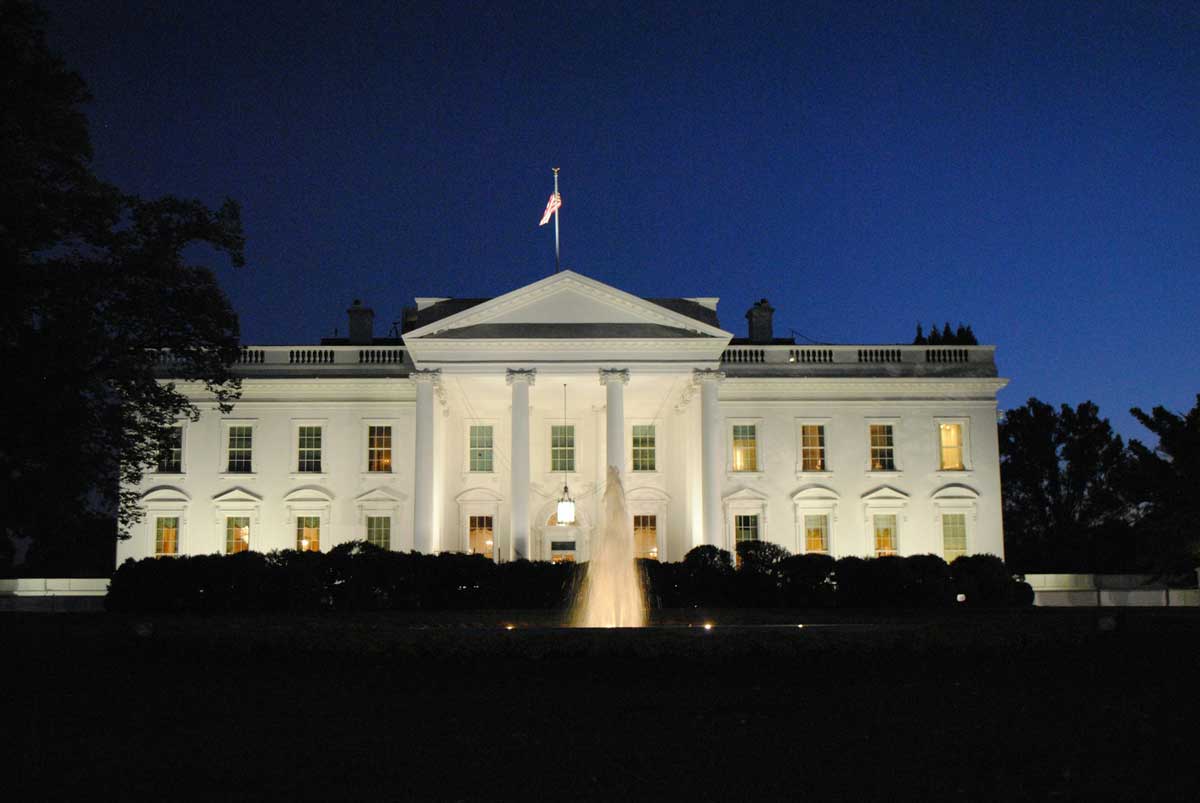
A legal battle over President Donald Trump’s plan to construct a $400 million ballroom on the site of the demolished East Wing of the White House has evolved into a major constitutional dispute over executive authority and the separation of powers.
The controversy began after the Trump administration demolished the East Wing in October 2025 and initiated construction of a 90,000-square-foot ballroom without obtaining explicit congressional authorization. The East Wing historically housed the offices of the first lady and support staff and formed part of the broader White House complex.
The project has been challenged by the National Trust for Historic Preservation, which argues that the administration bypassed Congress and violated legal protections governing historic federal properties. A federal district court twice blocked above-ground construction, prompting the administration to appeal.
The dispute now sits before the influential United States Court of Appeals for the District of Columbia Circuit, whose ruling could have significant implications for future presidential authority over federal property and national landmarks.
Stay ahead of the geopolitical week.
MD Briefing delivers expert analysis across five global fronts — the Indo-Pacific, energy, geoeconomics, European security, and the Middle East — every Monday morning. Free.
Why It Matters
At its core, the case is not simply about a ballroom. It is about whether a president can undertake major construction projects involving nationally significant federal property without congressional approval.
The U.S. Constitution grants Congress substantial authority over federal spending and government property. The preservationists argue that allowing a president to unilaterally alter one of the nation’s most important historic sites would weaken congressional oversight and establish a precedent for future executive actions.
The Trump administration, however, frames the project as a matter of presidential necessity and national security. Officials argue that modern security threats require upgraded facilities capable of hosting major state functions within a highly secure environment.
The legal dispute therefore reflects a broader pattern that has characterized Trump’s presidency: the expansion of executive authority in areas traditionally subject to legislative oversight. Similar debates have emerged over immigration policy, emergency powers, trade measures, and federal spending decisions.
The outcome could influence how future presidents interpret their authority over federal property, national monuments, and government infrastructure projects.
Donald Trump Administration
Seeking to defend presidential authority to modify White House facilities and pursue broader plans to reshape parts of Washington’s civic landscape.
Congress
Has a constitutional interest in preserving its authority over federal property, appropriations, and major government construction projects.
National Trust for Historic Preservation
Arguing that the project threatens an important historic site and bypasses established legal procedures.
Federal Judiciary
Tasked with determining the constitutional boundaries between executive power and congressional authority.
Historic Preservation Community
Concerned that the project could establish precedents affecting other historically significant federal sites.
American Public
As the White House is both a functioning government facility and a symbol of national heritage, decisions regarding its alteration carry broader public significance.
Future Outlook
The appeals court’s ruling could become one of the most consequential judicial decisions regarding presidential authority during Trump’s second term. If the administration prevails, it may strengthen executive discretion over federal property and encourage further redevelopment initiatives in Washington.
Conversely, a ruling against the administration would reinforce congressional control over major alterations to federal facilities and place clearer limits on unilateral presidential action.
Regardless of the immediate outcome, the case is likely to continue through additional appeals and could eventually reach the Supreme Court of the United States. Given the constitutional questions involved, the dispute extends far beyond architecture or preservation.
The broader significance lies in what the case reveals about competing visions of executive power. Supporters view the ballroom project as an example of presidential leadership and modernization, while critics see it as part of a wider effort to expand executive authority at the expense of congressional oversight.
As a result, the courtroom battle over the White House ballroom is emerging as a test of constitutional governance as much as a dispute over a building project.
With information from Reuters.
