


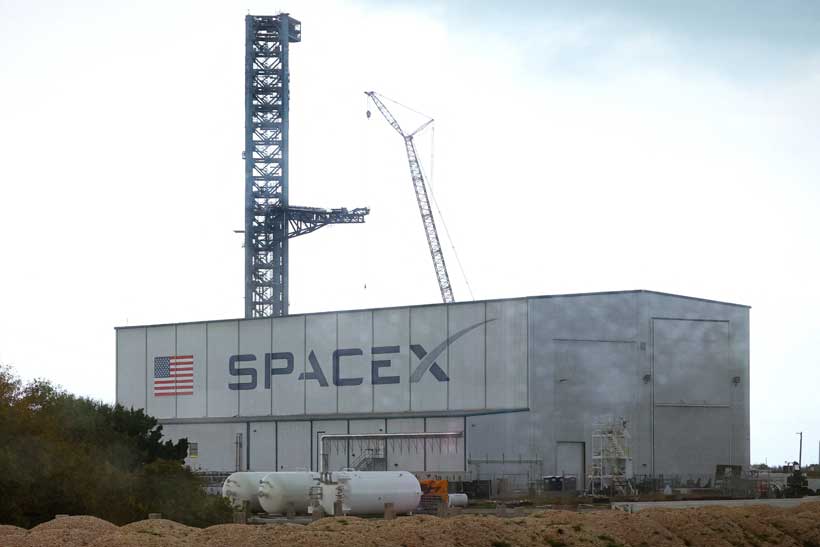
SpaceX is preparing for what could become the largest initial public offering (IPO) in history, marking a major milestone for both the company and global financial markets. The listing comes as investor appetite for high-growth technology and artificial intelligence companies returns after several years of subdued IPO activity. Founded by Elon Musk, SpaceX has grown from a private rocket company into a diversified business spanning satellite communications, launch services and artificial intelligence-related infrastructure.
What Happened
According to sources familiar with the matter, SpaceX plans to set its IPO price at $135 per share, aiming to raise a record $75 billion through the sale of approximately 555.6 million shares. The offering would value the company at around $1.75 trillion, making it one of the world’s most valuable publicly traded firms from the moment it begins trading.
The company is expected to start its investor roadshow on Thursday ahead of a planned Nasdaq debut under the ticker symbol “SPCX.” Unlike most public offerings, SpaceX intends to use a fixed share price before meeting investors, departing from the traditional practice of setting a price range and adjusting it based on demand during the book-building process.
Why SpaceX’s IPO Is Unusual
The proposed IPO is breaking several Wall Street conventions. By fixing the share price before the investor roadshow, SpaceX is effectively asking investors to accept its valuation rather than negotiate it through the normal pricing process.
Stay ahead of the geopolitical week.
MD Briefing delivers expert analysis across five global fronts — the Indo-Pacific, energy, geoeconomics, European security, and the Middle East — every Monday morning. Free.
The company is also reportedly planning a larger allocation for retail investors than is typical in major IPOs. Up to 30% of the offering could be reserved for individual investors, reflecting confidence in Musk’s strong retail following.
In addition, the IPO is expected to be structured as an all-primary offering, meaning all proceeds will go directly to SpaceX rather than existing shareholders. Musk has also reportedly agreed to hold his shares for at least 366 days after the listing, a move designed to reassure investors about his long-term commitment to the company.
Growth Strategy and Valuation Debate
SpaceX’s valuation is based not only on its current businesses but also on ambitious future projects. The company is betting heavily on expanding its Starlink satellite network, increasing artificial intelligence computing capacity and developing technologies tied to future space-based infrastructure.
Earlier this year, SpaceX merged with Musk’s AI venture xAI in a deal that valued the combined businesses at approximately $1.25 trillion. The company has since promoted growth opportunities linked to AI-powered data centers in space and future Mars-related missions.
However, analysts remain divided on valuation. Research firm Morningstar recently estimated SpaceX’s value at about $780 billion, significantly below the proposed IPO valuation. Critics argue that much of the company’s future growth projections rely on technologies and markets that have yet to be developed at scale.
Financial Performance and Investor Concerns
Despite strong revenue growth, profitability remains a challenge. SpaceX reported revenue of $18.67 billion in 2025 but recorded a net loss of $4.94 billion for the year. Revenue increased to $4.69 billion in the first quarter of 2026, although losses widened compared with the same period a year earlier.
Among SpaceX’s major business segments, Starlink remains the company’s primary profit generator. Other operations, including some of its space exploration and AI-related initiatives, continue to consume significant amounts of capital.
Corporate governance is another area attracting scrutiny. The company’s planned dual-class share structure would concentrate voting power in the hands of Musk and a small group of insiders, limiting the influence of ordinary shareholders.
What Comes Next
Investor presentations are expected to begin this week, with the IPO currently targeted for June 12. The offering is being led by major investment banks including Goldman Sachs, Morgan Stanley, Bank of America, Citigroup and JPMorgan Chase.
The success of the listing could pave the way for other highly anticipated technology IPOs, including potential market debuts by OpenAI and Anthropic. Together, these offerings could add trillions of dollars in market value to public markets and reshape the investment landscape for years to come.
With information from Reuters.
