


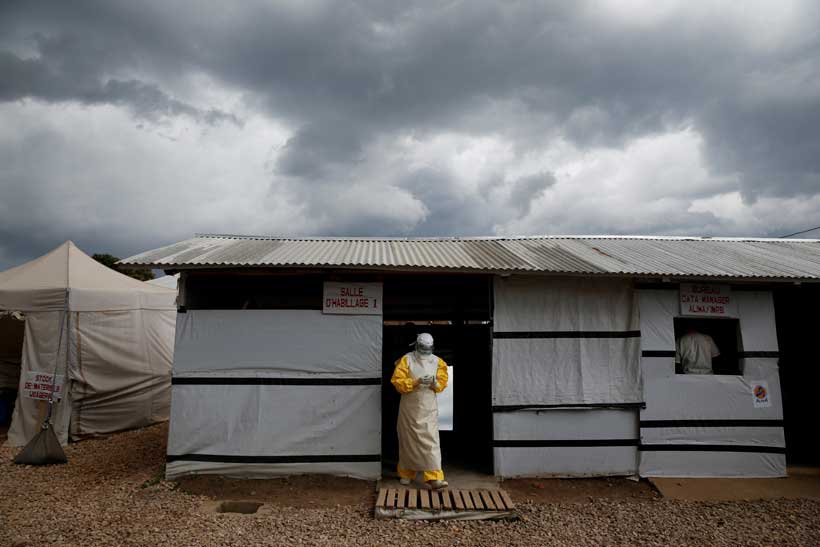
Kenyan President William Ruto has publicly defended plans to establish a U.S. backed Ebola quarantine facility at a military air base in central Kenya, arguing that the project is part of the country’s broader disease preparedness strategy and reflects decades of health cooperation with the United States.
The proposal has sparked significant controversy. Residents of Nanyuki and local leaders have staged protests, while legal challenges have temporarily halted the project amid concerns about public safety, transparency, and national sovereignty.
The dispute comes at a sensitive moment as East Africa faces a growing Ebola outbreak involving the rare Bundibugyo strain, with health authorities warning that the crisis is expanding faster than international response efforts.
Stay ahead of the geopolitical week.
MD Briefing delivers expert analysis across five global fronts — the Indo-Pacific, energy, geoeconomics, European security, and the Middle East — every Monday morning. Free.
At its core, the debate is not only about disease control. It also reflects broader questions about public trust, foreign partnerships, crisis preparedness, and how governments balance national health security with local concerns.
Background
The controversy emerged after Kenya approved a U.S. request to establish a quarantine facility at Laikipia Air Base in central Kenya.
The facility would reportedly be used for Americans who may have been exposed to Ebola during operations or activities linked to outbreak affected regions.
The request comes as the Democratic Republic of Congo and Uganda continue battling an outbreak of the Bundibugyo strain of Ebola, which has already claimed dozens of lives and prompted the World Health Organization to declare a Public Health Emergency of International Concern.
Kenya occupies a strategically important position in East Africa and serves as a major transport and logistics hub for regional humanitarian and military operations.
Because of its advanced medical infrastructure relative to neighboring countries, Kenya has often played a central role in responding to regional health emergencies.
However, news that the country would host a quarantine facility specifically linked to American personnel quickly triggered public backlash.
What Happened?
Following the government’s approval of the facility:
- Residents in Nanyuki organized protests.
- Local leaders questioned the rationale behind hosting the center.
- A legal challenge was filed in court.
- A judge temporarily suspended implementation of the project.
Critics argue that the facility could expose local communities to unnecessary health risks and have questioned why Kenya should host a quarantine center for foreign citizens.
President Ruto responded by emphasizing that the proposed facility is consistent with existing health preparedness infrastructure already operating throughout Kenya.
He stated that the country has isolation, surveillance, and treatment facilities across 23 counties and argued that the new center would serve both Kenyans and international partners if necessary.
Ruto also noted that the project followed a direct request from U.S. President Donald Trump.
Understanding the Ebola Threat
Why Ebola Generates Public Anxiety
Ebola remains one of the world’s most feared infectious diseases due to its high fatality rate and severe symptoms.
Although outbreaks are generally localized and can often be contained through proper public health measures, public concern tends to rise rapidly whenever new cases emerge.
The Bundibugyo strain currently circulating in parts of Central and East Africa is less common than some previous Ebola variants but still poses significant risks.
Communities often react strongly to proposals involving treatment centers or quarantine facilities because of fears that such sites may increase local exposure to infected individuals.
The Reality of Quarantine Facilities
In practice, quarantine facilities are designed specifically to prevent disease transmission rather than facilitate it.
Properly managed isolation centers operate under strict containment protocols intended to reduce risks to surrounding populations.
However, public acceptance often depends on transparency, trust in authorities, and confidence that safety measures are being followed.
These are areas where governments frequently face challenges during health emergencies.
Why the United States Is Involved
Longstanding Health Cooperation
Kenya and the United States have maintained extensive cooperation on public health programs for decades.
Joint initiatives have included:
- HIV and AIDS programs.
- Ebola preparedness efforts.
- COVID-19 response measures.
- Disease surveillance systems.
- Medical training and capacity building.
Ruto framed the quarantine facility as a continuation of this partnership rather than an exceptional arrangement.
Strategic Importance of Kenya
Kenya’s geographic location makes it one of the most important operational hubs in Africa for international organizations, aid agencies, and foreign governments.
The country serves as a staging point for humanitarian missions and emergency response operations throughout the region.
Establishing quarantine infrastructure in Kenya may therefore be viewed by Washington as a practical measure for protecting personnel involved in regional activities.
The Sovereignty Debate
Why Some Kenyans Oppose the Facility
Public criticism is not solely focused on health risks.
Many opponents view the arrangement through the lens of national sovereignty.
Questions being raised include:
- Why was Kenya selected?
- Why should foreign citizens be quarantined on Kenyan soil?
- Were local communities adequately consulted?
- Does the arrangement primarily benefit Kenya or the United States?
These concerns reflect broader debates seen in many countries regarding foreign military, health, or security facilities.
The Political Challenge for Ruto
President Ruto faces the difficult task of reassuring both international partners and domestic audiences.
While maintaining strong relations with Washington brings diplomatic and economic benefits, public perception remains crucial.
If citizens believe decisions are being driven by external pressure rather than national interests, political resistance can intensify regardless of the actual health risks involved.
The Court Challenge and Public Trust
One of the most significant developments is the court’s decision to temporarily suspend the project.
The lawsuit argues that the facility could pose risks to public health and that proper procedures may not have been followed.
Although Ruto defended the project, he did not publicly address the court order during his remarks.
The legal proceedings are important because they shift the debate beyond public protests and into institutional scrutiny.
The outcome could establish important precedents regarding how emergency health facilities are approved and how governments engage communities in such decisions.
Analysis: A Test of Crisis Preparedness and Public Confidence
The controversy surrounding the quarantine facility highlights a recurring challenge faced by governments during health emergencies.
Technically, preparing for potential disease outbreaks is often viewed by public health experts as a responsible and necessary measure.
Politically, however, preparedness efforts can become controversial if communities perceive them as imposed, poorly explained, or primarily serving foreign interests.
President Ruto’s government appears to be emphasizing the logic of preparedness. From that perspective, establishing quarantine capacity before cases emerge is preferable to scrambling for solutions during a crisis.
Yet public opposition demonstrates that preparedness alone is not enough.
Trust is equally important.
Citizens are often willing to support emergency measures when they understand the risks, believe authorities are transparent, and feel their concerns are being taken seriously.
The fact that protests emerged so quickly suggests a gap between government planning and public communication.
Another important dimension is geopolitics.
The project arrives at a time when international health cooperation is increasingly intersecting with questions of national sovereignty and strategic influence. Even when initiatives are designed around public health objectives, they can become politically sensitive if foreign governments are perceived as playing a dominant role.
The challenge for Kenya will be convincing citizens that the facility serves national interests first while also supporting broader regional and international health security goals.
Future Scenarios
Scenario One: Project Proceeds After Legal Review
The courts ultimately allow the facility to move forward after additional safeguards and public consultations.
This would strengthen Kenya’s role in regional outbreak preparedness while preserving cooperation with the United States.
Scenario Two: Modified Agreement
Public pressure leads to changes in the project’s structure, location, or operating procedures.
This could provide a compromise between preparedness goals and community concerns.
Scenario Three: Project Cancelled
The court rules against the facility or political opposition becomes too strong to sustain the initiative.
Such an outcome could strain aspects of U.S.-Kenya cooperation while satisfying critics concerned about sovereignty and public safety.
What’s Next?
Attention will now focus on the ongoing court proceedings and whether the temporary suspension remains in place.
The Kenyan government may also face increasing pressure to provide detailed information regarding safety protocols, operational procedures, and the facility’s intended purpose.
Health officials will continue monitoring the Ebola outbreak in the Democratic Republic of Congo and Uganda, as developments there could influence public opinion and government decision making.
Meanwhile, Washington and Nairobi are likely to continue discussions on how best to maintain outbreak preparedness without further inflaming domestic opposition.
Conclusion
The debate over Kenya’s proposed U.S. backed Ebola quarantine facility reflects far more than concerns about a single health project. It sits at the intersection of public health preparedness, international cooperation, national sovereignty, and public trust.
While the government argues that the facility represents responsible planning in the face of a growing regional outbreak, critics view it as a potential risk imposed without sufficient consultation. The outcome of the legal and political battle ahead will help determine not only the future of the facility but also how Kenya balances international partnerships with domestic accountability during future health emergencies.
With information from Reuters.
