


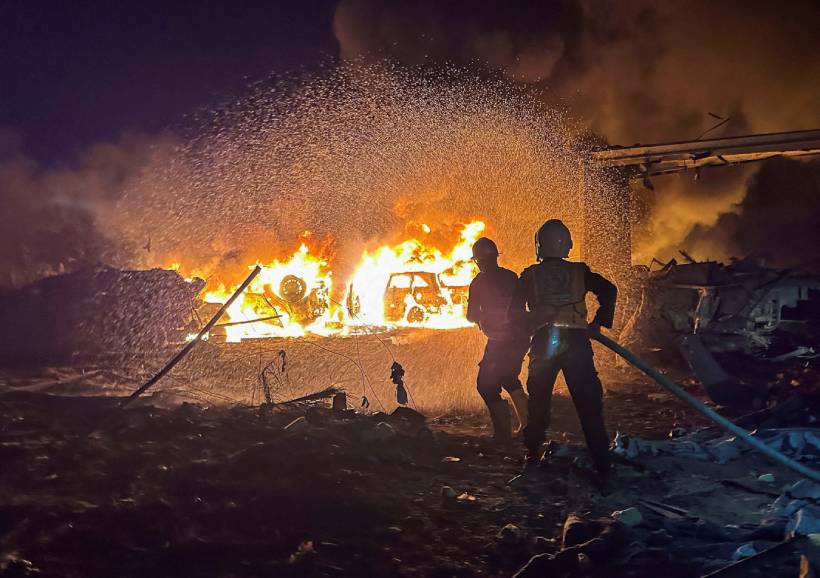
At least three Palestinians were killed in separate incidents across the Gaza Strip on Tuesday after Israeli air and ground fire struck multiple locations, according to Gaza health officials. The latest fatalities come despite an October ceasefire agreement that has repeatedly failed to stop ongoing violence in the enclave.
The incidents highlight the continued instability of the truce and the absence of progress in indirect negotiations between Israel and Hamas over its implementation. While the ceasefire was intended to reduce hostilities and establish a framework for further political steps, fighting has persisted at a lower but sustained intensity.
The situation underscores a central reality of the current phase of the conflict: formal agreements exist on paper, but conditions on the ground remain volatile and largely unchanged.
Background
The current ceasefire was brokered in October with U.S. involvement and was intended to pause large scale fighting between Israel and Hamas after prolonged conflict in Gaza.
Stay ahead of the geopolitical week.
MD Briefing delivers expert analysis across five global fronts — the Indo-Pacific, energy, geoeconomics, European security, and the Middle East — every Monday morning. Free.
The agreement was structured in phases, including:
- An initial cessation of major hostilities.
- Negotiations over prisoner exchanges and security arrangements.
- A second phase involving Hamas disarmament and Israeli military withdrawals.
However, implementation has stalled.
Both sides remain deeply divided over core issues, particularly the future governance and security structure of Gaza.
Israel continues to maintain control over large parts of the territory, while Hamas retains influence in limited coastal areas.
What Happened?
According to Gaza health officials and medics:
- One person was killed and four were wounded in an Israeli airstrike on a vehicle east of Deir Al Balah in central Gaza.
- One person was killed and another wounded in a separate strike in Zawayda town.
- One man was killed by Israeli gunfire in northwest Khan Younis.
The Israeli military has not yet issued a statement regarding the incidents.
Images from the scene in Deir Al Balah showed a heavily damaged vehicle, reduced to a twisted metal frame after the strike.
These incidents occurred across multiple locations in the Gaza Strip, indicating continued military activity despite the ceasefire framework.
The Ceasefire in Practice
A Fragile and Partial Truce
Although labeled a ceasefire, the agreement has not brought a complete end to violence.
According to Gaza health authorities, approximately 930 Palestinians have been killed since the truce began. These figures do not distinguish between civilians and combatants.
Israeli military sources report that four soldiers have been killed during the same period in attacks carried out by militants.
The disparity in casualties reflects ongoing asymmetric conditions on the ground and continued low intensity conflict.
Control of Territory Remains Divided
The ceasefire has effectively frozen rather than resolved territorial control:
- Israel maintains control over more than half of Gaza.
- Hamas continues to hold smaller remaining areas of coastal territory.
This division has contributed to persistent tensions and periodic outbreaks of violence.
Why Violence Continues Despite the Ceasefire
1. Unresolved Core Political Issues
The most significant obstacle is the lack of agreement on long term political arrangements.
Key disagreements include:
- Whether Hamas will disarm.
- The extent of Israeli military withdrawal.
- Future governance of Gaza.
- Security guarantees for Israel.
Without consensus on these issues, the ceasefire remains structurally unstable.
2. Fragmented Implementation
Ceasefires in complex conflicts often depend on phased implementation.
When later stages stall, earlier stages can break down in practice, even if they remain formally in place.
This creates a situation where limited violence continues despite an official truce.
3. Localized Military Actions
Even under ceasefire conditions, both sides may conduct operations they consider defensive or targeted.
This includes airstrikes, arrests, and responses to militant activity, which can quickly escalate into renewed clashes.
Human Impact in Gaza
The continued incidents contribute to an already severe humanitarian situation in Gaza.
Civilians face ongoing risks from:
- Airstrikes and gunfire.
- Displacement and damaged infrastructure.
- Limited access to medical services.
- Food and water insecurity.
Even isolated incidents can have disproportionate effects in densely populated urban areas.
Hospitals and emergency services remain under significant strain due to repeated casualties and infrastructure damage.
Analysis: A Ceasefire in Name, Not in Practice
The situation in Gaza reflects a broader pattern seen in many protracted conflicts where ceasefires reduce but do not eliminate violence.
Rather than a full transition to peace, the current arrangement functions more as a managed conflict environment.
The persistence of casualties suggests that neither side has fully shifted from military to political solutions.
For Israel, ongoing operations appear linked to security concerns, enforcement actions, and responses to perceived threats.
For Hamas and other armed groups, sporadic attacks and resistance activity continue despite the ceasefire framework.
This creates a cycle in which limited violence becomes normalized rather than exceptional.
Another important factor is the absence of progress in negotiations.
The second phase of the agreement, which includes Hamas disarmament and Israeli withdrawal, represents the core political challenge. Without movement on these issues, the ceasefire lacks a stable foundation.
The result is a situation where each incident risks undermining the broader framework, even if neither side formally abandons it.
International mediators, including the United States, face the difficult task of maintaining diplomatic engagement while preventing localized violence from escalating into broader conflict.
Future Scenarios
Scenario One: Managed Ceasefire Continues
Violence persists at low levels, but the ceasefire framework remains intact.
Both sides avoid full scale escalation while negotiations remain stalled.
Scenario Two: Gradual Breakdown
Repeated incidents erode trust and lead to renewed large scale fighting.
The ceasefire effectively collapses without formal announcement.
Scenario Three: Renewed Diplomatic Breakthrough
External pressure leads to progress on disarmament, withdrawal, and governance arrangements.
This stabilizes the ceasefire and reduces violence significantly.
What’s Next?
Attention will focus on whether Israel responds with broader military operations or treats the incidents as isolated events.
Mediators are expected to continue pushing for progress on the stalled second phase of the agreement.
Humanitarian organizations will also monitor conditions in Gaza, where civilian needs remain severe and ongoing instability complicates relief efforts.
The trajectory of the ceasefire will depend heavily on whether both sides are willing to maintain restraint despite continued friction on the ground.
Conclusion
The killing of three Palestinians in separate incidents underscores the fragility of the current ceasefire in Gaza. While formal agreements remain in place, continued violence reveals deep unresolved political and security disputes that have yet to be addressed.
Without meaningful progress in negotiations, the ceasefire risks remaining a temporary pause in a conflict that continues to shape the daily reality for both Palestinians and Israelis.
With information from Reuters.
