


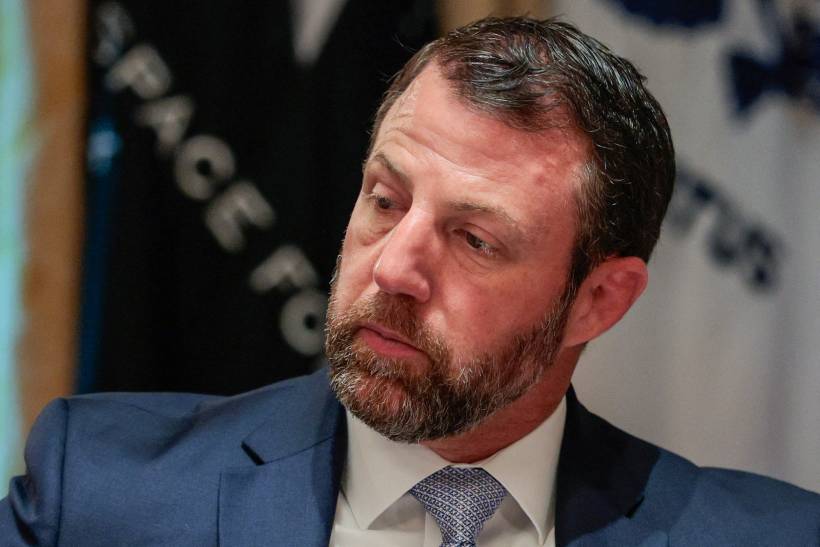
U.S. Homeland Security Secretary Markwayne Mullin is set to testify before a Senate panel as political tensions escalate over immigration enforcement, detention facility conditions, and a controversial threat to restrict international travel through a major airport near New York City.
The hearing comes at a politically sensitive moment for the Trump administration’s immigration agenda, which has expanded detention levels and sought additional funding for mass deportation operations. It also coincides with growing public protests outside a New Jersey detention center and warnings from industry groups that immigration enforcement disputes could disrupt global travel ahead of the upcoming World Cup.
At the center of the controversy is a broader debate over how far federal authorities should go in enforcing immigration policy, and what impact aggressive enforcement measures may have on infrastructure, civil liberties, and international perception.
Background
A Hardline Immigration Agenda Continues Under New Leadership
The Trump administration has maintained an aggressive immigration enforcement strategy, significantly increasing detention numbers and deportation operations.
Stay ahead of the geopolitical week.
MD Briefing delivers expert analysis across five global fronts — the Indo-Pacific, energy, geoeconomics, European security, and the Middle East — every Monday morning. Free.
While former Homeland Security Secretary Kristi Noem took a highly visible approach involving federal raids and expanded urban enforcement, her successor Markwayne Mullin has publicly signaled a more restrained style while continuing core policies.
Despite this shift in tone, enforcement activity has remained high, with immigration detention figures still elevated compared with historical averages.
Rising Political Investment in Enforcement
Republicans are currently pushing for an additional 72 billion dollars in funding to expand deportation operations over the next three years. This proposal comes on top of a previously approved 170 billion dollar allocation for immigration enforcement measures.
The scale of proposed spending highlights how central immigration policy has become to the administration’s domestic agenda.
What Happened?
Senate Testimony Amid Rising Tensions
Secretary Mullin is appearing before a Senate panel for the first time since confirmation in March. Lawmakers are expected to question him on:
- Immigration detention conditions.
- Federal enforcement strategy.
- Funding requests for expanded deportation efforts.
- Recent threats involving airport operations.
Controversial Airport Warning
Mullin recently warned that international travel and cargo operations at Newark Liberty International Airport could be restricted if local authorities failed to secure areas around a nearby detention facility.
The warning sparked alarm among aviation and business stakeholders, who argued that such a move could disrupt global travel flows and cargo logistics.
Although Mullin later stated that no immediate shutdown was planned, the initial threat intensified scrutiny of the administration’s approach.
The Newark Detention Center Protests
Public Demonstrations Intensify
Protests have grown outside the Delaney Hall Detention Facility in Newark, New Jersey, where detainees have raised concerns about conditions inside the facility.
Demonstrators have called for improved transparency, oversight, and accountability regarding treatment of immigrants in federal custody.
Local Law Enforcement Response
In response to escalating tensions, New Jersey State Police have taken steps to restrict access to areas near the facility where protests had been concentrated.
Officials appear to be attempting to balance public safety concerns with the right to peaceful demonstration.
Immigration Detention Levels Remain High
Recent figures indicate:
- Approximately 56,000 people are currently held in Immigration and Customs Enforcement detention facilities.
- This is down from 68,000 earlier in the year but still significantly above the roughly 40,000 detained when Trump took office in January 2025.
These numbers suggest that while detention levels have fluctuated, enforcement remains substantially intensified compared with previous administrations.
Political Context Inside the Administration
Leadership Changes and Strategic Adjustments
The firing of Kristi Noem earlier in the year marked a notable shift in leadership at the Department of Homeland Security.
Her tenure was characterized by highly visible enforcement operations and scrutiny over federal contracting decisions involving politically connected figures.
Her removal followed public backlash over immigration enforcement incidents, including cases involving the deaths of U.S. citizens during federal operations, which significantly impacted public approval ratings for the administration’s immigration policies.
Continuity Despite Leadership Changes
Despite changes in leadership style, the underlying enforcement strategy has remained largely intact.
The administration continues to prioritize:
- Large scale detention.
- Expanded deportation efforts.
- Increased cooperation requirements for local jurisdictions.
The World Cup Factor
Heightened Stakes for Travel Infrastructure
The upcoming FIFA World Cup, set to begin on June 11, adds urgency to concerns about potential disruptions.
Eight matches, including the final, will be held at MetLife Stadium near the Newark airport, one of the key international entry points for foreign visitors.
Industry groups have warned that any restrictions on airport operations could:
- Disrupt international arrivals.
- Create airline scheduling chaos.
- Delay cargo shipments.
- Impact tourism during a major global event.
Economic and Reputational Risks
Beyond logistical concerns, there are broader implications for the United States as a host country.
Disruptions during a major international sporting event could affect:
- Global perception of U.S. infrastructure reliability.
- Airline partnerships and scheduling confidence.
- Economic benefits tied to tourism and travel spending.
Analysis: Immigration Enforcement Meets Infrastructure Pressure
The current dispute reflects a growing intersection between immigration policy enforcement and critical infrastructure management.
On one side, the administration is pursuing a high intensity enforcement strategy designed to deter unauthorized migration and accelerate deportations. This approach requires expanded detention capacity and strict cooperation between federal and local authorities.
On the other side, immigration enforcement actions are increasingly colliding with operational realities in major metropolitan hubs, particularly airports that serve as gateways for international travel.
The Newark situation illustrates this tension clearly.
A detention facility protest, while localized, has escalated into a broader policy dispute involving federal authority, local governance, and national transportation infrastructure.
The administration’s willingness to consider airport level restrictions demonstrates how immigration enforcement is expanding beyond traditional legal and border contexts into domains with direct economic and international implications.
At the same time, the political environment surrounding immigration remains highly polarized. Supporters argue that strong enforcement is necessary for border security and rule of law. Critics warn that aggressive tactics risk undermining civil liberties, damaging local economies, and straining federal state relationships.
The Senate hearing therefore becomes more than a routine oversight session. It functions as a test of how far the administration is willing to push enforcement boundaries and how Congress will respond to potential disruptions affecting national infrastructure.
Future Scenarios
Scenario One: De escalation Through Coordination
Federal and state authorities reach an agreement on security arrangements around the detention facility, reducing tensions and eliminating the need for airport related threats.
Scenario Two: Continued Enforcement Expansion
The administration maintains or expands aggressive immigration enforcement while increasing pressure on jurisdictions deemed uncooperative.
This could lead to recurring conflicts over infrastructure and local governance.
Scenario Three: Political and Legal Pushback
Congressional scrutiny and legal challenges constrain federal actions, particularly regarding threats to restrict airport operations.
This would likely slow enforcement expansion and shift focus toward legislative compromise.
What’s Next?
Key developments to watch include:
- Secretary Mullin’s testimony before the Senate panel.
- Congressional response to proposed immigration funding increases.
- Ongoing protests and legal proceedings related to the Newark detention facility.
- Decisions regarding airport operations and coordination with local authorities.
- Preparations for the World Cup and associated travel security planning.
Conclusion
The Senate hearing involving Homeland Security Secretary Markwayne Mullin highlights growing tensions between immigration enforcement policy, public protest, and critical infrastructure management in the United States.
While the administration continues to pursue an expansive deportation strategy, recent controversies underscore the complexity of implementing such policies in densely populated urban environments with global transportation links.
With the World Cup approaching and political divisions deepening, immigration enforcement is increasingly becoming not only a domestic policy issue but also a question of international logistics and national reputation.
With information from Reuters.
