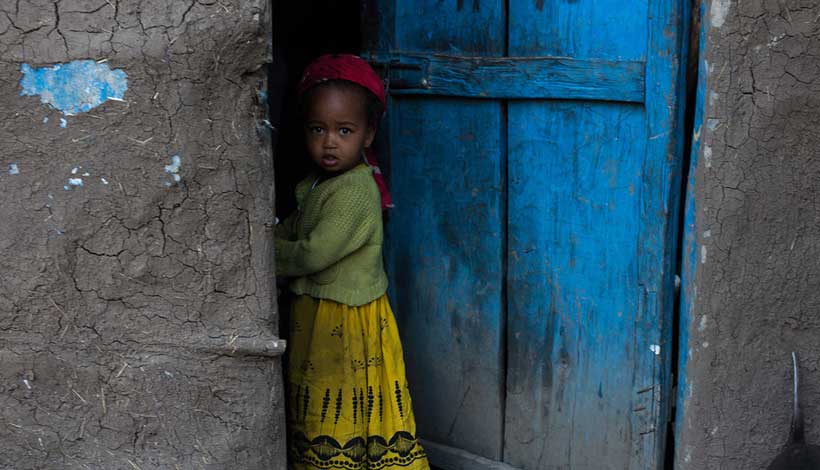
A Crisis the World Is Moving On From Too Quickly
Nearly four years after war erupted in Tigray, women and girls across the region remain trapped in suffering.
International attention has shifted elsewhere. Diplomatic discussions increasingly focus on ceasefires, political negotiations, and stabilization. Yet for many women and girls in Tigray, the realities of daily life remain defined by displacement, trauma, economic collapse, interrupted healthcare, insecurity, and the absence of justice.
The genocidal war devastated civilian infrastructure and social systems on a massive scale. Healthcare facilities were destroyed or looted, schools collapsed, banking and telecommunications systems were interrupted, and humanitarian access was repeatedly obstructed. Women and girls experienced the consequences of these disruptions in deeply gendered ways.
Stay ahead of the geopolitical week.
MD Briefing delivers expert analysis across five global fronts — the Indo-Pacific, energy, geoeconomics, European security, and the Middle East — every Monday morning. Free.
Research and humanitarian reporting continue to demonstrate that women and girls remain among the populations most severely affected by the ongoing humanitarian crisis. As outlined throughout this article, women and girls continue to face food insecurity, interrupted livelihoods, reduced healthcare access, inadequate psychosocial support, and humanitarian dependency years after the Pretoria Agreement.
Conflict-Related Sexual Violence Continues to Define Survivors’ Lives
One of the darkest aspects of the genocidal war in Tigray was the widespread and systematic use of conflict-related sexual violence. International investigations, survivor testimonies, and medical documentation revealed patterns of gang rape, sexual torture, forced pregnancy, deliberate HIV transmission, and sexual violence against children.
A recent investigation by The Guardian, based on findings from Physicians for Human Rights and the Organization for Justice and Accountability in the Horn of Africa, concluded that violence committed against women and girls in Tigray may amount to crimes against humanity and potentially genocide. The report documented extensive physical injuries, severe psychological trauma, and long-term reproductive harm affecting survivors.
The brutality described by survivors remains difficult to comprehend. Medical workers in Tigray documented cases involving the insertion of metal objects and other materials into women’s reproductive organs with the apparent intent of causing permanent reproductive damage. Survivors continue to face enormous barriers to accessing reproductive healthcare, psychosocial support, and justice.
The United Nations Population Fund (UNFPA) warned as early as 2021, in the midst of the war, that women and girls in Tigray were facing escalating gender-based violence amid collapsing healthcare and protection systems. Despite these warnings, accountability remains elusive.
Healthcare Collapse and Fuel Shortages Are Endangering Women
Women and girls in Tigray continue to face severe barriers in accessing healthcare. Blockades on fuel have crippled ambulance systems and emergency healthcare referrals across Tigray, forcing pregnant women to travel long distances under unsafe conditions to reach medical facilities.
Healthcare disruptions disproportionately affect survivors of sexual violence, pregnant women, women with disabilities, and internally displaced populations. Women and girls in Tigray face major gaps in access to reproductive healthcare, psychosocial support, and protection services.
Displacement Has Become a Long-Term Reality for Women and Girls
Millions of people were displaced during the war, and many remain unable to safely return home.
Women and girls living in displacement settings continue to face overcrowding, food insecurity, interrupted education, inadequate sanitation, and heightened exposure to gender-based violence and exploitation.
Conditions remain particularly dangerous in Western Tigray. In April 2026, Human Rights Watch documented continuing arbitrary detention, movement restrictions, denial of services, and discriminatory treatment targeting ethnic Tigrayans in Western Tigray. The report warned that displaced Tigrayans still cannot safely return home years after the Pretoria Agreement.
For women and girls, prolonged displacement often means continued dependence on inconsistent humanitarian aid, interrupted livelihoods, increased caregiving burdens, and exposure to exploitation and abuse. Lack of menstrual hygiene support, mental health distress, and ongoing insecurity continue to impede the lives of displaced Tigrayans.
Women and Girls With Disabilities Remain Largely Invisible
Women and girls with disabilities in Tigray face compounded and intersectional harms that remain severely under-addressed in humanitarian and recovery efforts.
Research documented that women and girls with disabilities experience inaccessible infrastructure, disrupted humanitarian assistance, exclusion from aid distribution, unsafe living conditions, and barriers to medical and psychosocial support during and after the genocidal war.
The research also identified that many women with disabilities also reportedly faced increased exposure to sexual violence, transportation barriers, and exclusion from recovery programs.
Despite these realities, disability-inclusive reconstruction and recovery remain inadequate.
Women Human Rights Defenders Are Facing Digital and Civic Threats
Women-led organizations and movements as well as women human rights defenders continue to play critical roles in humanitarian response, advocacy, and documentation efforts in Tigray. Yet many face shrinking civic space, digital abuse, online harassment, intimidation, surveillance concerns, and psychological burnout.
Research examining social media polarization and women’s participation in peacebuilding in Ethiopia found that hostile online environments and digital violence disproportionately silence women and undermine their participation in peacebuilding initiatives (See also:- https://www.theguardian.com/global-development/2026/mar/31/digital-violence-facing-ethiopi an-women-activists-online). The study concluded that online polarization, gendered abuse, and exclusion from digital spaces continue to marginalize women’s voices in conflict and post-conflict settings.
For women activists in Tigray, these digital threats compound already difficult humanitarian and security conditions on the ground.
Accountability Cannot Continue to Be Delayed
The absence of meaningful accountability remains one of the greatest failures, leading to continued impunity and repetition. Lack of prosecutions, lack of independent accountability mechanisms, fear of reprisals, and limited survivor participation in transitional justice discussions are concerns raised in many circles. Truth, justice, reparations, and guarantees of non-repetition are critical. But meaningful accountability mechanisms remain absent.
Without credible justice processes, survivors are left carrying the burden of trauma while perpetrators remain largely untouched by legal consequences. That reality not only deepens survivors’ suffering — it also undermines the prospects for sustainable peace and reconciliation.
Women and Girls Must Be Central to Recovery
Women and girls in Tigray cannot continue to be treated as secondary considerations in humanitarian response, political negotiations, and reconstruction planning.
They must be at the center of recovery efforts. This requires sustained humanitarian access, restoration of healthcare and education systems, survivor-centered psychosocial care, disability-inclusive reconstruction, economic recovery and livelihoods support, protection for women human rights defenders, inclusive peacebuilding processes, as well as international, independent and credible accountability mechanisms. Survivor-centered, gender-responsive, trauma-informed, and inclusive recovery efforts that recognize the compounded harms experienced by women and girls during and after the genocidal war are indispensable.
The future of peace and recovery in Tigray will depend on whether women and girls are treated not merely as victims but as central actors in justice, reconstruction, and political transformation. Ignoring their realities will not bring sustainable peace. It will only prolong the suffering that women and girls in Tigray continue to endure every single day.