


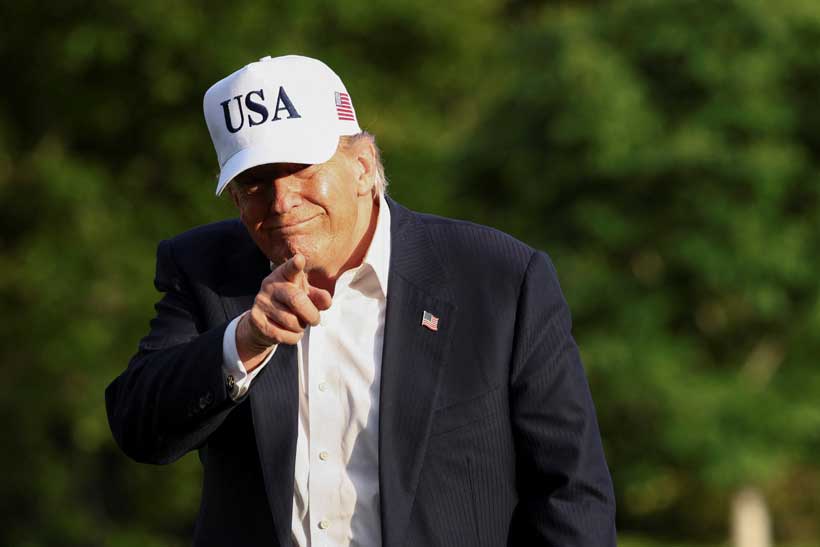
Donald Trump has repeated false claims that the 2020 U.S. presidential election was “rigged” at least 107 times over the last six months, according to a review of his speeches, interviews and social media posts.
The remarks have remained a consistent feature of Trump’s public messaging even as his administration faces mounting pressure over foreign policy challenges, including tensions involving Iran, and prepares for critical midterm elections that could determine control of Congress.
Trump has raised the issue during campaign-style rallies, meetings with foreign leaders, White House events and online posts on Truth Social.
During one day in April alone, Trump reportedly posted allegations about the 2020 election seven separate times while diplomatic tensions with Iran were unfolding.
Stay ahead of the geopolitical week.
MD Briefing delivers expert analysis across five global fronts — the Indo-Pacific, energy, geoeconomics, European security, and the Middle East — every Monday morning. Free.
Claims Continue Despite Lack of Evidence
Trump has repeatedly alleged that widespread fraud cost him the 2020 election against former President Joe Biden.
However, multiple courts, election officials, audits and previous investigations found no evidence of widespread voter fraud capable of altering the election outcome.
Even so, Trump has continued to frame the election as illegitimate, including during public appearances at the World Economic Forum and recent White House events.
In one recent comment, Trump claimed he would have won California if votes had been counted fairly, despite losing the state by large margins in both 2020 and 2024.
Midterm Strategy and Voting Restrictions
Political analysts and election experts say Trump’s repeated focus on 2020 reflects a broader political strategy ahead of upcoming midterm elections.
According to individuals familiar with internal discussions, the messaging serves several purposes:
- Reinforcing loyalty among Republican voters
- Building support for stricter voting laws
- Justifying federal election oversight efforts
- Creating a framework to challenge future election outcomes if Republicans lose key races
Election experts argue the strategy could normalize doubts about electoral legitimacy and reduce public resistance to federal intervention in election administration.
Republican Voters Remain Highly Skeptical of 2020 Outcome
Polling shows Trump’s claims continue to resonate strongly within the Republican base.
A recent Reuters/Ipsos survey found that roughly 63% of Republican voters still believe the 2020 election was stolen from Trump.
An even larger percentage expressed concerns about non-citizen voting, despite limited evidence of widespread fraud in U.S. elections.
By contrast, belief in widespread fraud remains significantly lower among Democrats and independent voters.
Administration Pushes Election Changes
Trump’s administration and allies have continued pursuing election-related reforms and investigations.
Last year, administration officials reportedly explored proposals involving federal oversight of voting systems and restrictions on voting machines used across many U.S. states.
Trump also backed legislation requiring proof of citizenship for voting and has repeatedly criticized mail-in voting systems.
Although nationwide reforms have faced obstacles in the United States Senate, several Republican-led states have implemented stricter voter identification and citizenship verification measures.
Some executive actions related to mail-in voting are currently facing legal challenges from Democrats.
Loyalty Test Within Republican Party
Trump’s election claims have increasingly become a political litmus test within the Republican Party.
Several judicial nominees and administration officials have avoided directly acknowledging Biden’s victory during Senate confirmation hearings, instead stating only that Congress certified the election results.
The issue has also intensified divisions within the Republican Party between Trump loyalists and more traditional conservatives.
Former Jan Brewer, a longtime Trump supporter, recently criticized ongoing fraud allegations and joined efforts defending the integrity of state-administered elections.
Meanwhile, outgoing Senator Bill Cassidy publicly rejected Trump’s claims during a concession speech following his Republican primary defeat.
Analysis
Trump’s continued focus on the 2020 election demonstrates how election legitimacy has evolved from a retrospective grievance into an active political strategy shaping the current American political landscape.
Rather than simply revisiting past disputes, the messaging appears aimed at influencing future elections by keeping doubts about electoral systems alive among Republican voters.
This strategy serves multiple functions simultaneously: energizing Trump’s political base, justifying stricter voting laws, strengthening party discipline and creating political cover for contesting unfavorable election outcomes in the future.
The persistence of these claims despite repeated legal and institutional rejections also highlights a broader transformation in political communication, where narratives can remain influential even without factual validation if they reinforce partisan identity and distrust of institutions.
At the same time, the issue continues to deepen polarization within the United States. While many Republicans view election security concerns as legitimate, critics argue that repeated fraud allegations risk undermining public confidence in democratic institutions and electoral administration.
The debate is also becoming increasingly institutional. Questions surrounding federal involvement in elections, voting technology, mail-in ballots and voter eligibility are likely to remain central issues heading into future elections.
Ultimately, Trump’s rhetoric reflects a political environment in which electoral legitimacy itself has become a contested arena of partisan competition, with implications extending far beyond the 2020 election alone.
With information from Reuters.
