


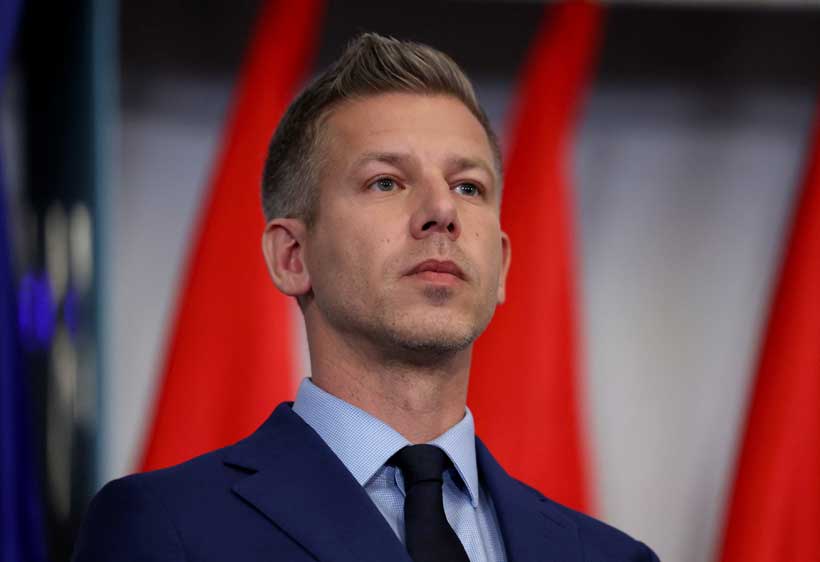
Hungarian Prime Minister Peter Magyar began his first official foreign visit since taking office with a two day trip to Poland, signalling a major shift in Hungary’s political direction after years of strained relations with the European Union.
Magyar’s visit carries strong political symbolism as he seeks to restore Hungary’s standing within Europe following his decisive election victory over former nationalist leader Viktor Orban earlier this year.
The Hungarian leader is scheduled to meet Polish Prime Minister Donald Tusk, whose own return to power in 2023 marked a significant pro European turn in Polish politics after years of tensions with Brussels over democratic standards and rule of law concerns.
Hungary Signals Return to European Mainstream
Magyar’s administration is attempting to reposition Hungary as a constructive European partner after years of confrontations between Budapest and European institutions under Orban’s leadership.
Stay ahead of the geopolitical week.
MD Briefing delivers expert analysis across five global fronts — the Indo-Pacific, energy, geoeconomics, European security, and the Middle East — every Monday morning. Free.
Relations between Hungary and Poland had deteriorated sharply in recent years, particularly after Tusk adopted a stronger pro Ukraine and pro European stance while Orban maintained closer relations with Russia and criticised European Union policies.
By choosing Poland for his first international visit, Magyar is sending a clear message that Hungary intends to rebuild alliances within Europe and restore diplomatic trust with key regional partners.
Polish officials described the visit as an opportunity to reopen dialogue on major European issues, including Ukraine, energy cooperation, and the future of Central European regional partnerships.
Poland and Hungary Seek New Regional Cooperation
The visit also reflects changing political dynamics across Central Europe, where governments are increasingly reassessing their relationships with the European Union and broader Western institutions.
Tusk has publicly framed Magyar’s electoral victory as part of a wider regional movement away from eurosceptic nationalism and toward stronger European integration.
Magyar’s itinerary across Poland, from Krakow to Warsaw and the Baltic city of Gdansk, further emphasises efforts to strengthen bilateral ties beyond symbolic diplomacy.
The Hungarian prime minister even highlighted Poland’s European Union funded high speed rail infrastructure, indirectly criticising the anti Brussels rhetoric associated with Orban’s government.
Magyar also expressed support for eventually developing a high speed rail connection between Warsaw and Budapest, signalling ambitions for deeper economic and infrastructure cooperation.
Energy Security Emerges as a Key Priority
Energy policy is expected to dominate discussions between the two governments.
Hungary has announced plans to reduce and eventually end its dependence on Russian energy supplies by 2035, a major strategic shift given Budapest’s historically close energy relationship with Moscow.
Poland is reportedly prepared to offer Hungary access to United States liquefied natural gas through a new terminal in Gdansk expected to begin operating in 2028.
The move would support broader European efforts to diversify energy supplies following years of instability linked to Russia’s role in European energy markets.
Officials are also expected to discuss support for Ukraine and the future role of the Visegrad Group, which includes Hungary, Poland, the Czech Republic, and Slovakia.
Hungary Seeks Support on European Union Funding
Another major objective for Budapest is securing Polish support in negotiations aimed at unlocking frozen European Union funds.
Like Poland under its previous government, Hungary has faced disputes with Brussels over concerns related to judicial independence, democratic governance, and rule of law standards.
Tusk’s government successfully improved relations with the European Union after taking office, leading to the release of billions in previously blocked funding.
Magyar now hopes to achieve a similar breakthrough by demonstrating Hungary’s renewed commitment to European cooperation and institutional reforms.
Analysis
Peter Magyar’s visit to Poland represents more than a routine diplomatic tour. It marks a potential turning point in Central European politics and in Hungary’s relationship with the wider European community.
For years, Hungary under Orban positioned itself as one of Europe’s most prominent nationalist and eurosceptic governments. Magyar’s rise to power suggests growing political fatigue within Hungary over isolation from European institutions and disputes that carried economic and diplomatic costs.
The partnership with Donald Tusk is particularly important because Poland recently underwent a similar political transition. Tusk’s success in restoring ties with Brussels offers a roadmap for Hungary as it seeks financial support, political credibility, and renewed influence within Europe.
Energy cooperation adds another layer of strategic importance. Europe continues attempting to reduce dependence on Russian energy, and Hungary’s willingness to diversify its energy sources indicates a broader foreign policy recalibration.
At the same time, challenges remain. Hungary must still convince European leaders that reforms will be meaningful and lasting. Questions also remain over how quickly Budapest can distance itself from policies associated with the Orban era.
Nevertheless, the visit demonstrates that Central Europe may be entering a new political phase characterised by closer European alignment, stronger regional cooperation, and a gradual shift away from confrontational nationalism.
With information from Reuters.
