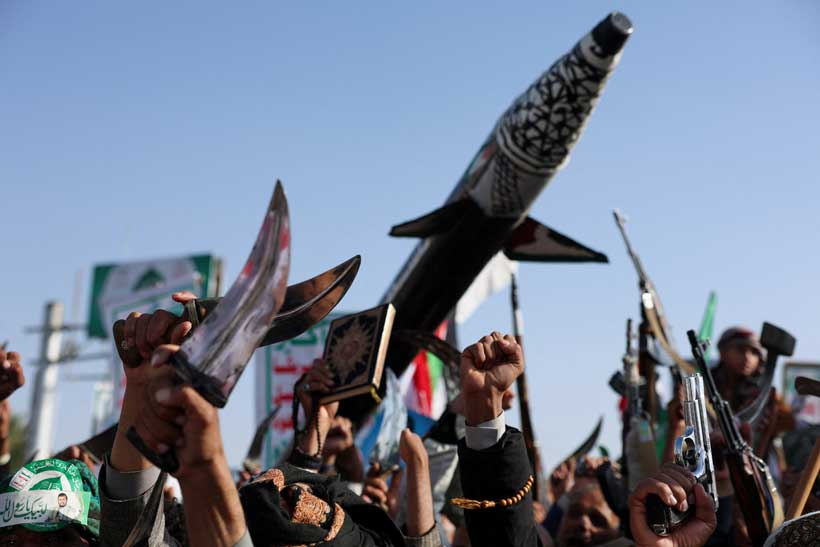
Yemen’s Iran-aligned Houthis announced on Monday they would ban ships linked to Israel from the Red Sea following renewed Israeli military attacks on Iran, which raises concerns for global shipping and energy supply. This situation is significant because Iran’s closure of the Strait of Hormuz in February, due to attacks from Israel and the U. S., has disrupted oil and energy exports from the Gulf, causing a spike in prices. In response, Saudi Arabia has redirected over 70% of its daily crude exports to the Red Sea port of Yanbu, stabilizing global oil prices. However, any ongoing disruption from the Houthis could severely affect shipping and energy markets.
The Houthis aim to prevent Israeli ships from using the Red Sea and have indicated that further escalations could lead to blocking any vessels heading toward Israel. Historically, during the Gaza war, the Houthis targeted ships linked to Israel and successfully discouraged many companies from using that route.
The Houthis, a military and political movement that emerged in north Yemen in the 1990s, follow the Zaydi sect of Shi’a Islam. They have strengthened ties with Iran since the 2011 Arab Spring and took control of Yemen’s capital in 2014, prompting a military intervention from Saudi Arabia and other Arab allies to restore the ousted government. Throughout the civil war, the Houthis targeted oil facilities in Saudi Arabia and the UAE, although a truce in 2022 has largely held.
Iran supports the Houthis as part of its “Axis of Resistance,” which also includes groups like Hezbollah. However, the Houthis assert their independence and do not view Iran’s leadership as their ultimate authority. The U. S. accuses Iran of providing military support to the Houthis, but the group denies being a proxy.
After the Hamas attack on Israel on October 7, the Houthis began firing at shipping in the Red Sea, disrupting global trade and prompting major shipping companies to alter their routes. A U. S.-led effort aimed at securing free navigation led to military strikes against the Houthis, but some of their attacks persisted until a ceasefire in October.
Unlike Hezbollah and Iraqi groups, the Houthis have remained largely inactive in the current Iran war, despite warnings from Iranian commanders that they might intervene. Their reluctance may stem from a desire to avoid escalating tensions with Saudi Arabia and potentially reigniting conflict within Yemen.
With information from Reuters