


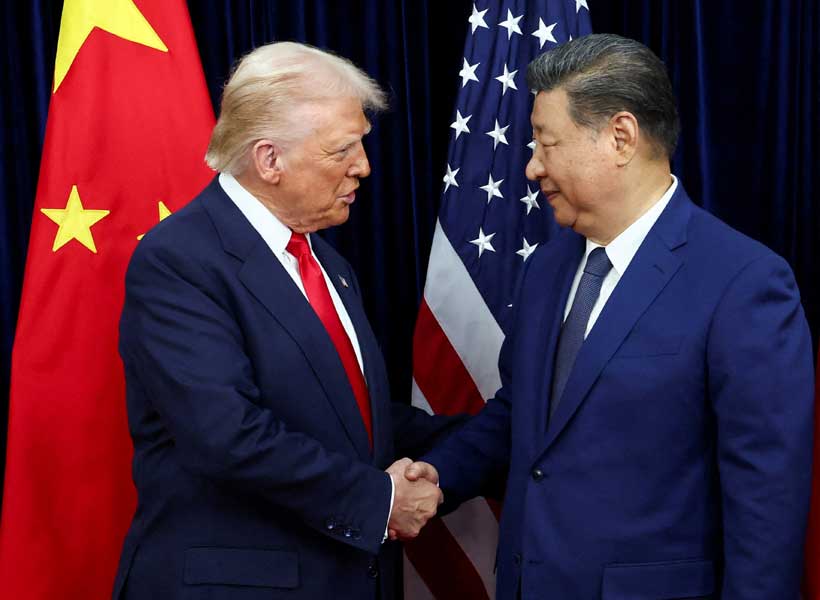
Chinese President Xi Jinping and United States President Donald Trump opened a high stakes summit in Beijing with optimistic language on trade cooperation but strong warnings over Taiwan.
The meeting represents one of the most significant diplomatic engagements between the world’s two largest economies in recent years. While both leaders emphasized the importance of stable bilateral relations, the summit also exposed deep strategic tensions surrounding Taiwan, technology competition, and global security issues.
The summit comes at a sensitive moment for both governments as they attempt to stabilize economic ties while managing growing geopolitical rivalry.
Trade Talks Show Signs of Progress
Xi stated that recent trade negotiations between Chinese and American officials had produced “balanced and positive outcomes.”
Stay ahead of the geopolitical week.
MD Briefing delivers expert analysis across five global fronts — the Indo-Pacific, energy, geoeconomics, European security, and the Middle East — every Monday morning. Free.
The discussions are aimed at preserving the trade truce established last year, when both sides stepped back from escalating tariffs and economic retaliation.
Key economic priorities for both countries include:
United States Objectives
The United States seeks greater Chinese market access for:
- American agriculture
- Energy exports
- Boeing aircraft sales
- Manufacturing and industrial investment
Washington also hopes to reduce its long standing trade deficit with China.
Chinese Objectives
China wants the United States to ease restrictions on:
- Advanced semiconductors
- Artificial intelligence technology
- Chipmaking equipment
- High technology exports
These issues have become increasingly central to China’s economic modernization plans.
Taiwan Emerges as the Most Sensitive Issue
Despite positive language on trade, Taiwan remained the most politically sensitive issue discussed during the summit.
Xi warned Trump that mishandling Taiwan could push bilateral relations toward conflict and create an “extremely dangerous situation.”
China considers Taiwan part of its territory and strongly opposes United States military support and arms sales to the island.
The warning reflects Beijing’s growing concern about deepening political and military ties between Washington and Taiwan.
The United States, while officially recognizing Beijing under the “One China” policy, continues supplying Taiwan with defensive military equipment under the Taiwan Relations Act.
Reports indicate a proposed fourteen billion dollar American arms package for Taiwan remains under consideration.
Why Taiwan Matters So Much to China
For Beijing, Taiwan is not only a territorial issue but also a matter of national identity, political legitimacy, and strategic security.
Chinese leadership views reunification with Taiwan as a historic objective tied closely to national rejuvenation under Xi Jinping’s leadership.
Any movement toward formal Taiwanese independence is considered unacceptable by Beijing.
China has repeatedly warned that it does not rule out military action if Taiwan formally separates from China or if foreign powers significantly increase support for the island.
As a result, Taiwan remains the single greatest potential flashpoint in China United States relations.
Shifting Balance of Power Between Washington and Beijing
Analysts note that the power dynamics between the two countries have changed considerably since Trump’s previous visit to Beijing in 2017.
At that time, China focused heavily on accommodating Washington through large trade commitments and symbolic diplomacy.
Today, China enters negotiations from a stronger strategic position in several areas:
- Greater economic resilience
- Increased technological capabilities
- Expanded global influence
- Stronger leverage in critical supply chains such as rare earth minerals
Meanwhile, the United States faces several domestic and international pressures, including inflation concerns, political polarization, and ongoing global conflicts.
This changing balance has contributed to a more equal and competitive relationship between the two powers.
Technology and Artificial Intelligence Competition
Technology competition remains a major factor shaping bilateral relations.
Both sides are expected to discuss frameworks for cooperation and dialogue on artificial intelligence.
However, disputes over semiconductor exports continue to fuel mistrust.
China seeks access to advanced American chip technology, while Washington increasingly views such exports through a national security lens.
The presence of leading business figures such as Elon Musk and Jensen Huang during the summit highlights the growing overlap between diplomacy, business, and technology competition.
Iran and Global Security Discussions
The summit also addressed broader international security concerns, including:
- The Middle East conflict involving Iran
- The war in Ukraine
- Stability on the Korean Peninsula
Trump reportedly hopes China can encourage Iran toward negotiations with Washington.
However, analysts believe Beijing is unlikely to pressure Tehran aggressively due to Iran’s strategic value as a counterweight to United States influence in the Middle East.
China’s broader foreign policy strategy increasingly emphasizes maintaining partnerships that challenge American global dominance.
Economic Interdependence Still Matters
Despite growing rivalry, both countries remain deeply economically interconnected.
Neither Beijing nor Washington appears willing to risk a complete breakdown in trade and investment ties.
The summit demonstrates that both sides still recognize the importance of maintaining at least limited cooperation in areas where their economic interests overlap.
This includes:
- Global trade stability
- Supply chain management
- Artificial intelligence development
- Investment flows
- Energy markets
The relationship increasingly reflects a model of “competitive coexistence” rather than full partnership or outright confrontation.
Future Outlook
The summit is unlikely to resolve the deeper structural tensions between China and the United States.
However, it may help preserve short term stability and prevent immediate escalation over trade or Taiwan.
Future relations will likely continue to be shaped by three major factors:
- Competition over advanced technology
- Strategic rivalry in Asia
- Management of economic interdependence
Taiwan is expected to remain the most dangerous and emotionally charged issue in the relationship.
Any future crisis involving Taiwan could rapidly escalate into a broader geopolitical confrontation.
Conclusion
The Trump Xi summit reflects both the opportunities and risks defining modern China United States relations.
While trade discussions showed signs of progress and both leaders emphasized stability, Xi’s warning on Taiwan highlighted the severe strategic tensions that continue to divide the two powers.
The summit ultimately demonstrates that cooperation and rivalry now exist simultaneously within the relationship.
As both countries compete for technological, economic, and geopolitical influence, managing tensions without triggering direct confrontation will remain one of the central challenges of global politics in the coming decade.
With information from Reuters.
