


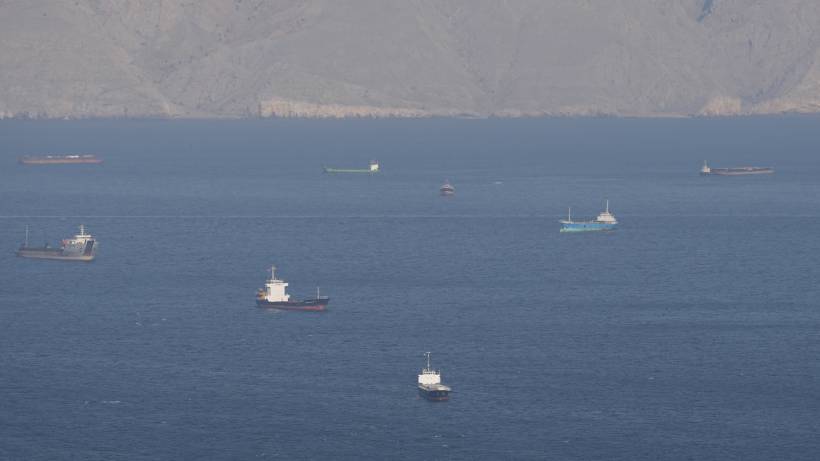
A Japan linked oil tanker managed by Eneos successfully passed through the Strait of Hormuz amid ongoing regional tensions linked to the United States and Israeli conflict with Iran.
The passage marks the second successful transit by a Japan connected oil vessel since disruptions intensified in the Gulf region earlier this year.
The development highlights Japan’s growing diplomatic efforts to secure energy imports while avoiding direct involvement in escalating geopolitical tensions in the Middle East.
Why the Strait of Hormuz Matters
The Strait of Hormuz is one of the world’s most strategically important maritime chokepoints.
Stay ahead of the geopolitical week.
MD Briefing delivers expert analysis across five global fronts — the Indo-Pacific, energy, geoeconomics, European security, and the Middle East — every Monday morning. Free.
A large percentage of global oil exports pass through the narrow waterway connecting the Persian Gulf to international markets.
For Japan, the route is especially critical because the country depends heavily on Gulf energy supplies. Before the current crisis, approximately 95 percent of Japan’s oil imports came from Gulf producers.
Any prolonged disruption in Hormuz therefore poses a major threat to Japan’s energy security, industrial stability, and economic performance.
Diplomatic Intervention by Japan
Japanese Prime Minister Sanae Takaichi confirmed that she directly contacted Iranian President Masoud Pezeshkian to facilitate the tanker’s safe passage.
The vessel reportedly carried four Japanese crew members and significant volumes of Kuwaiti and Emirati crude oil.
Japan’s diplomatic outreach reflects Tokyo’s long standing strategy of maintaining balanced relations with both Western allies and Middle Eastern states.
Unlike some Western governments, Japan has historically preserved relatively stable communication channels with Iran, allowing Tokyo to act through diplomacy during regional crises.
The Scale of the Energy Challenge
Despite the successful transit, Japan still faces considerable energy risks.
According to Japanese officials, dozens of Japan related vessels remain stranded in Gulf waters due to security concerns and uncertainty surrounding maritime navigation.
The crisis has already forced Japanese refiners to adopt emergency measures, including:
- Drawing from strategic petroleum reserves
- Increasing imports from the United States
- Seeking alternative supplies from the Caspian region
- Expanding domestic fuel subsidies to stabilize prices
These actions demonstrate how geopolitical instability in the Middle East can rapidly affect global energy markets and industrial economies far beyond the region itself.
The Role of Iran in Regional Shipping
Iran remains a central actor in the security dynamics of the Strait of Hormuz.
Although Tehran has not formally closed the strait, the ongoing conflict involving the United States and Israel has significantly disrupted commercial shipping activity and raised fears of escalation.
Iran’s geographic position gives it substantial influence over maritime traffic in the Gulf.
The fact that Japan sought direct Iranian cooperation for safe tanker passage reflects recognition that diplomatic engagement with Tehran remains essential for maintaining regional shipping stability.
Energy Markets and Global Trade
The successful transit of Japanese and Chinese oil tankers through Hormuz may help ease immediate fears of a complete energy supply breakdown.
However, global markets remain highly sensitive to developments in the region.
Any major escalation involving Iran could lead to:
- Sharp increases in oil prices
- Supply chain disruptions
- Inflationary pressure on global economies
- Higher shipping and insurance costs
- Increased volatility in financial markets
Asian economies are particularly vulnerable because of their heavy dependence on Gulf energy imports.
China and the Wider Geopolitical Context
The passage of a Chinese supertanker through Hormuz shortly before the Beijing summit between Donald Trump and Xi Jinping highlights how energy security is becoming intertwined with broader geopolitical diplomacy.
China, like Japan, relies heavily on Middle Eastern oil imports and has strong incentives to maintain stability in Gulf shipping routes.
Iranian Foreign Minister Abbas Araqchi also recently visited Beijing, signaling continued strategic coordination between Tehran and China.
The Gulf crisis therefore increasingly overlaps with larger global power competition involving the United States, China, and regional actors.
Japan’s Strategic Position
Japan’s response demonstrates a pragmatic foreign policy approach centered on economic security and diplomatic flexibility.
Tokyo is attempting to:
- Protect energy imports
- Avoid direct military entanglement
- Maintain balanced regional relations
- Reduce domestic economic disruption
This strategy reflects Japan’s broader concern about the vulnerability of maritime trade routes in an increasingly unstable international environment.
The crisis may also encourage Japan to accelerate long term diversification of energy sources and strengthen energy resilience policies.
Future Outlook
While some energy companies expect shipping conditions in Hormuz to gradually improve later this year, uncertainty remains extremely high.
Much depends on whether regional tensions de escalate or expand into a broader confrontation involving Iran, the United States, and Israel.
For now, diplomatic coordination appears to be helping selected vessels navigate the strait safely. However, sustained instability could still threaten global energy flows and economic stability.
Countries heavily dependent on imported energy, particularly in Asia, are likely to continue preparing for prolonged disruption scenarios.
Conclusion
The successful transit of another Japan linked oil tanker through the Strait of Hormuz represents a significant diplomatic and economic achievement for Tokyo during a period of severe regional instability.
Japan’s direct engagement with Iran underscores the growing importance of diplomacy in protecting global energy supply chains.
At the same time, the crisis highlights the continuing strategic importance of the Strait of Hormuz and the risks that Middle Eastern conflict poses to the global economy.
As geopolitical tensions deepen, energy security and maritime stability are likely to remain central concerns for governments and markets worldwide.
With information from Reuters.
