


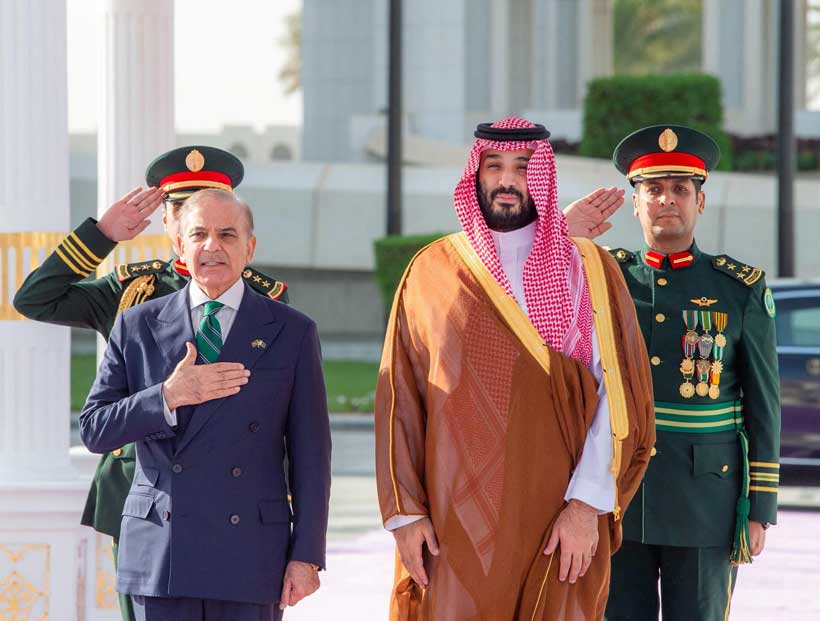
Following the recent events related to the conflict in Iran in March 2016, Pakistan emerged as a vital strategic partner for China, playing multiple roles that serve Chinese interests in the region. For China, in the post-Iran War era, Pakistan represents a geopolitical safety valve and a crucial diplomatic bridge for maintaining energy flows and balancing international power in South and Southeast Asia. China also declared its explicit support for Pakistan’s role as a mediator to de-escalate tensions between Iran and the United States. The Pakistani capital, Islamabad, hosted ministerial meetings that included Egypt, Turkey, and Saudi Arabia to discuss the repercussions of the war, a step Beijing considers essential for safeguarding regional stability.
Furthermore, China has strengthened its close relationship with Pakistan to maintain its influence in the Islamic world, particularly in the post-Iran war era, and to counter the growing Western-Indian alliances in the region. The China-Pakistan axis is seen as a potential avenue for alleviating the isolation or pressures imposed on Iran, thus serving China’s vision of a multipolar world order. To that end, China has continued to provide military and technical support to Pakistan to ensure its regional deterrence capabilities, especially given the escalating tensions on its borders with India and Iran. China closely monitors internal stability in Pakistan, fearing that the security chaos emanating from Iran could spill over into Pakistani territory, potentially jeopardizing its substantial investments. Pakistan plays a vital role for China in securing energy routes and logistical alternatives following the Iran-Iraq War. With energy supplies from Iran and the Gulf disrupted by the war, the China-Pakistan Economic Corridor (CPEC) has become increasingly important as a strategic alternative for China. China relies on Pakistan to secure a land and sea route, reducing its dependence on the Strait of Malacca, which could be closed in the event of conflict.
Furthermore, the escalating US military and political pressure against Iran has deepened the trilateral axis of China, Pakistan, and Iran, as Beijing and Islamabad seek to consolidate regional stability and protect their geostrategic interests. To this end, China is adopting an iron brother strategy with Pakistan, not just as a bilateral ally but as a geopolitical launching pad (conduit) to deepen its influence in the Islamic world and the Middle East. This relationship is of paramount importance given the current tensions between the United States and Iran, as Washington seeks to target Beijing’s network of allies. Here, China is working to utilize Pakistan as a bridge to the Middle East, leveraging Pakistan’s historical and religious weight in the region through several channels, most importantly diplomacy and mediation. Beijing supports Pakistan’s role as an acceptable mediator in regional conflicts, such as the current mediation between the United States and Iran to de-escalate tensions. This role grants China indirect influence and portrays it as a power that supports stability through local partners like Pakistan. In addition to Pakistan’s role through the China-Pakistan Economic Corridor (CPEC), as a gateway for energy for China, the CPEC (with investments exceeding $65 billion) is considered the cornerstone for connecting western China to the Pakistani port of Gwadar on the Arabian Sea. This corridor provides Beijing with a land route that bypasses traditional maritime chokepoints controlled by the United States, such as the Strait of Malacca, thus facilitating its access to energy resources in the Arabian Gulf. Pakistan’s role also plays a crucial part in China’s military and security penetration. Here, China uses Pakistan as a platform for military integration in the region, with the Pakistani military establishment acting as a silent architect of strengthening Chinese defense ties with the Gulf states.
The contours of the rapprochement and the roles of Pakistani regional powers with respect to China can be understood through the lens of China’s use of Pakistan as a diplomatic bridge. Here, Pakistan emerges as a middle power seeking to act as a back channel to bridge the gap between the major powers (China and the United States) and prevent the region from sliding into a full-blown war. This involves offering proposals to end the ongoing conflict, coinciding with China’s cautious stance. Despite condemning the American strikes and deeming them a violation of international law, China adopts a policy of balance in its relations. It supports Iran strategically through 25-year agreements but hesitates to engage militarily in order to protect its broader economic interests in the Middle East. With a high level of Chinese-Pakistani security and military coordination, there are indications of increasing technological and military cooperation. Washington fears the development of joint missile programs or the transfer of advanced Chinese-Pakistani technology to Iran to counter threats.
Stay ahead of the geopolitical week.
MD Briefing delivers expert analysis across five global fronts — the Indo-Pacific, energy, geoeconomics, European security, and the Middle East — every Monday morning. Free.
In this context, China, Pakistan, and Iran face the same regional challenges and pressures, particularly through the dynamics within the Shanghai Cooperation Organization (SCO). The SCO, which includes these three countries, serves as a framework for confronting American challenges, but it struggles to formulate a unified response due to divergent national agendas. Amidst the risk of escalation, the US military tensions with Iran led China and Pakistan to urge their citizens to leave Iran in February 2026, reflecting the seriousness of the on-the-ground threat despite their political alliance. This has also had an economic impact. The continued US-Iranian military escalation has shifted regional and international trade routes. While the Pakistani route has been occasionally disrupted, trade through Afghanistan has increased as a strategic alternative.
These Chinese moves intersect with a US strategy aimed at isolating and besieging China internationally by targeting its strategic partners and striking Iran as a gateway to China in order to strangle its energy supplies. Here, we analyze that a US war or military escalation against Iran is essentially aimed at creating a China chokehold on Chinese oil supplies, as Beijing relies heavily on Iranian oil (approximately 20% of its maritime imports). Furthermore, these US attempts to dismantle China’s chain of allies are part of a broader strategy. Washington views Iran, Venezuela, and Russia as links in a chain supporting Chinese influence. By targeting the leadership in Tehran or crippling its capabilities, the US seeks to break this geopolitical link and strategically isolate China. These US moves in the Gulf and on Iran’s Kharg Island also aim to challenge Chinese control over waterways and secure control of the Strait of Hormuz, which Beijing considers a direct threat to its national security and global trade.
Thus, we conclude that while the United States attempts to geopolitically encircle China by targeting its strong proxies in the Middle East, such as Iran, China responds by strengthening its strategic depth through Pakistan. Pakistan is not merely a strategic ally of China, but a safety valve, ensuring continued communication with the Islamic world and providing logistical alternatives in the event of a confrontation in the Gulf or the South China Sea.
