


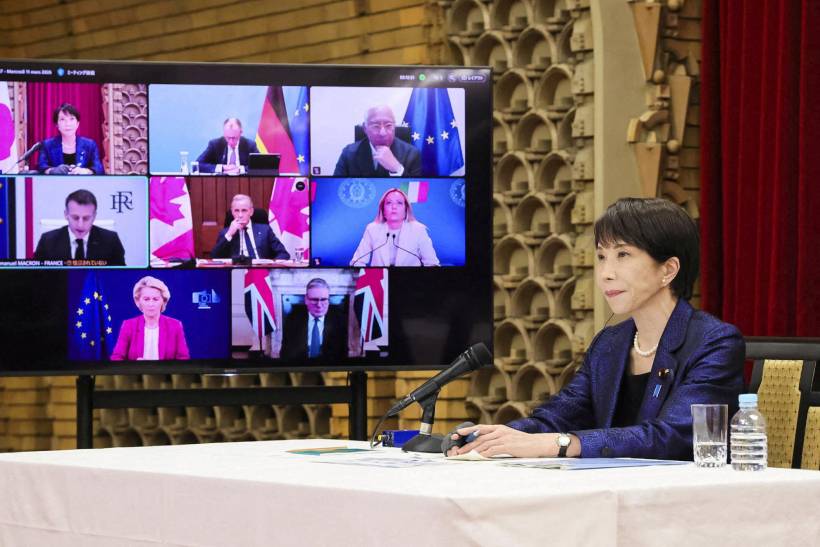
Foreign ministers from the G7 – Britain, Canada, France, Germany, Italy, Japan, and the U.S. – along with the European Union, convened this week at the restored 12th-century Abbaye des Vaux-de-Cernay, about 40 kilometers southwest of Paris.
The two-day meeting comes amid mounting geopolitical and economic pressures: the wars in Ukraine and Iran, global energy disruptions, and uncertainty over the U.S.’s foreign policy direction under President Donald Trump.
Once a forum for broad consensus on economic and security issues, the G7 now faces challenges in maintaining unity, particularly given the perceived unpredictability of U.S. actions.
U.S. Policy Seen as Destabilizing
European allies have expressed growing frustration with abrupt U.S. policy shifts across trade, Ukraine, and now the Middle East.
Stay ahead of the geopolitical week.
MD Briefing delivers expert analysis across five global fronts — the Indo-Pacific, energy, geoeconomics, European security, and the Middle East — every Monday morning. Free.
Thomas Gomart, director of the Paris-based French Institute of International Relations, warned that Washington’s approach has become “an element of destabilization of the international system for all players, not only for members of the G7, but also for China, and many countries worldwide.”
Reflecting these tensions, officials reportedly abandoned attempts to produce a comprehensive final communique, signaling the depth of divisions within the group.
Iran and Energy Security on the Agenda
Allies will seek clarity from U.S. Secretary of State Marco Rubio on American and Israeli military operations in Iran, as well as the existence of viable diplomatic channels to end the conflict.
The closure of the Strait of Hormuz, through which roughly one-fifth of global oil supplies previously transited, remains a key concern for energy security.
Ministers from major economies including Brazil, India, South Korea, and Saudi Arabia are attending, reflecting the G7’s effort to coordinate with broader international stakeholders.
Ukraine: Preventing a Premature Deal
The stalled peace negotiations for Ukraine are another focus. European officials fear that U.S.-led efforts to engage Moscow could push Kyiv toward an unfavourable deal, particularly ahead of U.S. midterm elections in November.
Europeans are pressing for sustained sanctions against Russia, continued military support for Ukraine, and protection of its energy infrastructure ahead of winter.
An Italian diplomatic source noted that ministers would emphasize “firm support for Kyiv and for U.S. mediation efforts, stressing the need to maintain strong pressure on Moscow through sanctions.” Ukraine’s foreign minister is attending the talks.
Other Priorities: Multilateralism and Crime
The meeting also ties into France’s preparations for the G7 leaders’ summit in the Alps next June, including strategies to address global economic imbalances and the crisis of multilateralism.
One area where consensus is possible is the establishment of a G7 task force to combat drug smuggling, reflecting shared concerns beyond the immediate crises.
Implications
The G7 meeting illustrates the challenges facing Western alliances in a turbulent global environment. Divergent priorities, U.S. unpredictability, and simultaneous crises in Iran and Ukraine test the cohesion of long-standing partnerships.
The outcome will influence not only G7 coordination on energy, security, and diplomacy but also broader international efforts to maintain stability amid escalating geopolitical shocks.
With information from Reuters.
