


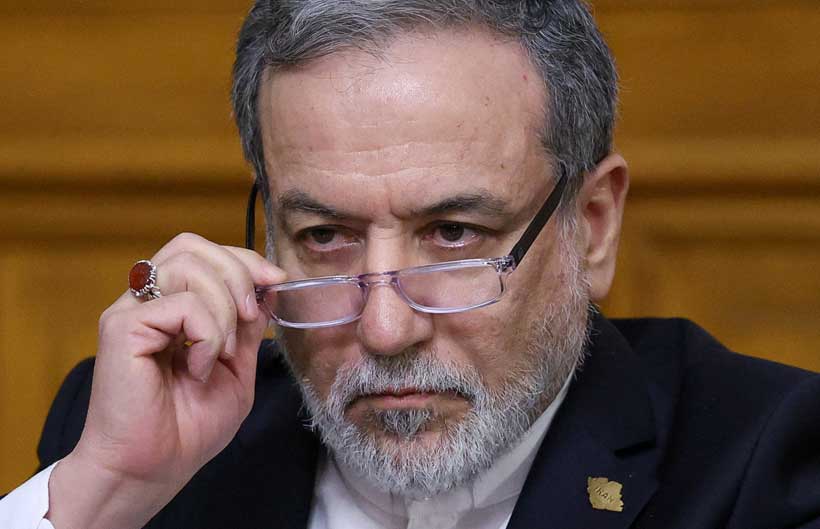
Israel reportedly removed Iranian Foreign Minister Abbas Araqchi and Parliamentary Speaker Mohammad Baqer Qalibaf from its elimination target list following a request from Pakistan, according to a Pakistani source with knowledge of the discussions.
The officials had reportedly been slated for strikes as part of Israel’s broader campaign against Iran during the ongoing conflict triggered by U.S. and Israeli actions earlier this year.
“The Israelis had their coordinates and wanted to take them out. We told the U.S. if they are also eliminated then there is no one else to talk to, hence the U.S. asked the Israelis to back off,” the source said.
Pakistan’s Role as Mediator
Pakistan, alongside Egypt and Turkey, has emerged as a key mediator between Tehran and Washington amid frozen direct channels between the two capitals. Islamabad has maintained consistent communication with both sides and is viewed as a likely venue for potential peace talks.
Stay ahead of the geopolitical week.
MD Briefing delivers expert analysis across five global fronts — the Indo-Pacific, energy, geoeconomics, European security, and the Middle East — every Monday morning. Free.
This intervention highlights Pakistan’s strategic diplomatic position, capable of influencing high-stakes decisions that could prevent escalation and preserve lines of communication.
U.S. Peace Proposal
Iran is currently reviewing a 15-point plan sent by U.S. President Donald Trump through Pakistan. The proposal reportedly includes:
- Removal of Iran’s highly enriched uranium stocks
- Halting further enrichment activities
- Curtailing ballistic missile development
- Cutting funding to regional allies
While Trump has claimed that Iran is desperate to reach a deal, Araqchi has maintained that Tehran is reviewing the proposal but has no plans to engage in direct talks to end the conflict.
Implications
Israel’s decision to remove Araqchi and Qalibaf from its hit list underscores the delicate balance between military objectives and diplomatic strategy. It demonstrates the influence that third-party mediators like Pakistan can exert in high-stakes international conflicts.
By preserving key Iranian officials, the U.S. and Israel maintain a potential communication channel, which could prove critical if the proposed peace framework moves forward.
The episode also reflects the broader geopolitical complexity in the region, where military actions, diplomatic overtures, and third-party interventions are closely intertwined.
Conclusion
Pakistan’s mediation appears to have averted the elimination of two senior Iranian officials, keeping open a crucial pathway for dialogue amid escalating conflict. Whether this intervention translates into tangible peace negotiations remains uncertain, but it highlights how intermediary states can play a pivotal role in de-escalating regional crises.
With information from Reuters.
