


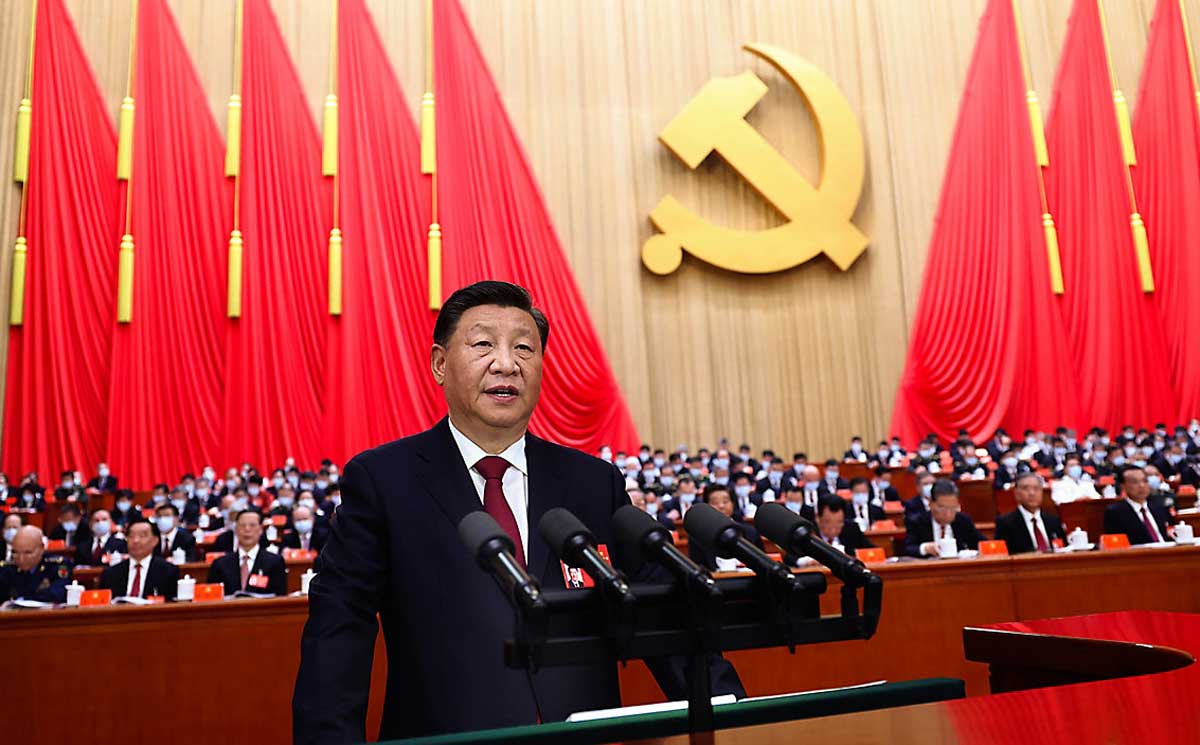
China is working to export its party schools model and political training to African countries, including Egypt, to promote its political ideology and train party and government cadres. China has opened party schools in Zimbabwe, Tanzania, Kenya, and other African nations. Transferring the experience of studying Xi Jinping Thought and the party schools model from China to Africa, and subsequently to Egyptian political parties, is a key focus of China’s party diplomacy for 2024-2026. This initiative aims to enhance governance capabilities and facilitate the exchange of development and political experiences between the Communist Party of China and political forces in the region.
This party cooperation between China and countries in Africa and the Global South focuses on transferring the Communist Party of China’s experience in governance and administration through joint educational programs, training courses, and the establishment of centers for teaching Chinese political thought, with the goal of strengthening political ties. This approach is based on the concept of ideological and political training, a core component of Chinese political education, which is disseminated through exchange and training programs. To disseminate Chinese political thought on governance and administration within the African continent, the Chinese Communist Party (CCP) revitalized the Herbert Chitebo Leadership School in Zimbabwe in 2023. This school has long been a key component of the ruling ZANU-PF party’s strategy for training its cadres and supporters. Beijing’s particular interest in establishing the Herbert Chitebo Leadership School in Zimbabwe stems from its role as an educational and training institution affiliated with the Zimbabwe African National Union-Patriotic Front (ZANU-PF), the ruling party in Zimbabwe.
The school is named after Herbert Chitebo, a prominent Zimbabwean national leader and lawyer who was assassinated in 1975 during the country’s struggle for independence. In May 2024, the CCP signed an agreement with the United Democratic Alliance (UDA) in Kenya to establish a leadership school in Nairobi, reflecting a broader expansion of party-affiliated schools across the African continent.
The plan for studying Xi Jinping Thought on Socialism with Chinese Characteristics for a New Era and its political training, as a doctrine integrating Chinese Marxism with national rejuvenation, is based on several pillars, the most important of which is (Training Content): The training focuses on the concepts of self-reform of the party worldview and methodology and the application of the new developmental thought based on innovation and coordination. It is to be implemented within African and Egyptian think tanks, research centers, and political parties by building intellectual cadres and establishing and organizing intellectual forums, such as the Xi Jinping Thought for China and the World forum, to discuss the Chinese experience at the conceptual and practical levels.
Stay ahead of the geopolitical week.
MD Briefing delivers expert analysis across five global fronts — the Indo-Pacific, energy, geoeconomics, European security, and the Middle East — every Monday morning. Free.
In general, ideological and political education is a common subject in higher education in the People’s Republic of China and is closely linked to the ideology of the Communist Party of China. In compulsory education, this education is known as Ethics and the Rule of Law, while in secondary education, it is known as Ideology and Politics. It is closely linked to the Communist Party of China’s campaigns in the field of patriotic education. Marxist departments at major Chinese universities offer majors and courses in ideological and political education, many of which are mandatory for students in other faculties. Interest in ideological and political education has increased under Xi Jinping, the General Secretary of the Communist Party of China. The term “sizing” has appeared in the People’s Daily nearly 766 times in its history, a term that was uncommon before 2000, with 700 of those appearances occurring during Xi’s leadership. In 2014, Shanghai universities began exploring and implementing the concept of ideological and political education courses. The National Conference on Ideological and Political Work, held in Beijing in December 2016, described this concept not as a specific course or type of course, but rather as an educational concept and a way of thinking. In 2016, the Ministry of Education announced changes to the curricula related to thought and politics for the primary and secondary levels. The three compulsory courses, Ethics and Life (grades 1 and 2), Ethics and Society (grades 3-6), and Thought and Ethics (preparatory stage), were merged into a unified course entitled Ethics and the Rule of Law, while the secondary stage course remained known as Thought and Politics. In 2018, a course on The Situation and Politics was added to the Thought and Politics course, which was expressed in the political outline of the postgraduate entrance exam as The Situation, Politics, Contemporary Global Economics, and Politics.
In 2019, the General Office of the Central Committee of the Communist Party of China and the General Office of the State Council issued Multiple Views on Deepening the Reform and Development of the Curriculum of Ideological and Political Theory in Schools in the New Era, which called for improving the curricula and syllabi of the teaching materials for these curricula, building a team of teachers of these curricula with strong political awareness, a profound sense, new thinking, broad vision, strict self-discipline, and positive character, continuously improving the ideological and theoretical aspects, convergence, and suitability of these curricula, and strengthening the leading role of the Party in their preparation.
In May 2020, the Ministry of Education issued the Guidelines for the Preparation of Ideological and Political Theory Curricula in Colleges and Universities, which clarified the importance of these curricula and specified requirements. On September 1, 2020, Xi Jinping, General Secretary of the Communist Party of China (CPC), published an article in the CPC’s journal Qiushi, stating that ideological and political education is essential for cultivating generations of effective individuals who support the leadership of the CPC. In 2021, the Chinese Ministry of Education organized the preparation of the Study Plan for Xi Jinping Thought on Socialism with Chinese Characteristics for a New Era for primary, junior, and senior high schools. Starting in the fall semester of 2021, primary and junior high schools nationwide began using this textbook. In August 2023, Introduction to Xi Jinping Thought on Socialism with Chinese Characteristics for a New Era was added as a textbook for ideological and political education in colleges and universities.
Therefore, transferring the experience of Chinese leadership schools from China to Africa and then to Egyptian political parties is one of the most important ideas that the leadership of the ruling Communist Party in China can discuss and implement in Egypt. This would serve as a tool for developing Egyptian party cadres and building leadership capabilities, drawing inspiration from the successful Chinese model in Africa and benefiting from the experiences of Chinese leadership schools in Africa. China relies on establishing schools to train political cadres, most notably the Mwalimu Julius Nyerere Leadership School in Tanzania, which aims to train political elites by providing training programs for six ruling parties in southern Africa on governance principles and economic management. Furthermore, (Transfer Chinese expertise): by learning from Chinese experiences, such as transferring the Chinese success story in eradicating poverty and achieving rapid development under strong party leadership. This aims to strengthen party ties between China, Africa, and Egypt by building bridges of communication between the Communist Party of China and various African and Egyptian parties to ensure the continuity of strategic cooperation.
There are numerous examples and models of this cooperation between China and the African continent, such as the exchange of training courses. The Communist Party of China organizes regular courses for cadres from both Egyptian and African political parties, focusing on political thought and governance. The ruling Communist Party also presents (similar, applicable African models): The Communist Party of China signed an agreement in Kenya to establish a leadership school in Nairobi and to revitalize think tanks in other countries, such as the Herbert Chitibo School, a model that China seeks to replicate as a tool of ideological influence in Africa, including Egypt. In addition, there are aspects of (intellectual and academic cooperation): through organizing joint seminars between research centers affiliated with the Communist Party of China and Egyptian universities or political parties to disseminate the Communist Party of China’s vision.
The experience of party schools in Africa involves learning from the Chinese party experience and transferring it to Egypt. This involves studying China’s experience in exporting its leadership school model to Africa as a tool for training cadres, which paves the way for similar models with Egyptian parties. We can understand how the Chinese party experience was transferred to the African model after the opening of a leadership school in Nairobi, Kenya, in cooperation with the United Democratic Alliance Party, and the revitalization of the Herbert Chitibo School of Thought in Zimbabwe to train cadres and supporters of the ruling parties.
As for the mechanisms for transferring and implementing the Chinese party experience in Egypt, the initial groundwork was laid during Egyptian President Abdel Fattah El-Sisi’s visit to the Central Party Academy of the Communist Party of China, the parent institution for training middle and senior officials, to discuss ways to enhance training cooperation. Furthermore, cooperation and dialogue continue through the International Department of the Central Committee of the Communist Party of China with representatives of Egyptian and Arab political parties and think tanks to strengthen the partnership. Considering the current trend of linking political training to economic projects, such as the (TEDA Economic Cooperation Zone) in Egypt’s Suez Canal, to create cadres capable of managing joint development within the framework of China’s Belt and Road Initiative, the objectives of political exchanges between Egyptian and Chinese parties, are: (Capacity Building): equipping Egyptian cadres with the tools of rigorous party management and modern governance techniques; (Strategic Alignment): achieving integration between Egypt’s Vision 2030 and China’s Belt and Road Initiative through political cadres aware of the requirements of strategic partnership, and (Exchanging Common Models between Egypt and China): studying how China achieved rapid growth through reform and opening-up policies and adapting these to suit Egyptian characteristics.
Here, we can benefit from China’s experience and its leadership schools in Africa by applying them to Egyptian political parties in several areas, such as Cadre Development Centers, through the establishment of specialized Egyptian party schools that adopt scientific curricula in management and strategic planning instead of relying on traditional activities. Egyptian parties can also benefit from the Chinese development model by learning from the Chinese experience in how the party manages local development files and small projects. Furthermore, the experience of party discipline from the Chinese Communist Party can be transferred to Egyptian parties by adopting the philosophy of strict organization and building a strong administrative structure within the parties to ensure the effectiveness of young cadres. This is reflected in the current Egyptian movement with China, in various forms, such as academic and professional cooperation: successful models of Egyptian-Chinese cooperation already exist, such as the Luban Workshop and applied technology schools, which can be emulated in the Egyptian political and party sphere.
