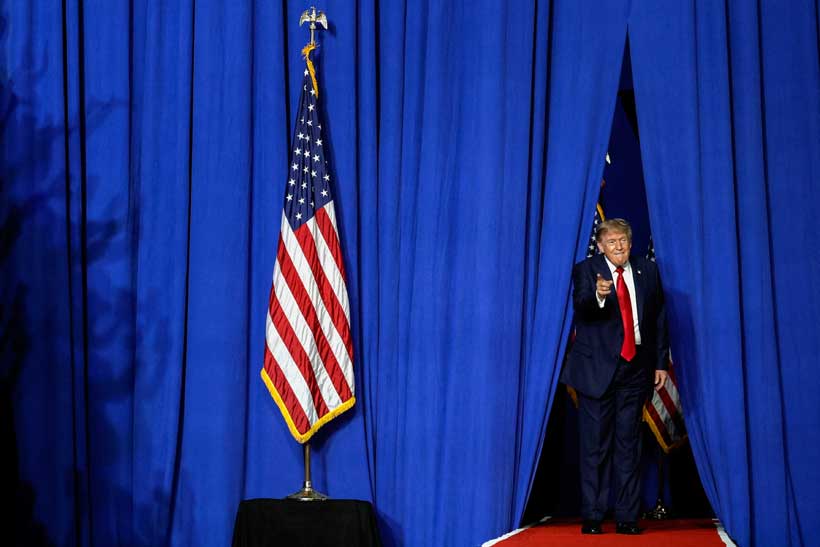
U.S. President Donald Trump has promised to impose strong economic measures on Iran, following remarks by Treasury Secretary Scott Bessent that unprecedented sanctions will be announced soon. Bessent is scheduled to hold a press conference at 2 p.m. EDT on Monday.
The United States, along with the United Nations and the European Union, has imposed various sanctions and trade embargoes on Iran since the late 1970s due to its nuclear program, human rights issues, and support for militant groups. Since the start of the war in Iran in February, the U.S. has increased maritime, energy, and financial sanctions, including a naval blockade. The U.S. Treasury’s Office of Foreign Assets Control has sanctioned over 1,000 individuals, vessels, and aircraft since Trump began his second term.
The latest sanctions have focused on Iran’s hidden oil fleet, shipping insurers, and entities facilitating Iran’s weapons acquisition and digital currency exchanges, leading to the freezing of about $500 billion in Iran-linked cryptocurrency. Iran has criticized these upcoming sanctions, which could further damage its economy. Oil shipments are nearly halted in the Strait of Hormuz, with Iran threatening to target unauthorized oil tankers, intensifying pressure on its economy.
Experts have suggested several strategies the Trump administration may consider. One strategy is to impose sanctions on smaller Chinese “teapot” refineries, which represent a significant portion of China’s refinery capacity and buy a majority of Iran’s oil. While past sanctions have deterred larger refiners, smaller ones could still operate with minimal exposure to the U.S. financial system.
Another potential action includes imposing sanctions on Chinese banks accused of processing Iranian oil transactions and funding weapons procurement. Although the Treasury Department has warned some banks about possible secondary sanctions, they have yet to be specifically targeted, as doing so may provoke retaliation from Beijing.
The U.S. could also continue to target Iranian individuals and entities that help Iran evade sanctions. Recent measures against firms aiding Iran’s oil trading illustrate a “whack-a-mole” tactic, where Iran simply creates new entities to replace those sanctioned. Further sanctions affecting aviation and trade may also be implemented.
Additionally, there are discussions about a land blockade with help from Iran’s neighboring countries, although executing such a plan would be complex. A blockade could significantly impact the Iranian population by halting essential imports, but may not lead to public protests.
Lastly, Trump has threatened tariffs on nations engaging with Iran, although legal challenges have complicated this route. A recent Senate bill aimed at sanctions against Russia may provide Trump with new tariff powers, but it still requires approval from the House of Representatives amidst concerns from both parties.
With information from Reuters