


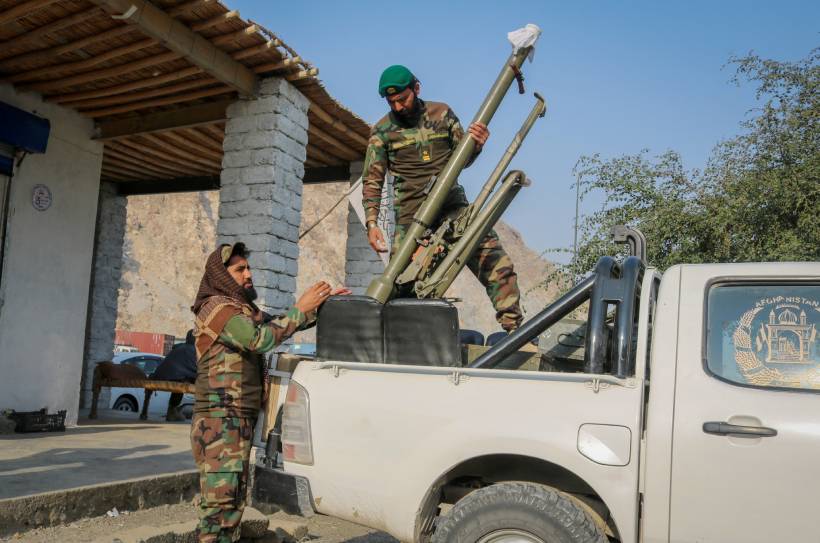
China now looks like the only outside power with enough access, patience, and strategic weight to mediate the Afghanistan-Pakistan conflict in a serious way. Recent reports on China’s mediation efforts suggest Beijing has already helped reduce the intensity of fighting, at least for short periods. Beijing has also made its position public through Wang Yi’s call for talks instead of force and through an official phone call with Amir Khan Muttaqi in which China again pushed for restraint. At the same time, the Chinese foreign ministry’s March 17 press conference made clear that Beijing still wants face-to-face dialogue and a ceasefire. That is the right instinct. The region does not need more military chest-thumping. It needs a state that can speak to both sides without turning every crisis into a morality play. China can do that because it is not a distant commentator. It is a neighbor with trade routes, security interests, and enough leverage to make its words matter.
China’s advantage is not only diplomatic. It is practical. Beijing has spent years building a format in which Afghanistan and Pakistan can meet under Chinese sponsorship, and the Beijing trilateral meeting showed that this channel still exists. China later said that Pakistan accepted its mediation proposal, which is important because mediation cannot work if one side sees the mediator as irrelevant. The reason this matters more now is obvious from the timeline of recent fighting, which shows how fast cross-border clashes have turned into a broader military crisis. It also matters because the old relationship between Islamabad and the Taliban has broken down, as Reuters explained in “What Lies Behind Pakistan’s Attack on the Taliban.” When old understandings collapse, someone must create a new framework. China is trying to do that. It is acting not as a charity worker but as a power that understands peace must be tied to influence, pressure, and economic logic.
The hardest issue in this conflict is militancy, and Pakistan’s complaint is not a fantasy. The current crisis grew out of Islamabad’s claim that armed groups continue to use Afghan territory against Pakistan, a concern repeated in Reuters reporting on what to know about the Kabul strike and in follow-up coverage of the deadliest recent strike in Kabul. More importantly, the UN listing for TTP confirms that this is a designated terrorist organization, and the UN monitoring report says the group has carried out major attacks in Pakistan from Afghan soil. That is why Pakistan’s anger is easy to understand. Kabul may deny formal support, but denial alone does not answer the basic question. Why do these networks keep finding room to operate? A government does not need to sign a paper of support to create danger. Tolerance, weakness, selective blindness, or plain inability can produce the same result. For Pakistan, the outcome is the same: bloodshed inside its borders and constant pressure on its western frontier.
Still, China will only succeed if it deals in facts, not slogans. It is fair to point to the UN listing for Jamaat ul Ahrar, which identifies the group as a TTP splinter based in Afghanistan. It is also fair to note Pakistan’s official statement on attacks from Afghan soil, which says the presence of terrorist elements there is well documented. The case of Baloch militancy also troubles Pakistan, and Reuters’ profile of the BLA shows why Islamabad treats that threat seriously. But the ISKP issue needs more care. It is not accurate to treat the Islamic State as a Taliban proxy, because Reuters also reported on Russia helping the Taliban fight ISKP, which reflects a real conflict between them. China should therefore push Kabul hard on TTP and on any armed activity that targets Pakistan while refusing lazy arguments that collapse all militant actors into one category. Precision is not softness. Precision is the only way to build a credible settlement.
Stay ahead of the geopolitical week.
MD Briefing delivers expert analysis across five global fronts — the Indo-Pacific, energy, geoeconomics, European security, and the Middle East — every Monday morning. Free.
Pakistan, for its part, has tried to frame its preferred outcome in the language of peace, transit, and trade, and that line appears again and again in Pakistan’s Afghanistan relations page, in the March 2025 Kabul visit focused on trade and connectivity, and in Pakistan’s Kabul statement on economic interdependence. That message should not be dismissed as empty wording. Pakistan has a clear interest in a calmer border, more transit, and a region where commerce replaces militancy as the main story. Projects like the World Bank update on CASA 1000 show why this matters. If Afghanistan becomes a corridor instead of a sanctuary, everyone gains. My view is simple: China should mediate firmly, not politely. It should tell Kabul that no government can ask for regional respect while armed groups keep threatening a neighbor from its soil. It should also tell Pakistan that a durable peace needs discipline, diplomacy, and room for trade. If Beijing can combine pressure on militancy with a real economic roadmap, it will not just calm a war. It will shape the future of the region.
