


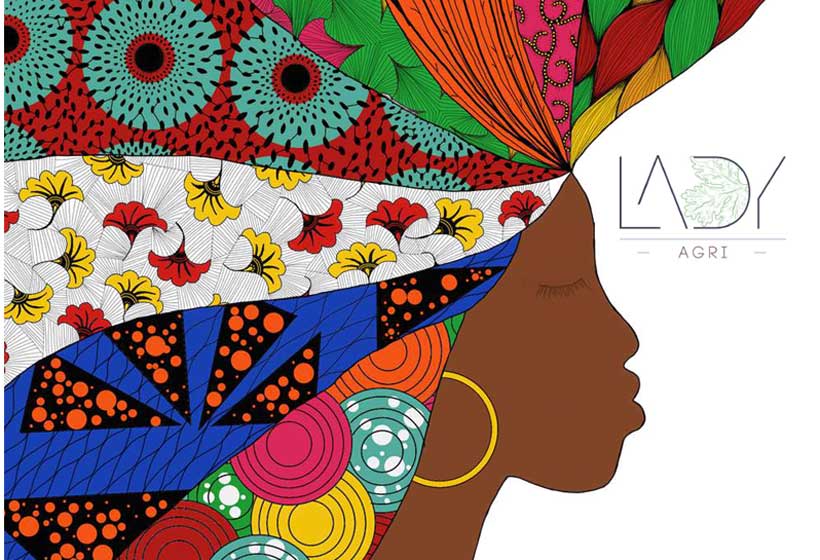
Introduction: Sharing What Works
One might say that in Brussels, much like in the finest salons of society, conversations are abundant-diagnoses even more so. Food insecurity, fragile value chains, migration pressures, climate stress: each topic is discussed with precision, often with urgency.
And yet, dear reader, what is far more rare is the quiet acknowledgment of what truly works.
It is for this reason that I have decided to put pen to paper. Not to add another layer of analysis, but to share an example of practice-one that delivers, one that endures, and one that, if properly understood, could be multiplied.
For good practices do not emerge in isolation. They are built, tested, refined-and above all, shared. Only by recognising and amplifying them can we move from policy ambition to tangible transformation within our European institutions and beyond.
Stay ahead of the geopolitical week.
MD Briefing delivers expert analysis across five global fronts — the Indo-Pacific, energy, geoeconomics, European security, and the Middle East — every Monday morning. Free.
This morning offered one such example.
This morning in Brussels began like many others-structured, purposeful, and filled with meetings. Yet, it quickly turned into something more meaningful.
A Movement, Not Just an Association
Last summer, I had the chance to meet someone who spoke to me about an initiative I had not yet fully grasped: LadyAgri. At that moment, it sounded promising-another network, another project, another initiative to support women in agriculture. But today, in my first meeting with them, I saw it for what it really is.
What I witnessed was not just an association-it was a movement.
What I witnessed was not just a presentation-it was a moment of clarity.
The speaker did not start with numbers and words that often accompany such presentations, but with a simple and undeniable truth: that what we often believe is happening in the future, in some far-off place-with energy costs and fertilizers and international issues-is already happening in our present.
Just as the COVID-19 pandemic reshaped our societies, and just as climate change continues to redefine our future, the fragility of global food systems is no longer someone else’s problem. It is ours.
From there, the tone shifted-from the global to the deeply personal.
Personal Story, Global Vision
2018, she explained, was not just another year. It was a turning point. A moment of decision.
Coming from a family of farmers-her grandfather a small farmer, nine kids to feed on a small patch of land-her path to a university education is a generational leap.
But more importantly, it created a responsibility. A responsibility to give back.
Her experience, including time spent in Ghana, was not simply an accumulation of knowledge, but a catalyst. It pushed her to ask a fundamental question: how can personal opportunity be transformed into collective impact?
The answer, as she framed it, was not abstract. It was a call to action-grounded in purpose, driven by meaning, and anchored in something disarmingly simple: ensuring that people can “get up on a Monday morning and say, it’s time to eat.”
It was at once humble and powerful.
And it set the tone for everything that LadyAgri stands for.
But beyond the narrative, what emerged clearly is that LadyAgri is not driven by rhetoric-it is built as an architecture.
Architecture of Impact: LadyAgri Today
Its full name, LadyAgri Impact Investment Hub, reflects a cooperative of technical expertise, bringing together 27 members across 17 nationalities, united behind a shared social mission. Since its launch in 2018-heralded as a “wind of change”-it has positioned itself as a positive disruptor within agri-value chains.
Today, LadyAgri operates across an entire ecosystem. Whether engaging with women entrepreneurs, cooperative leaders, public authorities, development partners, or investors, it adapts its role-acting as a technical advisor, a trusted pipeline, a gender-smart network, or a mentor and coach. This flexibility is matched by a level of rigor, as it is not only told but also measured through a gender-smart scorecard and a data system that looks at business viability, employment creation, as well as social and environmental performance. The scale is also telling, as it is now reaching over 4,000 SMEs and cooperatives across 17 countries, turning an idea into a structured, data-driven, and growing ecosystem.
This institutional clarity is reflected in its latest milestone.
Food Security from Farm to Fork
On behalf of its Board, LadyAgri expressed both gratitude and ambition with the launch of the SAFAF programme-“Food Security from Farm to Fork”-its first EU co-funded initiative in Côte d’Ivoire. More than a programme, it is a strategic response to a regional reality: a country that plays a key role in feeding its sub-region, while neighboring states such as Burkina Faso and Mali face high risks of food insecurity.
Throughout 2023, LadyAgri supported the creation of nine Agri-Food Development Poles, managed and run by women’s cooperatives.
Through the acceleration of the production and use of innovative green energy processing solutions, women have been able to access the formal markets and finance. The success stories are evident in the reduction of post-harvest losses by more than 70%, with some cases showing tenfold income increases.
However, the other notable initiative is the development of blended finance solutions for women entrepreneurs in Kinshasa and other cooperatives in Cameroon and Togo. These initiatives are not isolated successes; they are the foundation for sustainable and inclusive value chains that generate jobs and skills for women and youth.
But what distinguishes LadyAgri further is its ability to structure markets-not just support actors within them.
Women-Led Clusters and Alliances
Particular pride is placed on the creation of business clusters and women-led commercial alliances across Africa. These clusters are not symbolic; they are functional ecosystems accelerating trade and market access for women across the entire value chain-from farm to fork. They are supported by strategic allies such as the He4She champions, whose role as trusted advisors has been instrumental in this success.
This ecosystem is also enhanced by various types of catalytic funding mechanisms, such as the LadyAgri philanthropic fund managed by the King Baudouin Foundation. In a world that is increasingly uncertain from a climatic and food security point of view, this philanthropic fund has helped women entrepreneurs to become more resilient by embracing a more sustainable and climate-resilient approach to business, incorporating green energy and modern food systems.
But beyond this world of structures, financial models, and strategy, there is something else.
A recognition that impact is not one-directional.
What came out strongly in this process is that there is a two-way relationship between LadyAgri and the women entrepreneurs and cooperatives it supports. It’s not just a one-way street in which they are simply beneficiaries; they are co-creators. They bridge gaps between leadership, financial models, equipment, technology, and digital access in a way that challenges what partnership means in development practice.
However, being “LadyAgri” has come to mean more than just being part of a network. It has come to represent a quality that is based upon a philosophy of equity, inclusion, and social entrepreneurship in which women are not just supported but are empowered.
This philosophy is extended into a larger commitment that change will be most effectively achieved at the intersection of public, private, and financial sectors in which “good business” will create a rising tide of opportunities for women and youth.
A Global Perspective:
Phil Hogan and the International Year of Women Farmers
Yet, as if to remind us that these ambitions extend well beyond Brussels, the morning also offered the rare privilege of encountering another perspective-one that bridged policy, geopolitics, and practical insight. I met Phil Hogan, Ireland’s candidate for the position of Director-General of the FAO in Rome, a figure whose presence immediately commands attention, not least because he stands nearly two metres tall.
Hogan reflected on his journey from European Council formations to agricultural innovation: “As one of my staff used to say in DG Agri, nobody goes home,” he remarked wryly, describing the continuity and persistence required in public service. Over the past three years, he has been exploring, often “under the radar,” the direction of travel for agriculture and food policy, in partnership with experts across Europe and Africa. Their focus: how agri-food systems are developing and how much more must be done to realize Africa’s untapped potential.
He spoke vividly of an initiative that will shape 2026: Ireland’s co-sponsorship of the International Year of Women Farmers under FAO auspices. In his words, women farmers in Africa will be “center stage” in harnessing the continent’s vast agricultural potential-a task made urgent by the projection of 1.2 billion more people on the continent over the next 20 years.
Hogan’s observations resonated deeply. “Food security, in the context of today’s geopolitical challenges, is no longer taken for granted,” he said. The message was clear: it is now, not in some distant future, that we must act to ensure resilient, productive, and equitable food systems-not only in Europe but globally.
Listening to him, I realized how this perfectly fit into the LadyAgri model – women-led, structured, evidence-based, and aware of the challenges in the world. Hogan and LadyAgri also reminded me that the future of agriculture is not an abstract concept but a human effort based on foresight, collaboration, and most importantly, action.
As in any fine chronicle, it is only at the end that one truly understands the authors behind the story.
The Women Behind LadyAgri
For “LadyAgri” is not a single voice, nor a distant institution.
It is, in fact, the convergence of two remarkable women-each bringing vision, discipline, and conviction to a shared mission:
Hilary Barry
Ayélé Sikavi Gabiam
Two voices, one purpose.
And, one might say, a quiet force-already reshaping the future of agri-value chains, far beyond the rooms in which we so often speak about them.
Seeds of Transformation
Thus, dear reader, as the chandeliers of Brussels twinkled this morning, and the discussions of policy and practice blended together, one thing was certain: transformation is not ushered in by thunder, nor is it sparked by lightning. Transformation is ushered in, rather, by a soft, insistent tide-by those individuals with a vision, with courage, and with an unwavering commitment to their purpose.
With LadyAgri, we have witnessed such a tide. Two remarkable women-Hilary Barry, and Ayélé Sikavi Gabiam – have not simply created an association, but have cultivated a movement. And as their network of women entrepreneurs continues to spread across continents, redefining markets, bridging gaps, and providing economic security, one thing is certain: the seeds these women plant today will flourish tomorrow, and tomorrow’s tomorrow.
One might think that these triumphs belong only to faraway fields or distant offices. Yet, as this morning reminded me, the lessons of LadyAgri are meant for all who dare to act: share what works, nurture it, and multiply it. For in doing so, we ensure that the art of good practice-like the finest of social secrets-is never hidden, and always finds its way into the world.
And as whispers of ambition and impact lingered in the room, I could not help but smile: Brussels, Rome, or the sun-drenched fields of Côte d’Ivoire – the story of LadyAgri is, indeed, one the world must read.
