


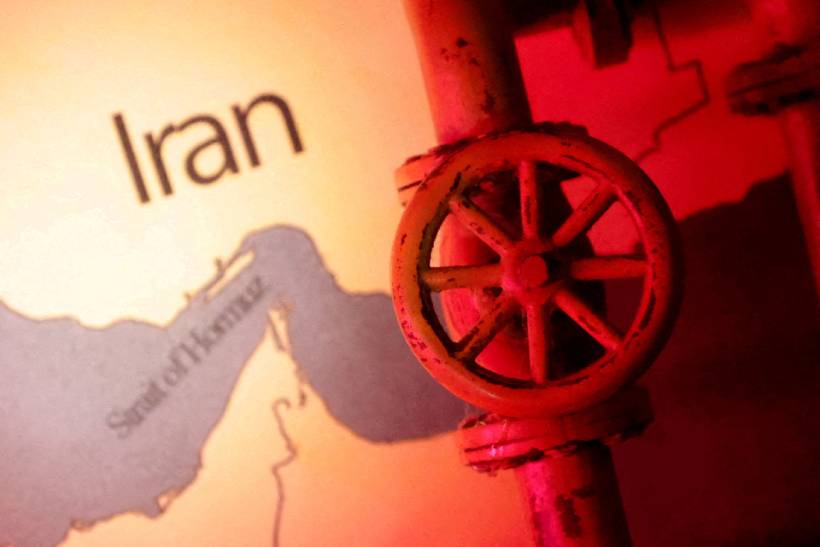
The race by Gulf importers to reroute food, medicines, and factory supplies is more than a temporary logistics headache. It is a reminder that the region’s prosperity still rests on a narrow maritime doorway that can turn into a trap without warning. As Gulf oil producers scramble to bypass Hormuz, the old assumption that trade will always keep flowing looks badly shaken. That was always a fragile belief, because the U.S. Energy Information Administration has long described the Strait of Hormuz as the world’s most important oil transit chokepoint. For years, Gulf economies enjoyed the efficiencies of concentration, fast ports, short sea links, and lean inventories. Now they are learning that efficiency without backup is not strength. It is exposure.
What makes this crisis especially serious is that it is not confined to crude exports. The Financial Times reports that shipping in the region has turned into a kind of commercial wild west, with bookings suspended, cargo dropped at substitute ports, and rates shooting higher. That commercial chaos is reinforced by Maersk’s own operational updates, which show surcharges, disruptions, and a constant rewriting of schedules. This matters more in the Gulf than in many other regions because import dependence is so deep. An IMF study notes that GCC countries import about 85 percent of the food they consume. When a place relies this heavily on imported essentials, every delay becomes political, every detour becomes expensive, and every freight decision starts to look like a national security issue.
To the region’s credit, the search for alternatives has been immediate and practical. Saudi Red Sea exports are surging, which shows that bypass routes can soften the blow when the Gulf route is blocked. The kingdom is not improvising from nothing, because Aramco’s annual reporting makes clear that the East West pipeline was built to give Saudi Arabia export flexibility. The same logic is now spreading into non oil trade. Emirates Global Aluminium is moving exports and raw materials through Oman, a striking example of how companies are trying to stitch together land and sea corridors on the fly. These are sensible moves, but they also expose a deeper problem. A system that depends on emergency rerouting every time a single chokepoint is hit is not resilient. It is merely adaptive under stress.
Shipping companies are making the same calculation in harsher terms. Reuters reports that Maersk is redistributing vessel fuel and prioritising critical cargo such as food and medicine. The International Energy Agency says the closure is also putting more than 4 million barrels a day of refining capacity at risk, which means this is no longer only about ships waiting offshore. It is about refineries filling up, downstream production losing outlets, and the whole trade system becoming more brittle by the day. Even humanitarian concerns are now entering the debate, with a senior United Nations official calling for food and medicine cargo to be allowed through. Once a trade route becomes a corridor for exceptions and emergency pleas, the illusion of normal commerce is already gone.
Stay ahead of the geopolitical week.
MD Briefing delivers expert analysis across five global fronts — the Indo-Pacific, energy, geoeconomics, European security, and the Middle East — every Monday morning. Free.
The market reaction shows just how quickly logistics problems become strategic shocks. The UAE is considering joining a U.S. led effort to secure the strait, which tells you that commerce alone cannot protect commerce. Meanwhile, oil prices have pushed above 108 dollars a barrel during the latest escalation, and the pressure is even sharper in physical markets, where Oman related crude grades have surged above 150 dollars a barrel. Add to that Iran’s warnings aimed at Gulf energy installations, and the region starts to look less like a logistics hub and more like a zone where every port, pipeline, and industrial site has become part of a wider battlefield. That is not a market problem. It is a structural vulnerability.
Gulf officials often talk about world class logistics, and there is truth in that. Jebel Ali connects to more than 150 ports worldwide, and the wider Gulf has spent decades building ports, free zones, and storage facilities that many regions would envy. But scale is not the same as resilience. IMF work on GCC resilience shows just how large the region’s trade exposure remains, while UNCTAD continues to document how central Hormuz is to tanker, bulk, and container traffic. My view is that the Gulf’s real mistake was not relying on trade. It was relying on a model that prized speed and concentration over redundancy. That model looked modern in calm times. In a crisis, it looks dangerously thin.
The larger lesson goes beyond this week’s headlines. Reuters notes that the current energy shock is already pushing countries to rethink dependence on vulnerable fossil fuel routes. The Gulf should apply that same lesson to food, medicines, and industrial inputs. It needs backup corridors through Oman and the Red Sea, deeper shared reserves, faster cross border customs coordination, and supply contracts that value reliability as much as price. The closure of Hormuz is not just exposing a shipping problem. It is exposing a development model that became very rich, very fast, and a little too confident that geography could be managed like an accounting line.
