


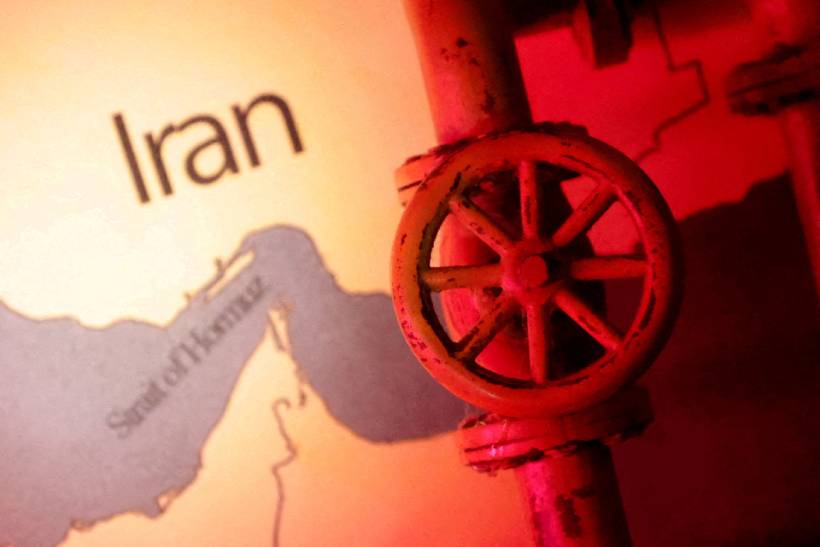
The United States is seeking international support to restore navigation through the Strait of Hormuz after its closure during the conflict with Iran. The disruption has choked a vital global energy artery that carries roughly one fifth of the world’s oil and gas supplies, sending crude prices sharply higher and raising fears of a broader economic slowdown.
Oil market shock and economic risks
Global oil prices have surged to multi year highs, with Brent crude briefly crossing 125 dollars a barrel. The spike reflects concerns over prolonged supply disruptions, which are feeding inflation and increasing fuel costs worldwide. Sustained high prices risk weakening economic growth and intensifying political pressure on governments.
US strategy and coalition push
Washington is proposing a new international framework, the Maritime Freedom Construct, aimed at reopening the waterway. The plan involves coordinating naval presence, intelligence sharing, and sanctions enforcement to ensure safe passage for commercial shipping. The effort signals a shift toward multilateral burden sharing rather than unilateral action.
Escalating conflict dynamics
The crisis stems from ongoing hostilities between the United States, Israel, and Iran, which began after strikes earlier this year. Donald Trump is reportedly considering further military options to pressure Tehran back to negotiations, while Iran has warned of severe retaliation and vowed to continue disrupting maritime traffic. The risk of escalation remains high as both sides exchange threats.
Stay ahead of the geopolitical week.
MD Briefing delivers expert analysis across five global fronts — the Indo-Pacific, energy, geoeconomics, European security, and the Middle East — every Monday morning. Free.
Stalled diplomacy and nuclear tensions
Negotiations remain deadlocked over Iran’s nuclear programme. Tehran insists on its right to uranium enrichment for civilian purposes, while Washington demands stricter limits. Disagreements over sequencing and conditions for talks have prevented progress, prolonging both the military and economic standoff.
Strain on Iran’s economy
The conflict is placing heavy pressure on Iran’s economy, with its currency weakening and inflation surging. Sanctions and disrupted exports are compounding internal challenges, while political shifts within Iran’s leadership are strengthening hardline factions.
Regional mediation efforts
Countries such as Pakistan are attempting to mediate between Washington and Tehran to avoid further escalation. However, with both sides holding firm positions, diplomatic breakthroughs remain uncertain.
Analysis
The closure of the Strait of Hormuz represents one of the most serious threats to global energy security in years. The US push for an আন্তর্জাতিক coalition reflects recognition that maintaining open sea lanes is a shared global interest, especially for major energy importing nations.
However, forming such a coalition will be politically complex. Key allies may hesitate to participate without a ceasefire, fearing deeper involvement in a volatile conflict. This limits the immediate effectiveness of Washington’s strategy.
At the same time, the crisis highlights how tightly global markets are tied to geopolitical stability in the Gulf. Even temporary disruptions can trigger sharp price spikes, underscoring the vulnerability of supply chains.
In the longer term, the situation could accelerate shifts toward energy diversification and alternative routes, but in the short term, much depends on whether diplomatic efforts can de escalate tensions. Without progress, the risk of prolonged disruption and wider regional instability will remain high.
With information from Reuters.
