


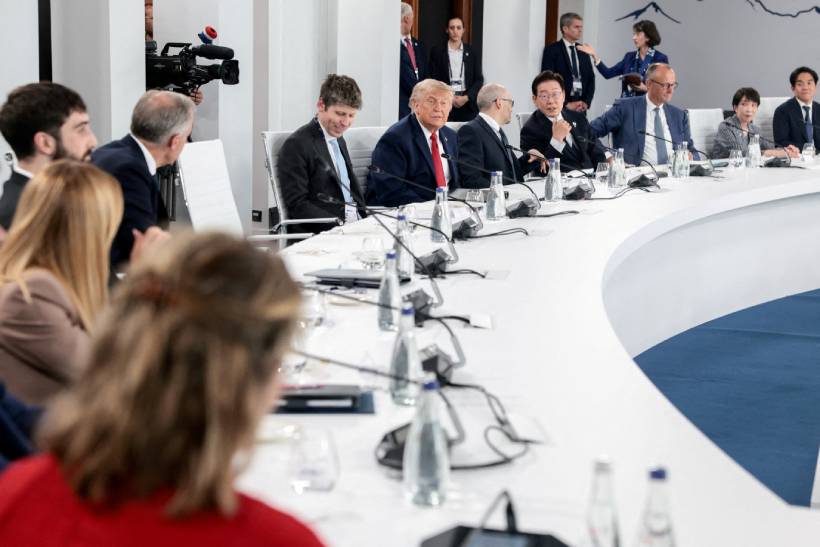
The Group of Seven (G7) foreign ministers are meeting in Paris on Monday to assess whether President Donald Trump’s midterm election setback will affect Washington’s approach to Ukraine, the Middle East and relations with its closest allies. The gathering offers the first opportunity for European and other partner governments to hear directly from US Secretary of State Marco Rubio about the administration’s foreign policy priorities following Democratic gains in Congress.
Although the election results could narrow the White House’s political room for manoeuvre, diplomats from four G7 countries have cautioned against expecting a return to traditional American multilateralism. Foreign policy remains firmly under Trump’s control, meaning allies are unlikely to see an immediate change in Washington’s international posture.
The meeting has taken on added significance as diplomatic efforts to end the war in Ukraine intensify, tensions surrounding Iran remain unresolved and France seeks greater international coordination over Lebanon.
Rubio Faces Allies Amid Questions Over Trump’s Political Position
The Paris gathering will mark Rubio’s first appearance before US allies since the midterm elections. The secretary of state, who is also viewed as a potential Republican presidential contender in 2028, will face questions about how the administration intends to navigate a more difficult domestic political environment.
Stay ahead of the geopolitical week.
MD Briefing delivers expert analysis across five global fronts — the Indo-Pacific, energy, geoeconomics, European security, and the Middle East — every Monday morning. Free.
The G7 comprises the United States, Britain, Canada, France, Germany, Italy and Japan, alongside the European Union. Ministers from Ukraine, Saudi Arabia, Egypt, South Korea and Brazil are also attending.
Democratic gains could increase congressional scrutiny of the administration’s foreign policy decisions, particularly military commitments, financial assistance and relations with strategic partners. However, the extent to which this will constrain Trump remains uncertain.
For Washington’s allies, the central question is whether the president will adjust his diplomatic approach or continue pursuing policies that have sometimes placed the United States at odds with European governments.
Ukraine Takes Centre Stage Ahead of Abu Dhabi Talks
Ukraine is expected to dominate the discussions, which come ahead of trilateral talks between Ukraine, Russia and the United States in Abu Dhabi on Tuesday. Officials from France, Britain, Germany, NATO and the European Commission are also seeking to be present in the Emirati capital, although they are not expected to participate in the trilateral format.
European governments are increasingly concerned that fragmented diplomatic initiatives could weaken their influence over the future of the conflict.
Italian Prime Minister Giorgia Meloni warned on November 5 that Europe risks becoming irrelevant in efforts to end the war if individual governments continue pursuing separate diplomatic approaches instead of agreeing on a common representative and strategy.
Her warning highlights a broader European dilemma. While European states remain important supporters of Ukraine, their ability to shape negotiations depends partly on whether they can coordinate their positions and maintain influence in discussions led by Washington.
The military situation also remains difficult. Diplomats described a largely stabilised front line, with major territorial breakthroughs appearing unlikely. However, Russia has increasingly focused on attacking Ukrainian energy infrastructure, raising fears of widespread power shortages and a potential nationwide winter blackout.
Ukraine’s immediate military vulnerability is its shortage of Patriot interceptors and other air-defence systems. G7 ministers are therefore expected to discuss ways to sustain pressure on Moscow while mobilising additional military, financial and energy assistance for Kyiv.
Iran War Raises Concerns Among US Allies
Iran will also feature prominently in the discussions. Washington’s G7 partners have repeatedly expressed scepticism about the US approach to the conflict, fearing that further American military action could intensify regional instability rather than produce a durable settlement.
The issue exposes a familiar divide within the alliance. While the United States retains considerable military influence in the Middle East, European governments are concerned about the wider consequences of escalation, including regional insecurity and disruption to international energy markets.
The midterm results could make the administration’s domestic political calculations more complicated, but they do not necessarily mean Washington will reduce its military involvement. Allies will be looking for indications of whether Trump intends to pursue further pressure on Tehran or create more room for diplomatic engagement.
France and US Differ Over Lebanon’s Security Arrangements
The G7 meeting could also reveal differences between Paris and Washington over the future security framework in southern Lebanon.
France is advocating a new United Nations-backed arrangement to replace existing security provisions, which are due to expire at the end of the year. Paris has also floated the possibility of an international force involving France and Italy.
However, French officials privately acknowledge that Washington is reluctant to support some of these proposals. The issue presents an opportunity for the two allies to narrow their differences before the current arrangements expire.
For France, the objective is to maintain an international role in stabilising Lebanon and prevent further deterioration in regional security. For the United States, the challenge is to balance its own regional priorities with the expectations of European partners seeking a more substantial diplomatic role.
What Happens Next?
The Paris meeting is unlikely to produce a fundamental shift in US foreign policy. Instead, its importance lies in giving Washington’s allies an opportunity to assess how much political pressure Trump faces at home and whether that pressure could influence his international decisions.
The upcoming Abu Dhabi discussions will provide an early indication of whether the United States and its partners can coordinate their approaches to Ukraine. Meanwhile, disagreements over Iran and Lebanon will test the G7’s ability to maintain a common position on Middle Eastern security.
Ultimately, Trump’s midterm setback may change the domestic political environment surrounding American foreign policy without necessarily changing its direction. For G7 governments, the challenge will be determining whether Washington remains a predictable partner or whether they must prepare for greater strategic independence.
With information from Reuters.
