


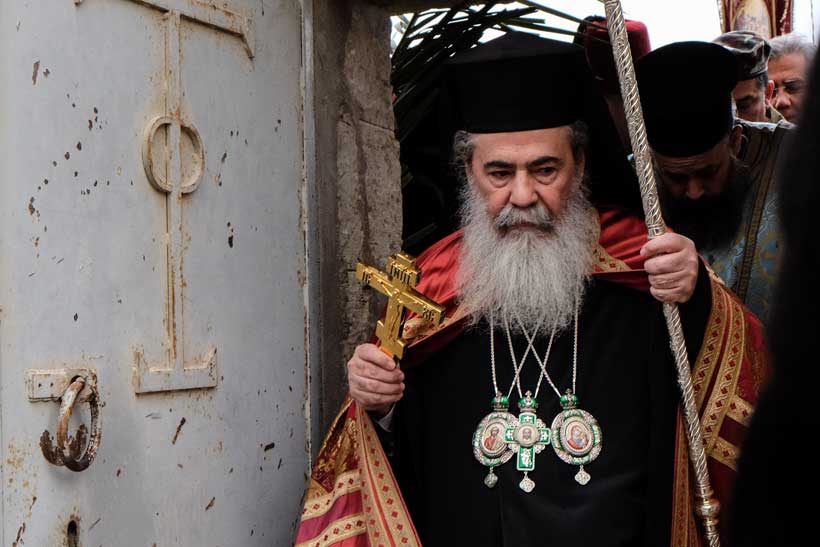
The meeting between Russian President Vladimir Putin and Patriarch Theophilos III of Jerusalem on November 5 highlighted the increasingly complex relationship between ecclesiastical diplomacy and geopolitical interests. Beyond the official discussions on Christian communities in the Middle East and possible dialogue over Ukraine, the encounter reflected the delicate position of Jerusalem between Moscow and Constantinople, whose relations remain deeply affected by the dispute over Ukrainian autocephaly.
The presence of Patriarch Kirill of Moscow reinforced the ecclesiastical significance of the meeting. Earlier discussions between the two patriarchs had addressed difficulties in inter-Orthodox relations, while Putin’s decision to award Theophilos the Russian Order of Friendship publicly acknowledged the longstanding ties between Russia and the Patriarchate of Jerusalem.
For Moscow, the meeting provided an opportunity to demonstrate that its relations with the ancient Orthodox Patriarchates remain active despite its rupture with Constantinople. For Jerusalem, it formed part of a broader diplomatic approach aimed at preserving communication with different centers of political and ecclesiastical influence.
Jerusalem’s Position in Orthodox Diplomacy
Stay ahead of the geopolitical week.
MD Briefing delivers expert analysis across five global fronts — the Indo-Pacific, energy, geoeconomics, European security, and the Middle East — every Monday morning. Free.
The Patriarchate of Jerusalem occupies a distinctive position within Orthodoxy. Its authority derives from its apostolic heritage and its responsibility for the principal Christian holy sites, while its institutional survival requires continuous engagement with governments and religious communities across the Middle East.
Unlike churches closely associated with a particular nation-state, Jerusalem operates within a politically fragmented environment. Its diplomacy has traditionally depended on maintaining relationships with competing political actors while protecting the historic rights and privileges governing the Holy Places.
This explains the significance of Theophilos’ recent international contacts. His meeting with US President Donald Trump in June 2026, followed by his visit to Moscow, reflects an effort to sustain access to different geopolitical centers without formally identifying the Patriarchate with their respective political agendas.
Nevertheless, such encounters inevitably carry political implications. In Moscow, Theophilos expressed appreciation for Russia’s support for the historic Status Quo arrangements in Jerusalem, while the Russian leadership emphasized its longstanding commitment to Christian communities in the region.
The relationship serves different purposes for each side. Jerusalem seeks international support for its institutional responsibilities, while Moscow maintains a connection with one of Christianity’s most historically significant ecclesiastical centers.
Moscow, Constantinople, and the question of Orthodox unity
The broader significance of the visit becomes apparent when placed within the continuing dispute over the Orthodox Church of Ukraine.
The Ecumenical Patriarchate’s decision to grant autocephaly in 2019 was rejected by Moscow, which broke Eucharistic communion with Constantinople. The disagreement extended beyond Ukrainian jurisdiction, exposing competing interpretations of primacy, conciliarity, and the distribution of authority within the Orthodox Church.
Since then, relations with the ancient Patriarchates have acquired particular importance for the Russian ecclesiastical leadership. Jerusalem and Antioch have maintained communication with Moscow without recognizing the Ukrainian autocephaly, preserving institutional channels that remain significant for inter-Orthodox diplomacy.
The meeting between Kirill and Theophilos therefore carried implications beyond bilateral cooperation. Their discussion of difficulties in inter-Orthodox relations suggested that the unresolved divisions within Orthodoxy remain part of the agenda.
Yet Jerusalem’s position cannot be reduced to Moscow’s ecclesiastical strategy. Theophilos maintains relations with the Ecumenical Patriarchate and has repeatedly presented dialogue as a necessary condition for preserving Orthodox unity.
This dual engagement creates diplomatic opportunities but also exposes Jerusalem to competing expectations.
The Significance of the Constantinople Initiative
The timing of Theophilos’ visit to Moscow adds another dimension. Ecumenical Patriarch Bartholomew has invited the Patriarchs of Alexandria, Antioch, and Jerusalem to a gathering in Constantinople on November 30, seeking to strengthen consultation among the four ancient Eastern Patriarchates.
The initiative reflects the historical responsibility of these Churches in addressing questions affecting Orthodox unity, particularly at a time when political conflicts increasingly influence ecclesiastical relationships.
Jerusalem’s engagement with Moscow shortly before the Constantinople meeting illustrates the complexity of its position. There is no evidence that the Kremlin visit was intended to challenge Bartholomew’s initiative. Nevertheless, the sequence highlights the existence of parallel diplomatic channels within Orthodoxy.
For Constantinople, the gathering represents an opportunity to reaffirm its coordinating role. For Moscow, continued relations with Jerusalem and Antioch demonstrate that its estrangement from the Ecumenical Patriarchate has not resulted in broader ecclesiastical isolation. For Jerusalem, maintaining communication with both centers offers a means of preserving diplomatic flexibility.
The central question is whether these parallel initiatives will contribute to renewed consultation or consolidate the divisions that have emerged since 2019.
Ukraine and the Limits of Ecclesiastical Mediation
The Moscow meeting also brought forward Theophilos’ proposal to contribute to dialogue between Russia and Ukraine. The initiative followed his earlier contacts in Washington, where he had discussed the possibility of supporting efforts towards peace.
His proposal reflects an established dimension of religious diplomacy, through which ecclesiastical leaders attempt to facilitate communication in conflicts involving communities linked by a common religious tradition.
However, Ukraine presents particular difficulties. The war has intensified disagreements over ecclesiastical jurisdiction, while the Moscow Patriarchate’s public support for the Russian leadership has complicated the possibility of religious mediation.
Theophilos’ remarks in Moscow also attracted criticism in Ukrainian media, particularly regarding his description of the conflict and his positive references to Putin. Such reactions demonstrate the difficulty of maintaining the perception of impartiality required for a credible mediation initiative.
No publicly confirmed agreement has established Jerusalem as an accepted intermediary between Moscow and Kyiv. The distinction between expressing readiness to mediate and securing the confidence of both parties remains essential.
The Diplomatic Balance of Jerusalem
The meeting between Putin and Theophilos illustrates the continuing relevance of ecclesiastical institutions within international diplomacy. Historical legitimacy and religious authority provide channels of communication that operate alongside conventional state diplomacy, even when their practical influence remains limited.
For Jerusalem, these channels are necessary to protect its religious responsibilities and its position in the Holy Land. For Moscow, they contribute to preserving relationships within a fragmented Orthodox world. For Constantinople, the challenge remains the preservation of ecclesiastical cohesion and the exercise of its traditional coordinating responsibilities.
These objectives are not necessarily incompatible, but they reflect different understandings of institutional authority and diplomatic priorities.
The significance of the Kremlin meeting therefore lies less in the immediate prospect of mediation over Ukraine than in the wider ecclesiastical relationships it reveals. Jerusalem continues to engage with Moscow while maintaining its place within the historical framework of Orthodox relations centered on the ancient Patriarchates.
Whether this diplomatic flexibility strengthens Jerusalem’s ability to facilitate dialogue or exposes it to increasing pressure from competing ecclesiastical centers will depend on subsequent developments.
At a time when political divisions have become closely intertwined with questions of Orthodox jurisdiction and authority, the Patriarchate of Jerusalem faces the challenge of preserving its institutional independence while remaining an active participant in the search for ecclesiastical unity.
