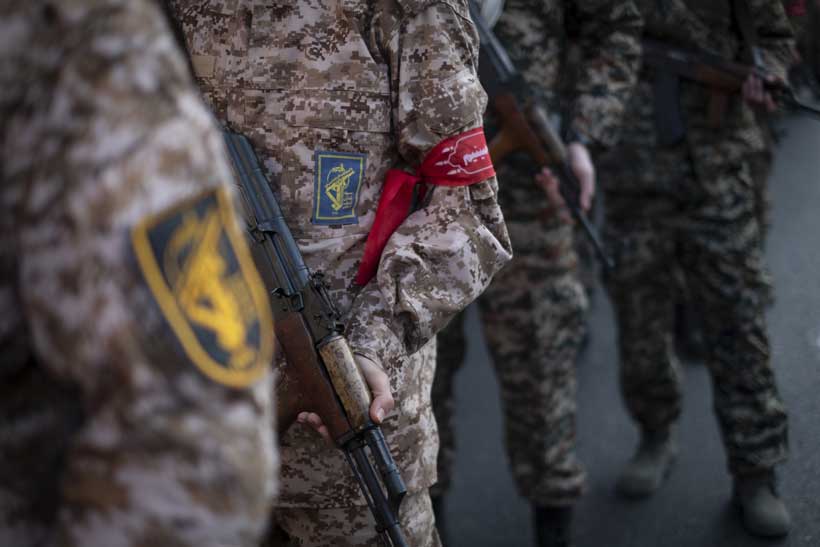
Iran has developed a covert network of military agencies capable of global operations to import over $2 billion in military supplies, including hardware, explosives, and heavy-duty trucks since January 2025. This effort enables Iran to bypass US naval blockades and Western sanctions, as revealed by a Reuters investigation. The network includes more than 5,000 agencies linked to the Ministry of Defense, facilitating a strong financial and military operation that has been active since at least 2016. Many of these agencies are associated with the Islamic Revolutionary Guard Corps (IRGC) and elite-run business groups in Iran known as bonyads.
The investigation sheds light on how the IRGC is restocking its missile and drone resources amid ongoing conflicts. Between January 2025 and June 2026, one agency, MOD 346428, imported extensive quantities of essential materials for rockets and drones, including heavy-duty trucks that can act as missile launchers. The goods primarily came from China, Russia, and Germany, transported through various means including land, sea, and air. This research utilized numerous Iranian bank records, government data, and corporate filings to outline the agencies’ operations.
All agencies share an official address with Iran’s Ministry of Defense. Although marked as incorporated in 1979, they were actually founded around 2013 due to sanctions that severely impacted Iran’s oil exports and economy. This network stands as the main component of Iran’s military procurement strategy and sanctions evasion efforts, employing a complicated system of foreign shell companies and frontmen to finance their operations through illicit oil profits.
This arms import network plays a critical role in providing the necessary materials for Iran to manufacture missiles and drones utilized in attacks against Gulf energy infrastructures. The investigation highlights how Iran managed to bear US pressure by exploiting illegal revenue sources, including cryptocurrencies and gambling platforms, while the IRGC has gained control over strategic waterways like the Strait of Hormuz.
Stay ahead of the geopolitical week.
MD Briefing delivers expert analysis across five global fronts — the Indo-Pacific, energy, geoeconomics, European security, and the Middle East — every Monday morning. Free.
Despite ongoing US sanctions against Iran’s military, none of the agencies listed have been assigned official designations by Western governments, suggesting they operate in a relatively unchecked environment. An expert on Iranian sanctions described this network as essential for the regime’s military sustenance. The defense procurement system established here shows how Iran can fund its military and maintain its weapons programs even in the face of external pressures.
The Reuters investigation also indicates that almost all shipments Iran received were recorded as military equipment and generally exempt from duties. Senior military leaders involved in missile and drone programs track these materials through various means, including state media and social outlets. The import data shows that many transactions were completed without moving currency across borders, which helps evade sanctions, as 97% of the reviewed shipments occurred without direct currency transfers.
The secret military agencies operate outside the formal economy, allowing Iran to utilize offshore illicit oil earnings for acquiring military equipment. One identified military unit is involved with Iran’s ballistic missile program, while another, Sahara Thunder, faces US sanctions for supplying drones to Russia. During the early months of this year, the import data indicates that significant deliveries included a variety of explosives and components crucial for drone and missile production, evidencing a large-scale initiative to bolster Iran’s military capabilities.
The United States and Israel have focused on disrupting Iran’s ballistic missile and drone operations since the war began on February 28, targeting factories that produce munitions. Despite these efforts, Iran continues to attack its neighbors and vessels in the Strait of Hormuz. Iran is receiving materials through various channels, including cargo ships from Russia, trucks from Central Asia, and planes from China.
In a response to questions about these findings, China’s Foreign Ministry claimed it was unaware of the situation and denied any involvement in supporting Iran. Similarly, there were no responses from Russia’s Defense Ministry, the White House, or CENTCOM regarding Iran’s military activities. Iran is also acquiring precision machinery capable of manufacturing military equipment, including computer-controlled machines and furnaces, indicating its desire to enhance its military manufacturing capabilities.
U.S. President Donald Trump expressed doubt that China and Russia were aiding Iran, suggesting if any support existed, it would be minimal and widely known. Since the war’s onset, data indicates that Iran’s military sourced around $27 million worth of goods mainly from the United Arab Emirates, despite ongoing attacks on UAE infrastructure and oil tankers. A recent UAE shipment of electronics occurred shortly after a temporary suspension of a U.S. naval blockade, which resumed. The UAE government denied any allegations of support for Iran, asserting its commitment to preventing illicit activities.
Arms experts, including Noam Binstok, have analyzed the vast network behind Iran’s global sanctions evasion efforts. Binstok discovered numerous numbered agencies involved in these operations while examining Bank Sepah documents. These agencies are crucial for facilitating financial activities related to the Iranian Revolutionary Guard Corps (IRGC). Many of these accounts had substantial deposits, revealing the scale of Iran’s financial operations hidden from view for a long time.
After initially pausing his investigation due to personal commitments, Binstok resumed and found the same agencies were involved in importing dual-use equipment and financing through illegal oil sales. This led him to realize the significant extent of these financial networks. Each agency could be linked to Iran’s corporate registry via unique identification numbers, allowing for tracking and revealing the flow of funds.
Binstok collaborated with Reuters to map these agencies, using the identification numbers to analyze shipping documents and import records. A notable agency identified was MOD 346428, which significantly increased its imports over the years and had become one of Iran’s top importers. From January 2025 to June 2026, MOD 346428 reportedly imported $2.3 billion in military hardware, highlighting the ongoing efforts to equip Iran despite international scrutiny.
Between January and April 2025, MOD 346428 imported 886 tonnes of chemicals, primarily sodium chlorates and perchlorates, from China to Iran’s Bandar Abbas port. These chemicals are essential for solid rocket fuel. An explosion occurred on April 26 at the port, reportedly caused by igniting sodium perchlorate stored in shipping containers. The explosion resulted in the deaths of at least 70 people and injured over 1,200. A company called Sina Port and Marine Services Development Co, owned by Bonyad Mostazafan, was responsible for storing the chemicals. The CEO of Sina stated that a “false statement” led to the delivery of the chemicals without proper documentation. It remains unclear if the final shipment was responsible for the explosion.
The US sanctioned Bonyad Mostazafan in 2020, alleging that it was a vehicle for the supreme leader of Iran to enrich his office. The organization is managed by Hossein Dehghan, a former defense minister and an individual linked to past violent incidents involving Iran. He did not comment on the explosion or related matters.
Alongside chemical imports, Iran brought in heavy-duty trucks that can be used as mobile missile launchers. In autumn 2022, a dealer in Italy purchased six Iveco trucks, later shipped to Dubai and ultimately delivered to Bandar Abbas, with connections to MOD 346428. Import data indicated that the trucks were sent to Sahara Thunder, a company involved in drone manufacturing. After 2025, MOD 346428 imported an additional 435 Iveco trucks, some of which were tracked utilizing satellite imagery to a customs lot near Tehran.
Iveco, the manufacturer, stated that it ensures products are not used for military purposes and that it does not have oversight over sales made by third parties. It denied any complicity in the sales identified by Reuters and asserted that most trucks imported by Iran were intended for Central Asia.
Additionally, MOD 346428 imported thousands of Toyota Hilux and Land Cruiser trucks, which are modified by the IRGC to carry heavy machine guns. Video from protests in Iran showed security forces using these vehicles. In January 2025, four Toyota Tundras were also imported for the IRGC’s drone transportation.
A spokesman for Toyota stated that the company does not conduct business in Iran and is unaware of any purchases reported by Reuters. Japan’s Ministry of Economy, Trade and Industry stated it cannot comment specifically on the Reuters investigation but emphasized strict controls over goods related to national security and the importance of informing businesses about export regulations.
On February 9, 2026, a shipment of 93 tonnes of unwrought Chinese titanium arrived in Bandar Abbas. Experts noted that this metal can be used to manufacture missile airframes and rocket motor casings. Leading up to the war starting on February 28, a total of 268 tonnes of nitrocellulose and 276 tonnes of chemicals, including those for rocket propellent and explosives, were also imported from China. Although a blockade existed during the war, Iran’s military continued to import materials. Initial monthly imports fell 47% to $54 million in March but rose to $77 million by May.
In June 2026, the final shipment of Russian detonators, valued at $1.9 million, arrived in Iran. These detonators can trigger high explosives for drones and missiles. Since early 2025, similar shipments had totaled $7.6 million. Additionally, despite sanctions from the European Union against Iran’s Defense Ministry, companies within the EU shipped a significant amount of goods to Iran, including hundreds of millions of dollars in trucks, airplane engine components, and electronics.
Detailed descriptions of many shipments were lacking; Reuters often used customs codes to identify contents and origins without independent verification. An EU spokesperson mentioned that it is up to individual member states to enforce sanctions, while Germany and Italy did not respond to requests for comments regarding their actions.
Iran’s economy is heavily influenced by bonyads, quasi-governmental foundations led by the elite, which were established after the 1979 Islamic Revolution. These foundations maintain the elite’s power through a patronage system and play a role in the violent repression of citizens, a point supported by both U.S. and European sanctions. One significant foundation is responsible for promoting government propaganda related to resistance, sacrifice, and martyrdom, deeply intertwined with the Ministry of Defense (MOD).
Transactions by this foundation include various imports and cash transfers linked to MOD agencies. In 2017, it received shipments of electronics and refrigeration units that also matched the MOD identifier. The purpose of these materials remains unknown, but they are associated with senior leaders in the Islamic Revolutionary Guard Corps (IRGC), who hold significant power within the provinces.
Evidence suggests that IRGC units led by General Hassan Shahvarpour have committed violent acts, including the killing of civilians during protests in 2019. Following U.S. sanctions due to human rights abuses, Shahvarpour received public praise at religious ceremonies, indicating continued support despite his actions. In 2021, he requested substantial funds from a state-run steel company for an IRGC building project. Throughout early 2023, his forces responded violently to widespread demonstrations against economic issues, resulting in numerous casualties and arrests.
State media later showed IRGC convoys in Khuzestan, highlighting a pink Shahed drone among their vehicles, illustrating the military and governmental ties within Iran’s complex ecosystem of power and repression.
With information from Reuters