


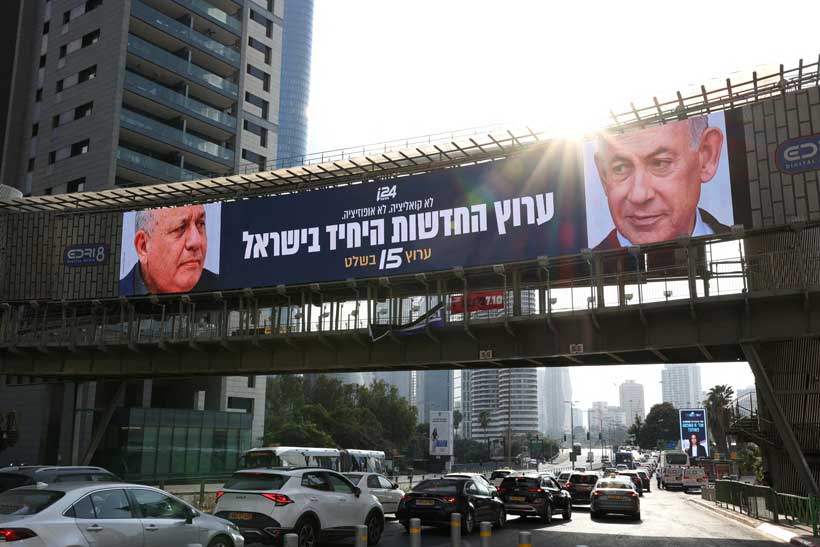
Israeli Prime Minister Benjamin Netanyahu and his political allies are competing to form the next government after an election left Israel’s parliament without a clear majority for either major political bloc. Although preliminary projections indicate that Netanyahu’s Likud-led bloc could emerge with the most seats, neither he nor his main rival, Gadi Eisenkot, has secured a clear path to forming a government.
The next stage will involve completing the vote count, publishing the official results and negotiating alliances with smaller political parties. If those negotiations fail, Israel could face another election, leaving the current government in place as a caretaker administration.
The outcome will determine who leads Israel through its continuing security challenges, including the conflicts involving Iran, Lebanon and Gaza, as well as domestic disputes over political leadership and public accountability.
When Will the Final Results Be Announced?
Israel’s Central Election Committee is counting ballots, including votes cast by military personnel and diplomats stationed abroad. While television exit polls have offered an early indication of the balance between the competing blocs, they cannot establish the final distribution of parliamentary seats.
Stay ahead of the geopolitical week.
MD Briefing delivers expert analysis across five global fronts — the Indo-Pacific, energy, geoeconomics, European security, and the Middle East — every Monday morning. Free.
The final vote tally is expected by October 30, with the official election results scheduled for publication on November 4.
The distinction matters because relatively small changes in party vote shares can affect which parties enter parliament and how many seats each bloc receives. In a closely divided legislature, even a handful of seats could influence the coalition negotiations.
Why Is Forming a Government So Difficult?
Israel uses a proportional representation system in which parliamentary seats are allocated according to parties’ shares of the national vote. A party must receive at least 3.25% of the vote to qualify for seats in the 120-member Knesset.
Around a dozen parties are considered capable of crossing that threshold, making the final allocation particularly important.
Neither Netanyahu’s Likud party nor Eisenkot’s Yashar party can govern independently. Instead, the candidate seeking to become prime minister must assemble a coalition of parties that collectively command at least 61 seats.
Smaller parties can therefore exercise considerable influence over government formation. Their support may come with demands over ministerial appointments, budget priorities, security policy or other political commitments.
The final results will determine which alliances are mathematically possible, but negotiations will decide whether those alliances can become politically workable.
How Is Israel’s Next Prime Minister Chosen?
Once the official results are available, President Isaac Herzog will consult political party leaders to determine which candidate has the strongest prospects of forming a government.
Herzog will then nominate a candidate, who will have up to 42 days to assemble a governing coalition.
If the nominee succeeds, the proposed government must secure the necessary parliamentary support. If the candidate fails, another politician may receive an opportunity to form a government under Israel’s constitutional procedures.
The process can take weeks, particularly when parties disagree over policy or the distribution of government positions.
If no candidate succeeds in forming a government, another election may be called. Until a new administration takes office, the existing cabinet continues in a caretaker capacity.
What Could Happen to Netanyahu and Eisenkot?
Netanyahu’s immediate challenge is to secure enough support from allied parties to reach the parliamentary majority required to govern. Even if his bloc wins the largest number of seats, that outcome alone would not guarantee his return as prime minister.
Eisenkot faces a similar challenge in assembling an alternative coalition. Arab parties outside the two main blocs could influence the balance of power, but political disagreements and limits on potential partnerships could complicate his negotiations.
The final seat distribution will therefore be central to both candidates’ prospects. Each will need to persuade smaller parties that joining their coalition offers a workable route to government.
The election does not automatically remove Netanyahu from office, nor does it establish Eisenkot as his successor. Those questions will be resolved through the formal appointment process and the negotiations that follow.
Could Israel Hold Another Election?
Yes. If the nominated candidate cannot secure a viable coalition and subsequent attempts also fail, Israel could return to the polls.
The country has experienced repeated periods of political deadlock, including four inconclusive elections within two years before Netanyahu returned to power in late 2022.
Another election would extend the uncertainty over Israel’s domestic leadership and potentially delay decisions on budgets, legislation and other policy priorities.
For now, the decisive stages are the completion of the vote count, Herzog’s consultations with party leaders and the coalition negotiations that follow. Until a candidate can demonstrate support from at least 61 lawmakers, Israel’s next government remains uncertain.
With information from Reuters.
