


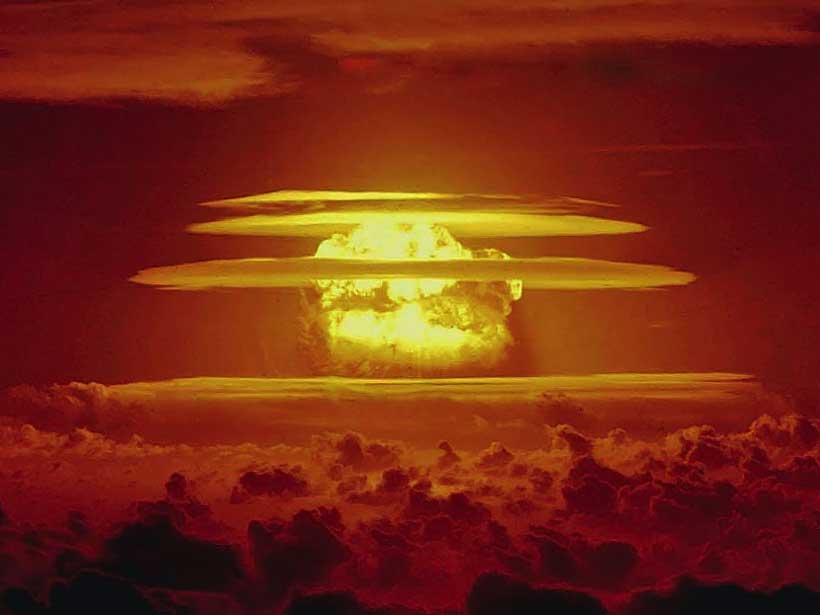
Thirty years after the Comprehensive Nuclear-Test-Ban Treaty opened for signature, the most consequential recent event in the life of the global testing moratorium produced no nuclear yield at all. On 30 September, the US National Nuclear Security Administration conducted a subsurface chemical high-explosive experiment at the Nevada National Security Site to sharpen its ability to detect “decoupled” nuclear explosions, blasts set off inside large underground cavities to muffle their seismic signature. The stated reference point was a test Washington says China carried out at Lop Nur in June 2020. The experiment was non-nuclear, consistent with the US moratorium and aimed at a genuine detection gap. Politically, it marks something more corrosive: compliance with the testing norm is increasingly being judged by national claims that rivals cannot inspect and the multilateral system cannot confirm.
That shift, rather than an imminent return to full-scale detonations, is the pressing problem. Every state with nuclear weapons except North Korea has observed the ban on test explosions since its adoption, even though the treaty has never entered into force. The norm has rested on two pillars: restraint among the major powers, and a broadly trusted body of evidence capable of exposing a breach. Both are eroding at the same time, and the second is eroding faster than the first.
The argument here is not that a test is imminent, nor that any single capital’s claims are false. It concerns process. The mechanisms that once allowed states to settle a compliance dispute are weakening, and without them the norm becomes hostage to whichever side tells the more confident story.
to read the full analysis, please subscribe to our Premium MD Briefing
Stay ahead of the geopolitical week.
MD Briefing delivers expert analysis across five global fronts — the Indo-Pacific, energy, geoeconomics, European security, and the Middle East — every Monday morning. Free.
