


China has deployed naval forces to monitor a US warship near a disputed shoal in the South China Sea, while a separate maritime confrontation between Chinese and Taiwanese coast guard vessels near the Pratas Islands has added to regional tensions.
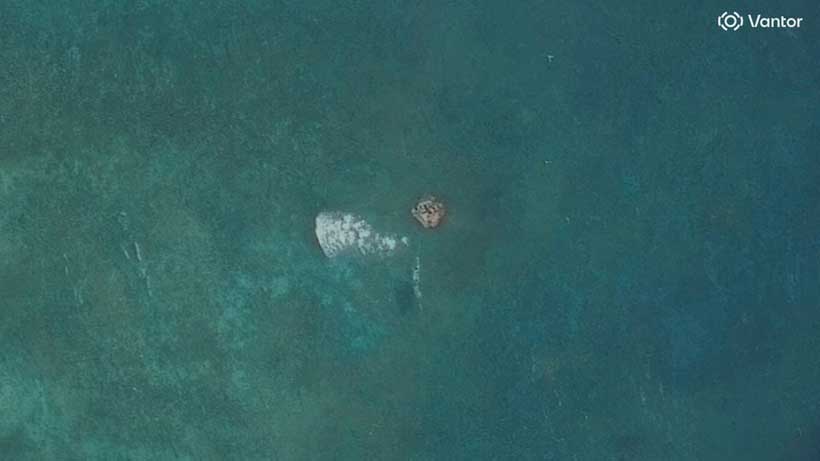
China’s military said on Tuesday that the USS Charleston had “illegally intruded” into waters adjacent to Sabina Shoal in the Spratly Islands without Beijing’s approval. The US Navy had not immediately responded to a request for comment.
China’s Southern Theatre Command said it had dispatched naval forces to track and monitor the American vessel, accusing Washington of infringing on China’s sovereign rights and threatening regional stability. Beijing called on the United States to stop such activities.
The US Navy generally describes similar missions as freedom of navigation operations, which are intended to challenge maritime claims that Washington considers inconsistent with international law. Its last known operation of this kind in the South China Sea was more than a year ago.
Stay ahead of the geopolitical week.
MD Briefing delivers expert analysis across five global fronts — the Indo-Pacific, energy, geoeconomics, European security, and the Middle East — every Monday morning. Free.
Why Is Sabina Shoal a Flashpoint?
The South China Sea remains one of Asia’s most contested maritime regions. China claims almost the entire waterway, despite overlapping claims by Brunei, Malaysia, the Philippines, Taiwan and Vietnam.
Sabina Shoal has become a particular source of friction between China and the Philippines, a US treaty ally. Both countries contest sovereignty over the shoal and the wider Spratly Islands archipelago.
Tensions have persisted despite diplomatic efforts to manage maritime disputes. Last month, a Chinese Coast Guard vessel rammed a Philippine boat conducting a refuelling mission near Sabina Shoal, according to the Philippine Coast Guard. Beijing blamed the collision on the Philippine side.
The latest encounter involving the USS Charleston adds another dimension to the dispute, bringing American naval activity into an already sensitive area where Chinese and Philippine vessels have repeatedly confronted one another.
Taiwan Reports Separate Maritime Confrontation
Further north, Taiwan’s Coast Guard reported a separate standoff involving a Chinese Coast Guard vessel near the Taiwan-controlled Pratas Islands.
Taiwan said the Chinese ship entered restricted waters near the islands on Tuesday, prompting it to dispatch the coast guard vessel Taichung to warn the Chinese vessel away. Both sides broadcast messages to each other as the confrontation continued.
According to Taiwan’s Coast Guard, the Chinese vessel declared that the “so-called Republic of China does not exist,” referring to Taiwan’s official name. The Taiwanese vessel responded by asserting that the Republic of China, Taiwan, was a sovereign and independent country.
China’s Taiwan Affairs Office did not immediately respond to a request for comment.
The incident follows another dispute last week, when the office warned Taiwan to “bear the consequences” after its coast guard used a water cannon against a Chinese fishing boat near the Pratas Islands.
Located between southern Taiwan and Hong Kong, the islands are lightly defended, with security responsibilities falling to Taiwan’s Coast Guard.
What Does This Mean for Regional Security?
The two incidents highlight the continuing risk of maritime confrontations across the South China Sea and the waters surrounding Taiwan. Although the encounters involve separate territorial disputes, both reflect Beijing’s efforts to reinforce its claims and challenge activities by governments and militaries that contest them.
For Washington, maintaining naval access to international waters remains an important element of its regional strategy. For Beijing, the presence of American warships near disputed features is a challenge to its territorial claims and maritime influence.
The Philippines’ mutual defence treaty with the United States adds further strategic significance to confrontations around Sabina Shoal. A serious incident involving Philippine and Chinese vessels could raise questions about Washington’s treaty commitments and increase the risk of a broader confrontation.
The Taiwan-related standoff presents a different but equally sensitive challenge. Beijing considers Taiwan part of China and has not ruled out using force to bring the island under its control, while Taiwan maintains its own government and security forces.
Neither incident, by itself, establishes that a wider conflict is imminent. However, repeated encounters involving naval and coast guard vessels increase the possibility of miscalculation, particularly when competing sides issue contradictory sovereignty claims and operate in close proximity.
The immediate question is whether the latest confrontations will remain limited maritime incidents or contribute to a further deterioration in relations between China, the United States, Taiwan and the Philippines.
With information from Reuters.
