


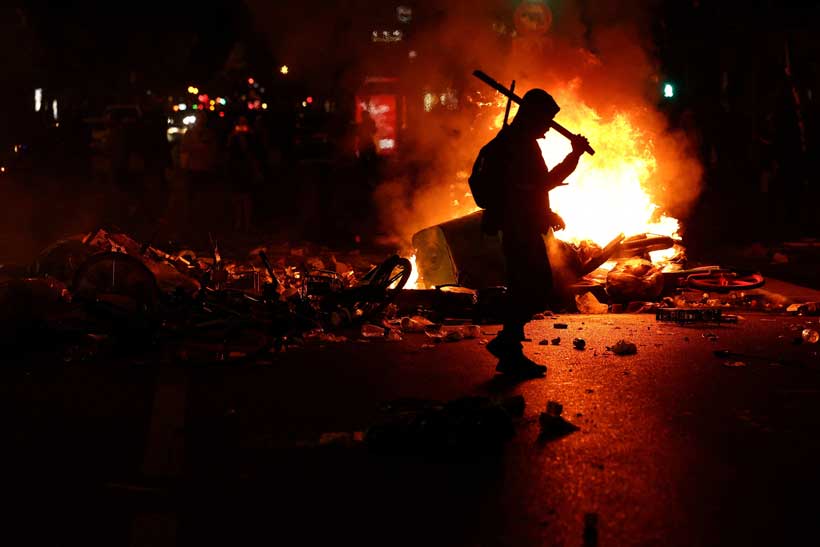
France remained calm overnight under targeted curfews following a weekend of violence and looting, but fresh demonstrations planned for Saturday are testing the government’s ability to restore order and address growing public anger.
Prime Minister Sébastien Lecornu said on Tuesday that the curfews had helped maintain calm and could be extended wherever necessary. The measures followed unrest in major cities, including Paris, Marseille and Lyon, where rioters and looters exploited security gaps after demonstrations.
The government is under pressure to demonstrate that it has learned from the security failures and can protect public spaces as protests spread beyond schools into broader grievances over living costs and public services.
Justice Minister Gérald Darmanin said 123 people arrested over the weekend were in detention awaiting trial. In a separate television appearance on Monday evening, he said around 2,500 people remained in custody for questioning.
Stay ahead of the geopolitical week.
MD Briefing delivers expert analysis across five global fronts — the Indo-Pacific, energy, geoeconomics, European security, and the Middle East — every Monday morning. Free.
Why Are Protests Spreading Across France?
The unrest began with high-school strikes and demonstrations over deteriorating school facilities and declining educational standards. It has since developed into a wider expression of frustration over rising prices and concerns that essential services, including healthcare, housing and welfare, are failing to meet public needs.
The growing demonstrations reflect mounting dissatisfaction with the government’s response to everyday economic pressures and the condition of public institutions.
France’s political climate is adding to the pressure. With presidential elections scheduled for April and May next year, candidates from the far right and far left are competing to capitalise on public discontent.
The government must therefore manage both the immediate security crisis and the broader political consequences of protests driven by economic and social grievances.
Students and Yellow Vests Plan Further Action
France’s main student union, UNEF, has pledged to continue demonstrations against President Emmanuel Macron and his government, demanding improvements to what students describe as an underfunded and deteriorating education system.
Separately, groups identifying themselves as gilets jaunes, or yellow vests, have called for scattered protests against rising fuel costs.
The yellow vest movement emerged in 2018 during Macron’s first term in response to plans to increase petrol taxes. It subsequently developed into a broader protest movement, with traffic blockades and recurring street violence continuing for months.
Its renewed mobilisation could widen the current unrest by bringing fuel prices and household affordability more directly into the demonstrations.
However, France’s main labour unions, including the CGT, have not joined calls for Saturday’s protests. Their absence could limit participation by organised workers, although it does not guarantee that demonstrations will remain small or peaceful.
Can the Government Restore Public Confidence?
Lecornu has promised to examine the security failures exposed by the weekend’s violence, acknowledging that the response included both successes and serious mistakes.
“There were things that went well, and things that were screwed up,” he said, reaffirming his determination to restore order.
The immediate challenge is to prevent further looting and violence without intensifying tensions with demonstrators whose grievances extend beyond public security. Curfews may provide temporary relief, but they cannot resolve disputes over education funding, living costs or the quality of public services.
The government must also prepare for the possibility that Saturday’s demonstrations will bring together groups with different demands, complicating efforts to manage crowds and distinguish peaceful protesters from those engaging in violence.
For Macron’s administration, the coming days will be a test of both policing and political leadership. Maintaining calm overnight has offered the authorities a temporary reprieve, but the durability of that calm will depend on how effectively they manage the next round of demonstrations and respond to the underlying causes of public frustration.
With information from Reuters.
