


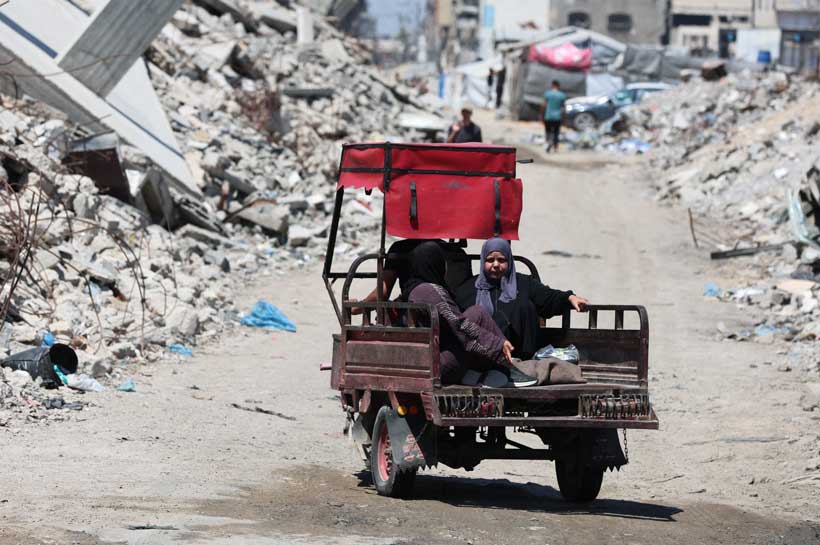
The United Nations World Food Programme (WFP) is cutting food assistance to hundreds of thousands of Palestinians in Gaza because of funding shortages, reducing support at a time when widespread hunger, displacement and a lack of basic services continue to affect the territory.
The agency said it would reduce the number of people receiving monthly food assistance from 1.6 million to 1.1 million, leaving approximately 500,000 people without that support. The cuts also include smaller food rations, reduced cash assistance and fewer daily hot meals for displaced families who lack facilities to prepare their own food.
The decision highlights the growing pressure on humanitarian operations in Gaza, where aid agencies are struggling to meet needs despite a ceasefire agreement intended to pave the way for an end to the conflict and eventual reconstruction.
How Deep Is Gaza’s Food Crisis?
The WFP said approximately 1.4 million people, representing around two-thirds of Gaza’s population, face crisis levels of food insecurity or worse. About 200,000 people are experiencing emergency conditions.
Stay ahead of the geopolitical week.
MD Briefing delivers expert analysis across five global fronts — the Indo-Pacific, energy, geoeconomics, European security, and the Middle East — every Monday morning. Free.
Alongside the reduction in monthly food assistance, the agency has halved food rations and cut cash support for 75,000 families. The number of daily hot meals available has fallen from 250,000 to 150,000. In some hard-to-reach areas, families now receive a hot meal only every other day.
These reductions affect people who rely on humanitarian assistance to meet basic needs, particularly displaced families living in temporary shelters with limited access to cooking facilities, reliable food supplies and essential services.
The WFP has warned that it urgently needs $450 million over the next six months to maintain critical operations in Gaza and the Israeli-occupied West Bank.
Why Are Humanitarian Operations Under Pressure?
Funding shortages are forcing aid agencies to make difficult decisions about how to distribute increasingly limited resources. For the WFP, the immediate consequence is a reduction in both the number of people reached and the amount of assistance available to each household.
The timing is particularly concerning as Gaza approaches another winter. Many displaced Palestinians continue to live in inadequate shelters, while access to basic services and reliable supplies remains limited.
Carl Skau, the WFP’s acting executive director, described conditions in Gaza as still brutal, despite the ceasefire agreement reached last year.
“There is no proper shelter,” Skau told Reuters during a visit to Gaza. He also cited the lack of basic services, safety and security, warning that the approaching winter would place additional pressure on an already difficult humanitarian situation.
Skau urged international donors to maintain their support, arguing that continued funding is necessary not only to meet immediate needs but also to protect progress already made and support early recovery.
Has the Gaza Ceasefire Improved Conditions?
The ceasefire agreement brokered by the United States last year envisaged an eventual reconstruction process for Gaza. However, progress towards implementing the broader agreement has remained limited, including on arrangements involving Hamas’s disarmament and an Israeli military withdrawal.
Israeli forces continue to hold more than 60% of the territory and carry out near-daily airstrikes, according to the report. Hamas retains control over most of the areas where more than two million Palestinians live, many of them in temporary shelters.
The continuing insecurity and the challenges facing humanitarian operations complicate efforts to move from emergency relief towards recovery. Even when food assistance reaches affected communities, inadequate shelter, damaged infrastructure and limited access to essential services can leave families exposed to further hardship.
The latest WFP reductions also underline how humanitarian relief depends on sustained financing. A ceasefire may create opportunities to expand assistance, but it does not automatically restore livelihoods, rebuild homes or guarantee that humanitarian organisations have the resources needed to operate at scale.
Palestinians Warn of Worsening Hunger
The Hamas-run Gaza government media office described the WFP announcement as “catastrophic” and warned that the reductions could accelerate famine in the territory. It called for increased funding for humanitarian agencies to prevent conditions from deteriorating further.
For displaced residents, the cuts represent another setback after years of conflict and repeated disruption to daily life.
Sabrine Kuhail, a Palestinian woman speaking near a tent shelter in the Nuseirat refugee camp in central Gaza, expressed frustration over the continued deprivation experienced by families.
Her remarks reflected the exhaustion of residents who have endured war, destruction, restrictions and the loss of basic security, with many still dependent on external assistance for food and other necessities.
The reductions could leave vulnerable households with fewer options for securing regular meals, particularly where employment, income and access to markets remain disrupted.
What Happens Next?
The immediate challenge for the WFP is securing enough funding to sustain its operations over the next six months. Its $450 million requirement places pressure on international donors to decide whether to increase contributions or risk further reductions in assistance.
The consequences extend beyond the number of food parcels or meals distributed. Sustained humanitarian support is also essential to help families meet basic needs while longer-term recovery remains uncertain.
For Gaza, the gap between the ceasefire’s reconstruction commitments and conditions on the ground remains significant. Without additional resources and more stable conditions for humanitarian operations, aid agencies may struggle to maintain even their reduced programmes.
The WFP’s announcement is therefore both a warning about immediate food insecurity and a reminder that humanitarian commitments require reliable funding. For hundreds of thousands of Palestinians facing another winter in displacement, further cuts could make an already precarious situation even harder to endure.
With information from Reuters.
