


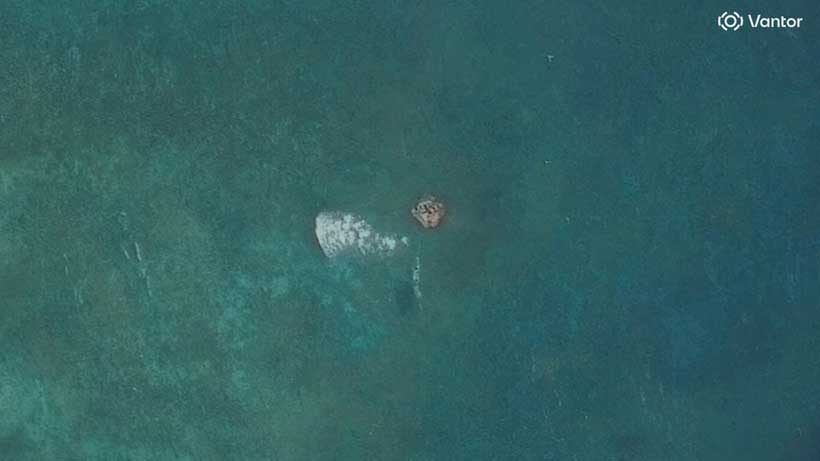
China has warned Taiwan that it must “bear the consequences” of using a water cannon against a Chinese fishing boat near the Pratas Islands in the South China Sea, escalating tensions as Taipei reports increased Chinese military activity around the island.
The incident occurred earlier this month when a Taiwan Coast Guard vessel used a water cannon against a Chinese fishing boat that allegedly failed to respond to warnings to leave restricted waters near the Taiwan-controlled islands.
Taiwan’s Coast Guard said the fishing boat subsequently suffered engine failure and was towed away by a nearby Chinese vessel.
Chen Binhua, spokesperson for China’s Taiwan Affairs Office, said Beijing had “indisputable sovereignty” over the Pratas Islands and surrounding waters. He described Chinese vessels operating in the area as acting legally and said Beijing would protect the lives and property of Chinese citizens.
Stay ahead of the geopolitical week.
MD Briefing delivers expert analysis across five global fronts — the Indo-Pacific, energy, geoeconomics, European security, and the Middle East — every Monday morning. Free.
Chen accused Taiwan of treating mainland vessels in a dangerous and aggressive manner, claiming that its actions were deliberately escalating cross-strait tensions. He warned that Taiwan would have to accept the consequences but did not specify what measures China might take.
A Taiwanese official with direct knowledge of the situation told Reuters that the Coast Guard had conducted normal law enforcement and responded carefully and proportionately to the incident.
Why the Pratas Islands Matter to China and Taiwan
The Pratas Islands lie between southern Taiwan and Hong Kong and are controlled by Taipei. Their location makes them strategically significant in the broader dispute between China and Taiwan.
The islands are more than 400 kilometres (250 miles) from Taiwan, leaving them geographically exposed to potential Chinese military pressure. Security experts consider them vulnerable to a Chinese attack because of their distance from Taiwan’s main territory.
The islands are designated as a national park and contain an airstrip but have no permanent civilian population.
Beijing claims democratically governed Taiwan as part of China and rejects all Taiwanese sovereignty claims, including those concerning the Pratas Islands. Taipei rejects Beijing’s territorial claims and maintains control over the islands.
Chinese coast guard vessels have increased patrols in the surrounding waters, adding another layer of tension to an already sensitive maritime environment.
Taiwan Warns of Growing Chinese ‘Grey Zone’ Tactics
The latest confrontation comes as Taiwan warns that China is expanding its use of so-called grey zone tactics, which involve coercive activities below the threshold of open military conflict.
Speaking at a forum in Taipei, Lii Wen, deputy secretary-general of Taiwan’s National Security Council, said Beijing was using a broader range of vessels, including maritime militia boats and research ships, to carry out what he described as incremental acts of aggression.
Lii warned that these activities could disrupt transportation and threaten critical infrastructure without triggering a conventional military response.
Grey zone operations can include coast guard patrols, maritime militia deployments, airspace incursions and other forms of sustained pressure. Such tactics can challenge Taiwan’s ability to enforce its jurisdiction while making it more difficult to determine when a response might escalate into a wider confrontation.
Beijing rejects Taiwan’s characterisation of its activities as aggression and maintains that its actions around the island are legitimate.
Chinese Military Activity Adds to Regional Tensions
Taiwan’s defence ministry reported another Chinese “joint combat readiness patrol” near the island on Wednesday, involving 13 aircraft, including J-16 fighter jets, alongside an unspecified number of Chinese navy vessels.
China’s defence ministry separately said the aircraft carrier Liaoning and accompanying ships were conducting drills in the Western Pacific. It did not provide further details about the exercises.
The military activity highlights the broader security pressures facing Taiwan as maritime confrontations continue around its outlying islands.
Taiwan’s Coast Guard, rather than its military, is responsible for day-to-day security around the Pratas Islands. This distinction is important because encounters involving civilian or law enforcement vessels can create diplomatic and security tensions without immediately becoming direct military confrontations.
What Happens Next?
The water cannon incident could become another flashpoint in relations across the Taiwan Strait, particularly if China responds by increasing coast guard patrols or deploying additional vessels near the Pratas Islands.
For Beijing, challenging Taiwan’s authority over the surrounding waters reinforces its rejection of Taiwanese sovereignty. For Taipei, allowing Chinese vessels to operate in restricted waters without enforcement could undermine its ability to maintain control over territory it administers.
The immediate question is whether China will limit its response to political warnings or use the incident to justify more persistent maritime activity around the islands.
Any increase in patrols or confrontations could raise the risk of miscalculation, particularly as Chinese military operations around Taiwan continue. Even without open conflict, repeated encounters between coast guard vessels, fishing boats and other maritime actors could intensify pressure on Taiwan and complicate efforts to maintain stability across the Taiwan Strait.
With information from Reuters.
