


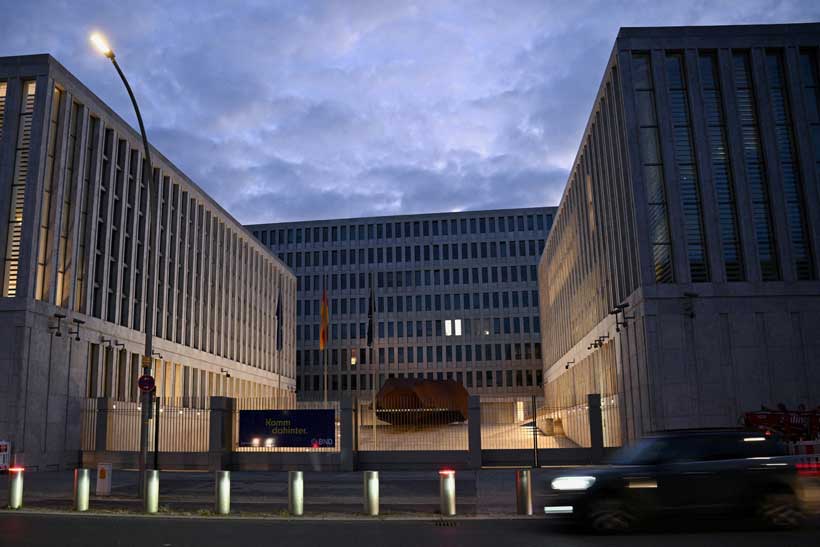
Germany is facing a campaign of destabilisation that could pose a greater threat than the Cold War, Interior Minister Alexander Dobrindt warned on Monday, renewing calls to strengthen the country’s domestic intelligence capabilities amid growing concerns about Russian activity.
Speaking at a press conference in Berlin, Dobrindt said the current “shadow war” was intended to undermine Germany at a fundamental level. He did not explicitly name Russia, but his remarks echoed wider warnings from German intelligence officials about the growing risk of confrontation with Moscow.
The warning comes as Berlin considers legislation that would expand the powers of its intelligence services, including the ability to take active defensive measures. The proposed reforms are being examined by parliamentary committees following an initial reading in September.
Dobrindt argued that Germany could not afford to fall behind its allies in developing intelligence capabilities, given the scale of the threats facing the country.
Stay ahead of the geopolitical week.
MD Briefing delivers expert analysis across five global fronts — the Indo-Pacific, energy, geoeconomics, European security, and the Middle East — every Monday morning. Free.
Suspected Russian Activity Raises Security Concerns
Concerns about covert operations have intensified following a failed attack involving an explosives-laden drone at a German airport in August, which authorities blamed on Russia.
The incident has added urgency to discussions about whether Germany’s intelligence agencies have sufficient powers to detect, disrupt and respond to suspected hostile operations.
Earlier this month, the head of Germany’s foreign intelligence service, the BND, also warned that the country risked entering a violent conflict with Moscow. Together, the warnings reflect growing concern within Germany’s security establishment about the potential for covert confrontation to escalate.
Such threats can extend beyond conventional military activity to include suspected sabotage, espionage and other operations designed to undermine public confidence or disrupt critical infrastructure.
Berlin Seeks to Expand Intelligence Powers
The German government’s proposed intelligence reform would broaden the operational capabilities of its security services, including provisions allowing more active defensive action.
The legislation remains under parliamentary scrutiny, leaving the scope of any eventual changes subject to the legislative process.
Germany’s intelligence agencies have traditionally operated under tighter restrictions than those of several Western allies. Those safeguards reflect the country’s experience under the Nazi regime and the subsequent determination to prevent the concentration and abuse of state power.
The challenge for policymakers is to strengthen national security without weakening the legal and democratic protections established after the Second World War.
Dobrindt’s comments suggest that the government sees existing arrangements as increasingly inadequate for responding to modern security threats.
Germany’s Security Debate Reflects Wider European Tensions
The debate over intelligence powers comes amid deteriorating relations between European governments and Russia, with officials increasingly concerned about the risks of covert operations alongside conventional military confrontation.
For Germany, the stakes are particularly high because of its strategic position in Europe and its role in supporting European security. Any expansion of intelligence capabilities could influence how Berlin responds to suspected hostile activity and cooperates with its allies.
However, broader powers are unlikely to eliminate the threat of covert operations on their own. Their effectiveness will depend on intelligence sharing, operational readiness, oversight and the ability to distinguish genuine security threats from activities that do not warrant intervention.
The coming parliamentary debate will therefore test how Germany balances the demand for a stronger security response with the legal constraints that have shaped its intelligence system since the end of the Second World War.
With information from Reuters.
