


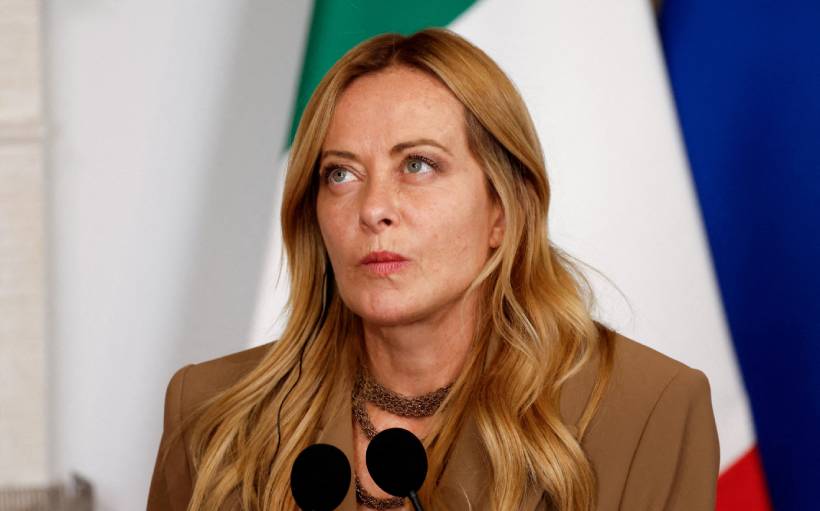
Major energy companies are rushing to help Italy contain soaring fuel prices, with Kuwait’s Q8 becoming the latest company to introduce a temporary price cap as Prime Minister Giorgia Meloni faces growing pressure to protect households and businesses from rising energy costs.
Q8 Italy said on Tuesday it would cap prices at its Italian petrol stations for one month beginning October 1, following similar measures announced by Italy’s Eni and Azerbaijan’s SOCAR.
The moves come as Meloni’s government prepares its 2027 budget and searches for ways to ease the pressure of higher energy costs before Italy heads toward an election next year.
Q8 Joins Eni and SOCAR in Capping Fuel Prices
Q8 said its decision was intended to deliver “tangible benefits” to Italian motorists, although the company did not disclose the price level at which it would set its cap.
Stay ahead of the geopolitical week.
MD Briefing delivers expert analysis across five global fronts — the Indo-Pacific, energy, geoeconomics, European security, and the Middle East — every Monday morning. Free.
Meloni welcomed the announcement, thanking Kuwait and Q8’s Italian operations for responding to the government’s appeal to energy companies.
Since Monday, Eni and SOCAR have capped diesel prices at €2.19 per litre and petrol at €1.99 per litre at their stations.
With Q8 now joining the initiative, the measures cover a significant share of Italy’s fuel retail network.
Italy’s National Consumers Union welcomed Q8’s decision, saying that around half of the country’s petrol stations would now be operating under some form of price cap.
Fuel Caps Could Help Companies Avoid a Windfall Tax
Behind the voluntary price measures lies a larger political battle over how Italy should respond to the energy shock.
Market analysts say the companies may be seeking to demonstrate that they are willing to help consumers rather than face a potentially more costly government intervention.
Economy Minister Giancarlo Giorgetti and other senior politicians have proposed imposing a windfall tax on energy companies that have benefited from higher prices.
Brokers Equita and Intermonte said the fuel price initiative could reduce the risk of new taxes on excess profits for Eni and other companies in the energy sector.
Giorgetti has not ruled out introducing an Italian windfall tax even if European governments fail to agree on a coordinated approach.
Europe Considers Taxing Energy Profits
The debate is not limited to Italy.
Finance ministers from Germany, Spain, Portugal, Italy, Poland and Austria are pushing for an EU wide windfall tax on energy companies as consumers face what they describe as one of the largest oil supply shocks in decades.
The surge in energy prices has become a growing political problem across Europe, where higher fuel and household energy bills are adding to pressure on living costs.
For governments, the challenge is balancing support for consumers with the need to avoid measures that could discourage investment by energy companies.
Italy’s Fuel Prices Have Barely Fallen
Despite the announcements from the three major companies, the impact on Italy’s overall fuel prices has so far been limited.
Industry ministry data showed that average self service petrol prices stood at €2.126 per litre on Tuesday, down from €2.159 on Sunday.
Diesel prices also edged lower, falling to €2.335 per litre from €2.377.
Motorway prices remained even higher, with petrol averaging €2.180 per litre and diesel €2.383.
The relatively modest decline highlights the difficulty facing Meloni’s government as it attempts to bring immediate relief to motorists while dealing with a broader energy shock.
Meloni Faces a Tough Budget Test
The timing of the fuel measures is particularly important for Meloni as her government prepares the 2027 budget, which is expected to be presented in October.
With an election due next year, pressure is mounting on the government to demonstrate that it can shield households and businesses from the economic impact of higher energy prices.
The voluntary caps give Rome a way to seek immediate relief without necessarily imposing a new tax on energy companies.
But with fuel prices still close to record levels and European governments debating broader measures against energy profits, the pressure on Italy’s government is unlikely to disappear with a temporary price cap.
For Meloni, the central question is whether companies can keep prices under control long enough to ease pressure on consumers, or whether governments will ultimately turn to taxation and other interventions to absorb the cost of the energy shock.
With information from Reuters.
