


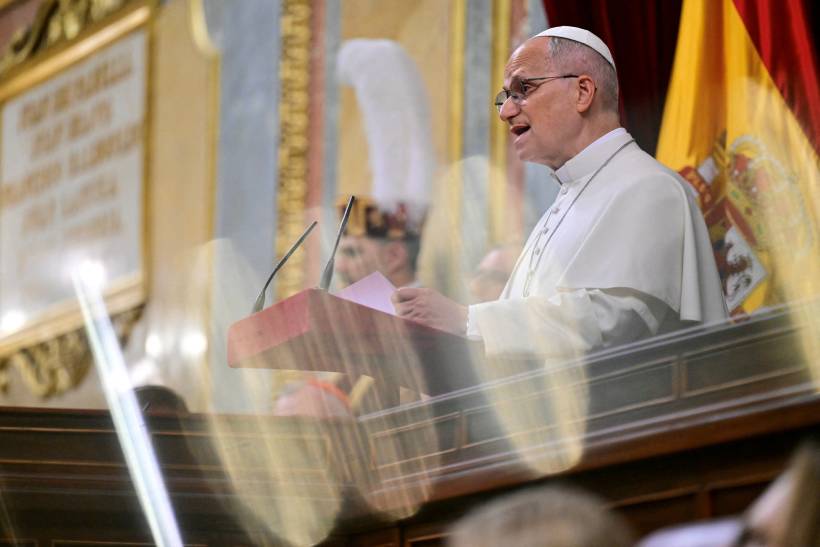
Artificial intelligence is emerging as one of the defining concerns of Pope Leo XIV’s papacy, with the Vatican warning that the technology could reshape society in ways that governments and institutions may struggle to control.
The Vatican’s concerns predate the recent warnings from leading technology executives about the potential dangers of increasingly powerful AI systems. Pope Leo has repeatedly called for international rules to govern the technology, arguing that its development must remain tied to human dignity, peace and the common good.
The issue has taken on greater urgency as technology leaders themselves have begun raising alarms about the speed of AI development. A recent meeting hosted by Britain’s King Charles brought together executives from major AI companies, including OpenAI, Anthropic and Google DeepMind, alongside policymakers and Vatican adviser Rev. Paolo Benanti to discuss the risks surrounding the technology.
Benanti, one of the Vatican’s leading advisers on AI, has argued that the transformative power of artificial intelligence could produce social changes that are difficult to predict. The Vatican’s position, he has stressed, is therefore not a reaction to the latest warnings from Silicon Valley but part of a debate it has been raising for years.
Stay ahead of the geopolitical week.
MD Briefing delivers expert analysis across five global fronts — the Indo-Pacific, energy, geoeconomics, European security, and the Middle East — every Monday morning. Free.
Pope Leo reinforced that position this week, warning that AI can bring significant benefits but also create new dangers for international security and peace. He has called on governments to govern the technology wisely rather than allowing technological progress to move ahead without adequate safeguards.
The pope’s concern extends beyond misinformation or the disruption of jobs. He has repeatedly focused on the possibility that AI could deepen conflict, undermine human agency and make increasingly autonomous weapons more difficult for people to control.
That concern is particularly significant as artificial intelligence becomes increasingly integrated into military systems. Leo has warned about the development of weapons that can operate with diminishing human control, an issue that places AI within the broader debate over autonomous weapons and the future of warfare.
The Vatican’s engagement with AI did not begin with Leo. In 2019, it hosted conferences examining the technology’s potential risks, while Pope Francis warned that AI driven misinformation could contribute to major international conflict.
The Holy See later worked with organisations including Microsoft, IBM, the UN Food and Agriculture Organization and the Italian government on principles calling for AI development to serve society rather than simply maximise profits or replace human workers.
Leo has since elevated the issue further. His first major document of the papacy, released in May, warned that AI systems could spread misinformation, encourage conflict and contribute to a cycle of violence. He called for international rules to oversee the industry rather than leaving individual countries to address the challenge alone.
Cardinal Pietro Parolin, the Vatican’s top diplomat, has similarly argued that countries cannot regulate AI in isolation. The scale of the technology, he has warned, requires governments and international institutions to establish common rules.
That message is increasingly relevant as the Vatican seeks to bring its concerns into wider international discussions. Leo is due to address UNESCO in Paris during his September visit to France, where AI, human dignity and the future of international cooperation are expected to feature prominently. UNESCO itself has described the visit as particularly timely amid rapid technological change and growing concern over whether AI development is moving too quickly to adequately protect human rights and autonomy.
The Vatican is also engaging directly with the technology sector and wider civil society. In September, the US bishops’ conference announced the creation of an AI task force following meetings between church leaders and technology executives.
For Leo, however, the central question is not whether humanity should accept or reject artificial intelligence. His recent statements have focused instead on whether societies can ensure that increasingly powerful technology remains subordinate to human dignity and human decision making.
That places the Vatican’s AI campaign within a much broader debate over who should govern technologies that cross national borders and can be developed faster than governments can regulate them.
The comparison with nuclear weapons is particularly revealing. Benanti has argued that nuclear weapons are at least physically identifiable and can be counted and controlled, whereas AI systems are far less visible and can spread rapidly through societies.
The Vatican therefore sees the AI challenge as extending beyond the technology itself. Its concern is that systems capable of manipulating information, influencing human behaviour, supporting military operations or making decisions with limited human oversight could gradually weaken the ability of societies to control the forces they have created.
That is why AI has become more than a technology issue for Pope Leo. It has become a question of international governance, peace and the future role of human beings in an increasingly automated world.
As governments and technology companies debate how far AI development should proceed, the Vatican is pushing a different question to the centre of the discussion: not simply what artificial intelligence can do, but whether humanity will remain capable of deciding what it should do.
With information from Reuters.
