Regional integration is usually built through treaties, protocols and formal institutions. Yet integration does not always begin with a legally binding agreement. It can also take shape through joint ministerial declarations, memoranda of understanding and other forms of political commitment that, although not normally enforceable under international law, can give political consensus institutional direction and create the conditions for collective action.
In Africa, the use of such soft instruments can be understood against a longer tradition of flexible, intergovernmental and consent-based regionalism. Rather than relying exclusively on binding commitments, African cooperation has often advanced through intergovernmental agreements, MoUs, declarations and frameworks that preserve national discretion while creating space for collective action. This flexibility helps accommodate differences in institutional capacity, levels of development and national priorities, allowing countries to build consensus and practical interdependence at different speeds.
Yet flexibility can also come at a cost. Because soft instruments are often negotiated and adopted at executive level, they may involve less scrutiny and participation from national parliaments, civil society and the private sector than formal agreements subject to domestic ratification. This can affect domestic ownership: commitments negotiated regionally may have limited staying power if the institutions, businesses and constituencies expected to implement them have little role in shaping them. The challenge is therefore to preserve flexibility while anchoring implementation in broader domestic ownership.
Recent scholarship on African regional trade agreements has highlighted the problem of “implicit flexibility”: the tendency of states to treat even formally binding regional obligations as discretionary, contributing to persistent implementation and compliance gaps. There is an important distinction between deliberately choosing a less formal instrument when countries are not yet ready to assume binding obligations, and signing a binding agreement whose obligations are subsequently treated as optional. The former can facilitate cooperation. The latter can undermine the credibility of regional integration.
Stay ahead of the geopolitical week.
MD Briefing delivers expert analysis across five global fronts — the Indo-Pacific, energy, geoeconomics, European security, and the Middle East — every Monday morning. Free.
The key question, therefore, is not whether an instrument is binding, but whether its level of commitment is appropriate to the objective being pursued. Treaties and protocols remain indispensable where predictable obligations, enforcement and regulatory certainty are required. MoUs can provide frameworks for operational cooperation, while ministerial declarations can establish political direction, mobilise institutions and create mechanisms for collective action. Where Regional Economic Communities (RECs) already provide a formal framework for integration, soft instruments should complement rather than duplicate existing regional arrangements. Their role may be to provide political coordination across countries, mobilise institutions and partners, or translate broad regional ambitions into practical cooperation.
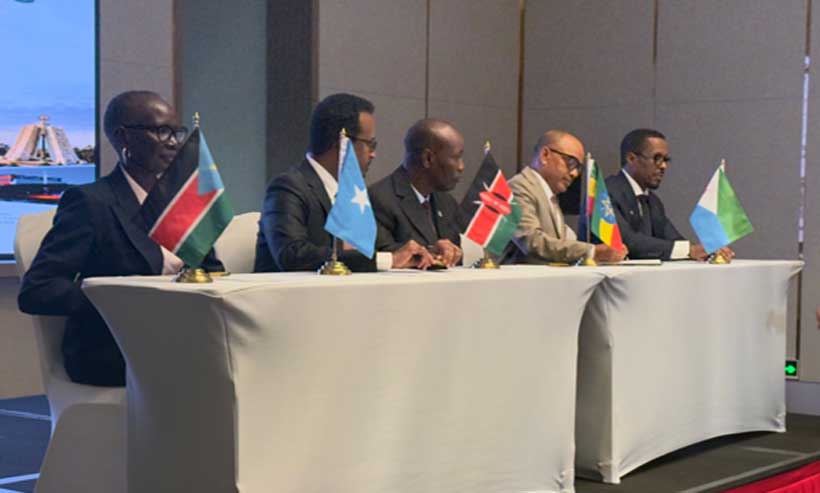
The Horn of Africa Initiative (HoAI) provides a particularly interesting illustration. In September 2026, Trade Ministers from Djibouti, Ethiopia, Kenya, South Sudan and Somalia adopted a Joint Ministerial Declaration that established the HoAI Regional Trade Facilitation Committee (RTFC) as a regional advisory mechanism through which Ministers can consult on trade facilitation reforms, discuss regional priorities and follow up on implementation. The declaration also provides a political, institutional and financing framework for translating jointly agreed priorities into coordinated action, including by calling on development partners to align financing behind agreed regional projects.
The Organization of the Black Sea Economic Cooperation (BSEC), a regional intergovernmental organization, provides a further illustration of how soft law can support regional integration, albeit in a different territorial context. Its 2011 Joint Ministerial Declaration on Trade and Economic Development established priorities around regional projects, intra-regional trade and investment, trade and investment facilitation, and the mobilisation of BSEC institutions and external partners. Its value lies in establishing a common political direction and framework for practical economic cooperation.
MoUs can perform a similar function, particularly where governments need to structure cooperation around specific areas such as trade, transport or investment facilitation. Rather than creating another governance or regulatory layer, they can identify concrete areas for cooperation, define institutional responsibilities and create a basis for concrete integration projects. Where binding REC commitments already exist, an MoU can complement them by addressing specific practical issues not fully covered by existing regional frameworks, while remaining consistent with the rights, obligations and institutional arrangements already in place.
This is particularly relevant in regions where economic fragmentation, geopolitical tensions and competing national priorities make uniform commitments difficult to achieve. A soft instrument can provide what a formal legal framework sometimes cannot: a common political horizon without demanding uniformity at the outset. Countries can move in the same direction, at different speeds and through different national pathways, while progressively building the institutional capacity and practical interdependence required for deeper integration.
The real test, however, is what happens after the signature. A declaration or MoU that merely restates aspirations has limited value. Its significance lies in whether it establishes mechanisms for follow-up, mobilises institutions and projects, assigns responsibilities and generates domestic ownership. Soft instruments can thus function as a form of “soft institutional infrastructure” between political statements and binding agreements, connecting political commitment with the institutions and reforms required to make integration work.
For Africa, the central problem is no longer a shortage of regional commitments. It is the distance between commitments on paper and integration in practice. The real measure of integration is not how many agreements countries sign, but whether they turn borders from barriers into bridges, infrastructure from isolated assets into networks, and national markets into connected spaces for production and trade.
This is where soft instruments can acquire hard consequences. They can become milestones in the progressive construction of an architecture of integration that is flexible in its commitments, incremental in its development and functional in its outcomes.