


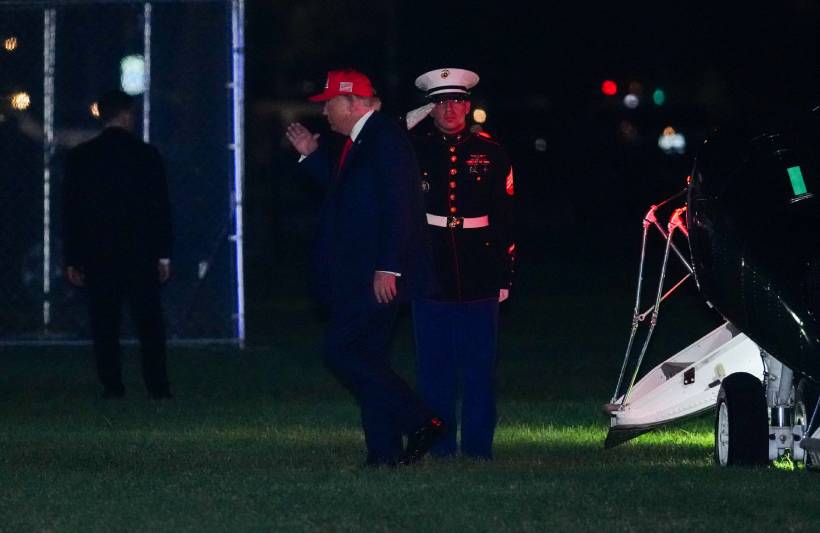
When U.S. President Donald Trump addresses the United Nations on Tuesday, he will return to a forum where he previously presented the U.S. campaign against Iran as both a military success and a diplomatic achievement.
A year ago, Trump told world leaders that U.S. strikes on Iran’s nuclear facilities had “totally obliterated everything” and claimed he had brought peace between Israel and Iran.
Six months into a new war, however, Trump faces a more skeptical international audience. The conflict has persisted despite shifting U.S. objectives, regional instability has intensified, and concerns over Iran’s nuclear capabilities remain unresolved.
Iran has suffered major military and economic damage but has continued to challenge U.S. and regional interests. Tehran has disrupted oil shipments through the Strait of Hormuz, while its Houthi allies in Yemen have expanded their control near the Bab el Mandeb Strait, another critical passage for global trade and energy shipments.
Stay ahead of the geopolitical week.
MD Briefing delivers expert analysis across five global fronts — the Indo-Pacific, energy, geoeconomics, European security, and the Middle East — every Monday morning. Free.
The Houthi advance has created a wider strategic problem for Washington. It has increased pressure on Saudi Arabia, complicated U.S. efforts to protect regional partners and raised questions about how much military capacity Washington can devote to additional threats while its forces remain engaged with Iran.
The conflict has also exposed differences between Washington and some of its traditional partners. Several European and Asian allies have resisted Trump’s calls for assistance in a war they were not consulted about and whose economic consequences have extended well beyond the Middle East.
Aaron David Miller, a former Middle East policy adviser to both Republican and Democratic administrations, described the situation as an example of the consequences that can follow when a president launches a war without fully anticipating its wider effects.
From military victory to prolonged conflict
Trump is expected to portray the U.S. campaign as a success during his UN address, despite having previously suggested that the conflict would be resolved within weeks.
Instead, the fighting has developed into a prolonged confrontation. The campaign has placed pressure on U.S. missile inventories while failing to produce a clearly defined political settlement.
The Houthi advance has added another layer to the crisis. Houthi forces have reportedly pushed through Saudi-backed Yemeni government positions, expanded their presence along the Red Sea coast and taken control of islands near the Bab el Mandeb Strait.
The development matters because the strait connects the Red Sea with the Gulf of Aden and is an important route for international shipping. Greater Houthi control could give Iran and its regional partners additional leverage over energy and commercial flows.
A senior Trump administration official told Reuters that Washington remains focused on protecting freedom of navigation in the Red Sea while encouraging regional partners to take the lead in addressing regional security challenges.
That position reflects a central tension for the Trump administration: Washington wants to prevent further disruption of strategically important waterways but is also reluctant to expand a military campaign that is already consuming significant resources.
Nuclear claims remain contested
Iran’s nuclear program was only one part of Trump’s UN speech last year, when he highlighted the U.S. bombing campaign against Iranian nuclear facilities.
Trump said American B-2 bombers had destroyed Iran’s uranium enrichment capabilities. Subsequent assessments by experts, however, concluded that the strikes had significantly damaged the program without eliminating it.
The issue remains central to Trump’s justification for the current conflict.
Trump joined Israel in launching strikes against Iran on February 28, saying the operation was necessary because of an imminent nuclear threat to the United States. Experts have disputed the assessment that Iran was on the verge of producing a nuclear weapon, while Tehran has consistently denied seeking one.
The strikes nevertheless caused extensive damage and killed several senior Iranian officials. Iran responded by targeting U.S. positions and facilities in Gulf countries hosting American forces.
Another unresolved issue is Iran’s stockpile of highly enriched uranium. Some of the material is believed to have survived the U.S. strikes after being moved or buried before the attacks.
The White House has defended Trump’s strategy, arguing that the president achieved his military objectives and that expanded sanctions and a maritime blockade are putting increasing pressure on Iran’s economy.
The Gulf security dilemma
Saudi Arabia has also become increasingly important to Trump’s calculations.
Trump has resisted Saudi requests for direct U.S. military intervention against the Houthis, despite their growing control over territory and strategic waterways. The decision has raised questions among Gulf states about the extent of Washington’s security commitments, particularly after Trump launched the war against Iran without securing their support.
Trump is expected to meet Gulf leaders on the sidelines of the UN gathering next week.
For Washington, the challenge is balancing two competing priorities. The United States has an interest in preventing the Houthis from disrupting another major international shipping route, but expanding the military campaign could place additional demands on forces already engaged in the war with Iran.
U.S. officials recently met Houthi representatives in Oman, according to people familiar with the discussions. The talks indicate that Washington is exploring diplomatic channels even as the wider conflict continues.
Jonathan Panikoff, a former deputy national intelligence officer for the Middle East, said the United States faces military capacity constraints but warned that inaction could further strain relations with Gulf partners.
A war without a clear exit
The Houthi resurgence illustrates how the conflict has expanded beyond the original confrontation between Washington, Israel and Tehran.
The war now affects multiple theaters, including the Strait of Hormuz, the Red Sea and the wider Gulf security environment. Each additional pressure point makes a negotiated exit more difficult.
Trump has repeatedly suggested that the conflict could soon end. On Wednesday, he told reporters that the United States was “hopefully” approaching the end of the war.
Yet the continued fighting suggests that the central challenge for Washington is no longer simply demonstrating military superiority. It is translating military pressure into a sustainable political outcome without opening additional fronts.
As Trump addresses world leaders at the UN, that distinction will be closely watched. His ability to present the war as a contained and successful campaign will increasingly depend not only on battlefield developments in Iran but also on whether the United States can prevent the conflict from destabilizing the wider Middle East and global trade.
With information from Reuters.
