


U.S. President Donald Trump has threatened to impose additional tariffs on the European Union if the bloc moves ahead with a proposal to make Canada its first associate member, escalating tensions over the EU’s plans to deepen ties with Ottawa.
Trump called the proposal by European Commission President Ursula von der Leyen “laughable” and warned that Washington could impose what he described as “very serious tariffs” or restrict trade with Europe if he viewed the move as hostile to the United States.
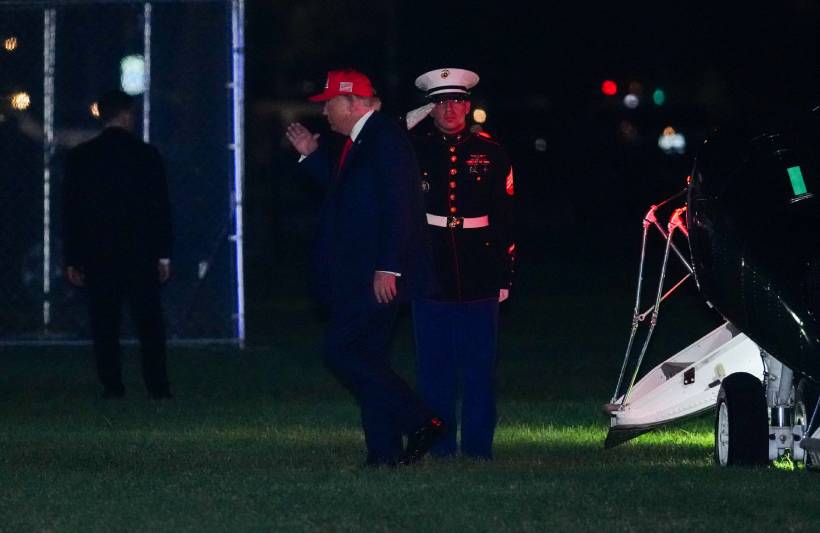
“If it’s a good intention, that’s fine. If it’s a bad intention, we’ll put very heavy tariffs on Europe,” Trump told reporters while travelling to an event in North Carolina.
The European Commission did not immediately respond to a request for comment.
Stay ahead of the geopolitical week.
MD Briefing delivers expert analysis across five global fronts — the Indo-Pacific, energy, geoeconomics, European security, and the Middle East — every Monday morning. Free.
The comments came a day after von der Leyen proposed that Canada become the EU’s first associate member during her annual State of the Union speech. Canadian Prime Minister Mark Carney attended the address as the European Commission chief called for stronger cooperation among allies in what she described as “an openly hostile world.”
Europe and Canada seek closer ties
Von der Leyen’s proposal comes as the EU and Canada face overlapping economic and geopolitical pressures.
Europe remains concerned about Russia’s war in Ukraine, which has created a major security challenge on the bloc’s eastern borders. At the same time, both the EU and Canada have faced growing trade tensions with Washington and increasing competition from China.
Carney said earlier this month that Canada was seeking a “unique alliance” with the European Union as relations between Ottawa and Washington have deteriorated since Trump’s return to the White House.
The United States and Canada have imposed or faced tariffs affecting tens of billions of dollars in cross border trade, creating incentives for Ottawa to expand its economic and political relationships with other major partners.
Closer EU Canada cooperation could therefore provide both sides with an additional framework for coordinating on trade, security, energy and strategic industries.
But the proposal also raises questions within Europe about what associate membership would actually mean.
The EU has historically been cautious about flexible forms of political association that do not have a clearly defined legal status. One EU diplomat said there was uncertainty over the proposal, questioning what associate membership would mean in practice and whether the European Commission would be able to deliver on it.
Trump warns of retaliation
Trump’s response demonstrates how closely Washington is watching Europe’s efforts to build alternative partnerships.
The U.S. president said the EU’s decision could be viewed as a hostile act depending on its intentions. His warning leaves open the possibility of new tariffs or other trade restrictions if Washington concludes that the initiative threatens U.S. interests.
The comments also underline the broader difficulty facing European governments as they seek greater strategic autonomy while maintaining their relationship with the United States.
France’s Europe Minister Benjamin Haddad rejected the suggestion that Washington should have a role in determining the EU’s geopolitical choices.
“It is not up to the United States — or anyone else — to choose the political and geopolitical direction of the Europeans,” Haddad said in an interview with French television channel Public Sénat.
His comments reflect a wider European debate over how the bloc should respond to a changing international environment in which traditional alliances are under greater strain.
What would associate membership mean?
The proposal remains at an early stage, and the precise institutional arrangements have yet to be established.
Canada already has extensive economic and political links with the EU, including a comprehensive trade agreement. Associate membership would represent a broader political framework rather than simply another trade arrangement.
The concept could potentially provide a structure for closer cooperation between Canada and the EU on areas such as defence, energy security, critical minerals, technology and trade.
However, the lack of clarity surrounding the proposal could make negotiations difficult. European governments would need to agree on the scope of Canada’s participation, while Ottawa would need to determine what additional commitments such an arrangement would require.
The initiative also comes at a sensitive moment for transatlantic relations.
For Canada, stronger European ties could diversify its international partnerships as it manages a difficult relationship with its largest trading partner. For the EU, closer cooperation with Canada could strengthen its network of partnerships beyond the United States while adding another major economy to its efforts to secure supply chains and coordinate on security.
A new test for transatlantic relations
Carney was scheduled to address the European Parliament on Thursday, giving him an opportunity to discuss the proposed relationship directly with European lawmakers.
The immediate question is whether the EU Canada initiative can develop into a concrete institutional arrangement without becoming another source of conflict with Washington.
Trump’s warning suggests that Europe’s efforts to expand its geopolitical partnerships will remain closely connected to the broader debate over tariffs and transatlantic trade.
For the EU, the challenge is to deepen cooperation with Canada while managing its existing relationship with the United States. For Canada, closer ties with Europe could offer another avenue for economic and strategic diversification as its relationship with Washington becomes more difficult.
The proposal therefore represents more than a new EU Canada initiative. It is also a test of how far Europe and its partners can pursue greater strategic cooperation while navigating an increasingly contested transatlantic relationship.
With information from Reuters.
