


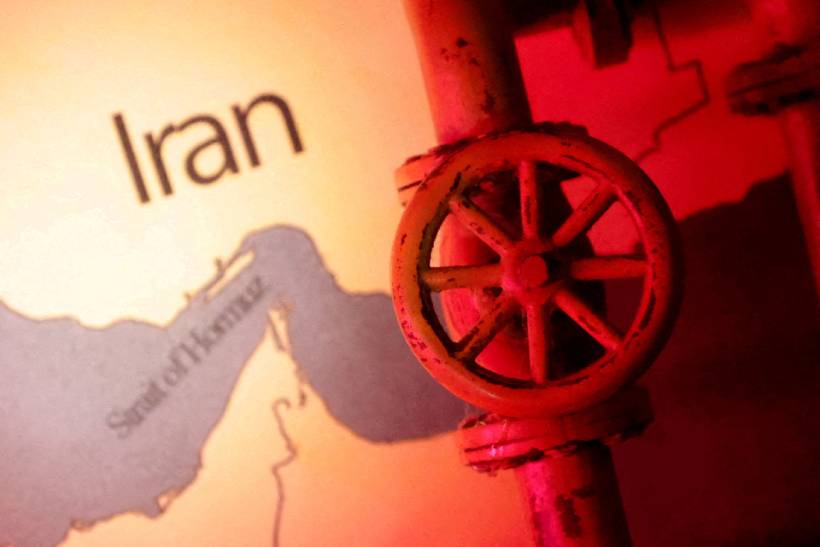
Middle East diplomacy has hit another setback as a planned regional meeting on the Strait of Hormuz was postponed, while attacks around the region’s two major oil transit routes increased concerns about global energy supplies.
The meeting had been expected to bring Iran together with Gulf Arab states to discuss an agreement with Oman on governing shipping through the Strait of Hormuz, a crucial energy route that carried about one fifth of global oil supplies before the war.
The postponement came as attacks on shipping and energy infrastructure added to existing disruptions caused by the conflict between the United States, Israel and Iran.
What’s Happening
Oman’s Foreign Minister Sayyid Badr Albusaidi said late Sunday that the regional meeting scheduled for Monday had been postponed in the interests of consensus.
Stay ahead of the geopolitical week.
MD Briefing delivers expert analysis across five global fronts — the Indo-Pacific, energy, geoeconomics, European security, and the Middle East — every Monday morning. Free.
Iranian officials had planned to attend the meeting and present an agreement reached with Oman on shipping routes through the Strait of Hormuz.
Iran’s Fars news agency said the postponement was requested by some regional countries and was jointly agreed by Tehran and Muscat. Iran said it would coordinate with Oman to find another date.
The diplomatic setback coincided with Saudi Arabia’s decision to shut its key east west oil pipeline, which provides an alternative route for moving Middle Eastern oil without using the Strait of Hormuz.
The strait itself also remained dangerous for shipping. Britain’s maritime security agency UKMTO said a vessel was struck by a projectile while transiting the waterway, causing a fire and forcing its crew to evacuate.
Iran separately reported that one person was killed and four crew members were wounded after an Iranian commercial vessel was struck off its coast.
Commodity vessel traffic through the strait fell to single digit levels per day over the weekend, below a 10 day average of 14. The figures did not include vessels that may have switched off their tracking transponders.
Oil Supply Risks Increase
The diplomatic setback has added to concerns about oil supplies.
Oil prices rose more than 3% on Monday after attacks on Saudi Arabia, the closure of its key pipeline and attacks on ships in the Gulf.
Oil prices had already moved above $100 a barrel the previous week for the first time since July. In the United States, the politically sensitive retail price of diesel reached another record above $6.20 a gallon on Sunday.
Saudi Arabia has enough oil stored at its Red Sea port of Yanbu to maintain exports for only about five to seven days if the pipeline remains shut, according to traders and Saudi oil buyers.
If the pipeline remains offline beyond that period, as much as 4% of global oil supply could be placed at risk, on top of the supply already disrupted by reduced traffic through the Strait of Hormuz.
Saudi Arabia has not provided a full assessment of the damage or said how long repairs will take. Estimates from sources range from several days to weeks, while satellite imagery has shown large columns of smoke from locations along the pipeline.
Iran Links Hormuz to US Demands
Iran has also made clear that reopening the Strait of Hormuz remains connected to its broader dispute with Washington.
Foreign Minister Abbas Araqchi said that even with an agreement involving Oman, Iran would not reopen the strait until the United States meets Tehran’s demands.
The position complicates diplomatic efforts because restoring shipping through the waterway depends not only on a regional arrangement but also on the wider conflict between Iran and the United States.
Washington has so far failed to achieve the objectives President Donald Trump set when he launched Operation Epic Fury in February. Those objectives included ending Iran’s nuclear program, preventing Iran from attacking its neighbours and creating conditions for political change inside the country.
Trump, during a weekend trip to Ireland, repeated his expectation that the war would end this year, possibly shortly after the U.S. midterm elections in November. He also said gasoline prices would fall sharply once the conflict ended.
Houthi Attacks Add Another Threat
The situation is also deteriorating around the Red Sea.
Yemen’s Iran aligned Houthi rebels have continued attacks against Saudi Arabia, with Saudi state media showing damage to homes and a mosque in Jazan province.
The Houthis separately claimed to have attacked a Saudi military base in a neighbouring province after capturing Perim Island in the Bab el Mandeb, the strategic strait at the entrance to the Red Sea.
The Houthi advance along Yemen’s Red Sea coast represents the biggest escalation of fighting in the country in years.
Their attacks create another dilemma for Washington. The United States wants to protect Saudi Arabia and international shipping but is reluctant to open another major front in the conflict.
The Gulf states face a similar dilemma, with growing economic costs forcing them to consider whether to accept further disruption or engage more closely with Iran.
The United States previously bombed the Houthis for two months in 2025, but Trump halted the campaign after saying the group had lifted its threat against Red Sea shipping.
Three sources told Reuters that Saudi Crown Prince Mohammed bin Salman called Trump on Thursday seeking military assistance against the Houthis. Trump reportedly offered intelligence support for now rather than direct military aid.
Trump later confirmed that he had spoken with the crown prince and said the Houthis had also contacted the U.S. administration asking Washington to stay out of the Yemen conflict.
Why It Matters
The Strait of Hormuz and the Bab el Mandeb are critical links in the global energy system. Disruption around both routes creates a much broader supply risk because alternative routes are limited and significantly more costly.
The latest developments also show that the conflict is becoming increasingly difficult to contain geographically. Pressure around Hormuz is being accompanied by attacks in the Gulf, threats to Saudi energy infrastructure and renewed fighting in Yemen.
The postponement of the Oman meeting is particularly significant because it removes, at least temporarily, a potential diplomatic channel for addressing the safety of shipping through Hormuz.
Key Stakeholders
Iran controls access to the northern side of the Strait of Hormuz and is using the reopening of the waterway as leverage in its negotiations with Washington.
Oman has been attempting to facilitate regional diplomacy and was expected to host the postponed meeting.
Saudi Arabia faces direct threats to both its territory and oil infrastructure and has sought U.S. assistance against the Houthis.
The United States is trying to protect its regional allies and global shipping while avoiding an expansion of the conflict into another major front.
The Houthis are expanding their role in the conflict through attacks around the Red Sea and Saudi Arabia.
Global oil markets remain vulnerable because disruptions to Hormuz and alternative energy routes could remove significant supplies from international markets.
What’s Next
The immediate question is when Oman, Iran and the Gulf states can reschedule their meeting and whether a regional agreement on shipping through Hormuz can still be reached.
Markets will also be watching the condition of Saudi Arabia’s east west pipeline and the extent of damage caused by the recent attack.
At the same time, further Houthi attacks could place additional pressure on Washington and Saudi Arabia to respond militarily, potentially widening the conflict.
Analysis
The postponement of the Oman meeting demonstrates how difficult it is to separate energy security from the broader war.
A regional agreement could potentially improve the safety of shipping, but Iran’s position that Hormuz will remain closed until Washington meets its demands means that diplomacy over the waterway is ultimately tied to the wider U.S. Iranian confrontation.
The simultaneous pressure on Hormuz, Saudi oil infrastructure and the Bab el Mandeb is particularly dangerous because it reduces the number of reliable routes available to move Middle Eastern energy to global markets.
The growing challenge for Washington is therefore not simply protecting individual shipping lanes. It is preventing disruptions across multiple strategic corridors from becoming a sustained global energy shock.
For Gulf states, the situation presents an equally difficult calculation. Their security relationship with the United States remains important, but continued attacks and economic disruption could increase the incentive to engage directly with Iran.
The failed meeting is therefore more than a diplomatic postponement. It is a sign that the regional conflict is making it increasingly difficult to restore the energy routes on which global markets depend.
With information from Reuters.
