TODAY’S NUMBERS:
$100 (Brent crude, after Wednesday’s tanker strikes) · 4.92% (US 10-year Treasury yield) · $4,440 (gold, per troy ounce)
Oil and yields are climbing together while gold sits flat — markets are pricing an energy shock, not a flight to safety.
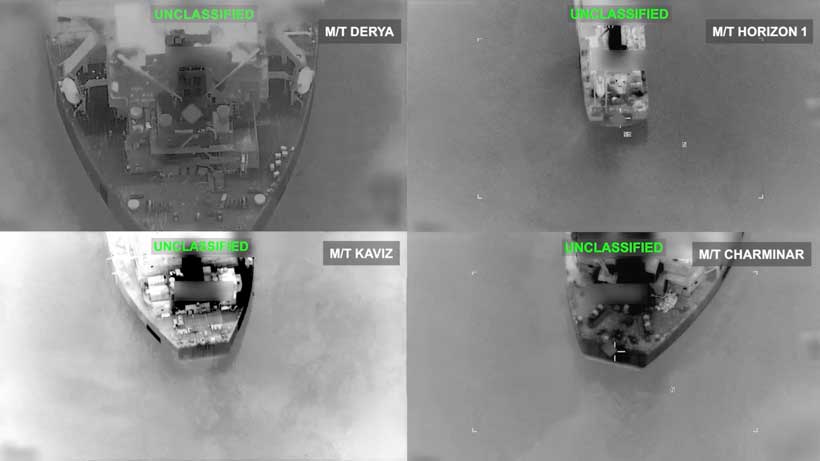
On Wednesday, US forces destroyed five Iranian oil tankers — the Kaviz, Charminar, Horizon 1, Riesco and Derya — ordering their crews to abandon ship before sinking them off Kharg Island and in the Gulf of Oman. Secretary of State Marco Rubio explained the logic bluntly: “Iran continues to try to hit US naval ships, and for every time they do that… they’re going to lose tankers.” Iran retaliated within hours, striking ten vessels near the Strait of Hormuz and firing ballistic missiles at a US base in Jordan. Brent crude broke $100 a barrel.
Stay ahead of the geopolitical week.
MD Briefing delivers expert analysis across five global fronts — the Indo-Pacific, energy, geoeconomics, European security, and the Middle East — every Monday morning. Free.
Washington has been fighting Iran’s oil exports on two tracks at once, and this week both accelerated. The financial track is the one sanctions lawyers know well: on September 4, the Treasury’s OFAC designated Golden Global Yatırım Bankası, a Turkish bank it says moved tens of millions of dollars for the IRGC-Quds Force and helped route Chinese payments for Iranian crude back through Turkish accounts — part of the Trump administration’s “Operation Economic Outcast” campaign to sever Tehran’s access to correspondent banking and, ultimately, SWIFT. Treasury Secretary Scott Bessent said banks were “finding out the hard way” that enforcement was serious; Golden Global denies wrongdoing, and Ankara has protested.
That track targets the paperwork behind Iran’s “shadow fleet” — the several hundred aging, opaquely owned tankers that use flag-hopping, AIS spoofing and ship-to-ship transfers to move sanctioned crude to buyers, mostly in China, despite a decade of OFAC and EU designations against their owners, insurers and captains. This week Washington skipped the paperwork. Rather than blacklist another shipping registry, the Navy sank the ships. The winners are Gulf and US producers now selling into a $100 market, and Treasury enforcers who no longer need to unwind a shell-company chain before acting. The losers are Iran’s oil revenue, Turkey’s correspondent-banking relationships, and the war-risk insurers who priced these tankers for seizure, not destruction.
Why it matters
For fifteen years, sanctions enforcement has run on a shared assumption: financial pressure is reversible, contestable and slow — designate an entity, freeze its correspondent access, let lawyers argue delisting. Iran and Russia have both built the same countermeasure because of it. Moscow’s A7 network, exposed by the UK’s National Crime Agency last month, has allegedly settled $86 billion in Kremlin-linked payments since 2024 using shell companies, promissory notes and VPN-masked banking — the same evasion architecture Golden Global stands accused of running for Tehran.
By destroying tankers instead of merely delisting the entities behind them, Washington is signaling that where financial enforcement can’t keep pace with evasion, it will substitute force. That is a doctrine shift, not a tactical one — and it has an audience beyond Iran. European navies have already begun boarding and detaining vessels tied to Russia’s Baltic shadow fleet over severed undersea cables; a precedent for sinking, not just seizing, sanctioned tankers will be read closely in London and Brussels. It also raises the cost of evasion for financiers on all sides, which may simply push more sanctions-busting money toward instruments with no hull to sink — stablecoins and promissory notes, the same tools already carrying Russia’s shadow-banking traffic.
Watch for: October 1, when EU leaders meet in Copenhagen to decide whether to advance the €176 billion “reparations loan” built on frozen Russian central-bank assets held at Euroclear. Belgium and the ECB are still resisting outright confiscation over reserve-currency risk — the same fear Ankara is now voicing about its banks’ SWIFT access. Whether Brussels moves from freezing assets to spending them will show whether Europe is willing to match Washington’s new appetite for turning financial leverage into something harder to reverse.