


An event addresses a moment; a process creates continuity.
An event manages adjustment; a process builds order.
Complementing the proposed Muscat/Oman process, diplomatically in circulation since June through the Group of Friends of the Process, Omani Foreign Minister Sayyid Badr Albusaidi said later in July that all eight countries on the Gulf littoral—Oman and the GCC five, plus Iran and Iraq—should be involved in designing a new regional security arrangement. He argued that years of dealing with Iran through a policy of containment had yielded no lasting security outcomes.
Albusaidi urged the Gulf states to reassess and recalibrate their relationships with powerful allies, including the United States, and to take more responsibility for their own security.
The Gulf has entered a new strategic phase.
Stay ahead of the geopolitical week.
MD Briefing delivers expert analysis across five global fronts — the Indo-Pacific, energy, geoeconomics, European security, and the Middle East — every Monday morning. Free.
Recent events have demonstrated the considerable capacity of the Gulf states to protect their societies, infrastructure, and economies and have also reaffirmed the importance of their international partnerships. At the same time, they have illustrated a more difficult reality: military preparedness and external security relationships, however important, cannot by themselves provide a durable answer to the political uncertainties of the region.
There is therefore a wider question worth considering: How can the states of the Gulf acquire greater capacity not only to respond to crises but also to shape the regional environment in which those crises arise?
The answer need not be another alliance or another externally designed security arrangement. It may lie in something less conspicuous but ultimately more durable: a continuing regional process through which states with different interests and security perspectives can maintain dialogue, develop confidence, and gradually identify areas of common interest.
Event vs. Process
The difference between an event and a process is the difference between (managing) adjustment and (building) an order.
International diplomacy offers one particularly instructive example of the value of such an approach: the Helsinki process.
Its significance did not rest simply upon the agreement reached in 1975. Its enduring importance lay in creating a framework through which states divided by profound political and strategic differences could continue to meet, establish principles, develop confidence-building measures and, over time, change the character of their relations.
The circumstances of the Gulf are, of course, very different. No historical model can simply be transferred from one region to another. But the underlying principle remains relevant: a process of dialogue does not have to wait for agreement on the final shape of the regional order.
Indeed, the opposite may sometimes be true.
Where strategic mistrust is greatest, regular contact can be most valuable. Channels of communication can reduce miscalculation; practical cooperation can create habits of confidence; and modest agreements in areas of common interest can gradually make more ambitious forms of cooperation conceivable.
Maritime safety, crisis communication, protection of critical infrastructure, humanitarian cooperation, disaster response, and economic connectivity would all offer possible starting points. None requires governments to resolve their most fundamental political differences before sitting at the same table.
Such an approach would also sit comfortably alongside the security relationships already established by the Gulf states.
There is little reason to regard regional ownership and international partnership as alternatives. The United States, Europe, Britain, China, and others will continue to have important interests and responsibilities in the Gulf. A stronger regional political framework could complement those relationships rather than compete with them.
For the Gulf states themselves, the question is perhaps even more consequential.
A regional order cannot ultimately be sustainable if those most directly affected by it remain principally subjects of decisions made elsewhere. The smaller and middle-sized states of the region may have less military weight than the major powers, but they possess other instruments of statecraft: the ability to convene, to build institutions, to create channels of communication, and to make cooperation attractive to others.
Perhaps the most important legacy of negotiating with unlike-minded nations is the Helsinki experience.
Its history demonstrates how timely statecraft can create strategic space for smaller and middle powers by establishing a framework in which larger powers are bound to interact through rules, institutions, and sustained dialogue rather than exclusively through (sporadic) bilateral arrangements.
Pivot to Gulf
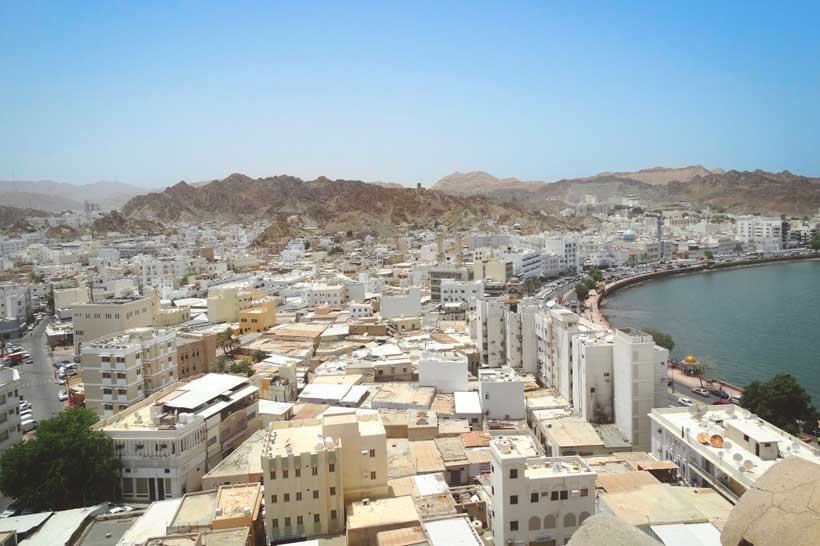
Oman’s experience is particularly relevant in this respect.
Having visited the Sultanate on a number of occasions, and having had the privilege of meeting the late Sultan Qaboos and working with senior Omani officials, I have long regarded Oman’s diplomatic tradition with particular respect. Its influence has rarely depended upon the exercise of power. It has rested instead upon credibility, patience, and the ability to maintain relationships across political divides.
There may be circumstances in which those qualities have greater strategic value than ever.
A regional process facilitated from Muscat would not need to begin with grand institutional ambitions. Its strength could lie precisely in allowing the participating states to determine its pace, scope, and eventual form. Consensus would be more important than speed; continuity more important than ceremony. Nor would such a process need to define the future security architecture of the Gulf in advance.
Its purpose could simply be to create the conditions in which the countries of the region are increasingly able to shape that architecture themselves. That is a modest objective. It is also a potentially consequential one.
For those of us who have been involved in international security and diplomacy, there is a familiar lesson in this. Durable institutions are rarely created because all the participants have suddenly discovered that they agree. They emerge because governments recognize that continuing disagreement is itself a reason to establish rules, channels, and habits through which disagreement can be managed.
The Gulf may now be approaching such a moment.
The task is not to choose between deterrence and dialogue, nor between international partnerships and regional agency. A stable regional order is likely to require all of these elements.
The more difficult task is to connect them.
A permanent regional process—as already advocated by the diplomatically active ‘Friends of the Process,’ rooted in the region and informed by the experience of those who have worked elsewhere on questions of security, confidence-building, and institutional development—could provide one such connection.
It would not promise immediate solutions. It would offer something more realistic: a means of making future solutions more possible.
And perhaps that is where the significance of a Muscat initiative ultimately lies—not in prescribing what the Gulf’s security order should become, but in creating a setting in which the states of the Gulf can, in time, decide that for themselves.
