


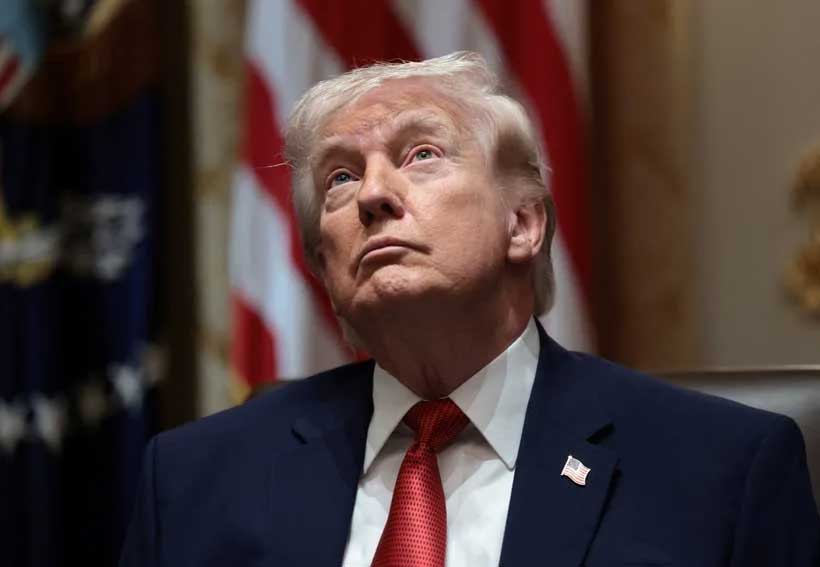
President Donald Trump and the Republican Party are taking an unusual approach to the 2026 midterm elections by holding a national Republican convention in Dallas, just weeks before voters head to the polls.
Unlike traditional party conventions, the gathering is not being held to nominate a presidential candidate or formally approve a party platform. Instead, its primary purpose is political: to put Trump at the centre of the Republican campaign and energize a party facing the historical disadvantage of holding the White House during midterm elections.
The convention comes at a particularly difficult moment for Republicans. Rising living costs, the Iran war and Trump’s declining approval ratings have created political vulnerabilities ahead of the November 3 elections.
What’s Happening?
The Republican gathering at the American Airlines Center in Dallas will take place on Wednesday and Thursday, less than two months before the midterms.
Stay ahead of the geopolitical week.
MD Briefing delivers expert analysis across five global fronts — the Indo-Pacific, energy, geoeconomics, European security, and the Middle East — every Monday morning. Free.
Trump will dominate the event, delivering a keynote address on Wednesday and closing remarks on Thursday.
The Republican National Committee expects around 30,000 people to attend over the two days. The event is being funded by Republican donors and is expected to cost more than $40 million.
But the decision to hold the convention carries considerable political risk.
Republicans are already facing concerns about attendance, with some party insiders telling Reuters they worry that candidates and activists may not turn out in large numbers.
Many Republican candidates scheduled to speak are themselves involved in competitive races. House Speaker Mike Johnson has acknowledged that some Republican lawmakers will remain in their districts because the event comes as early voting approaches.
Why Is Trump Holding a Midterm Convention?
Trump began discussing the idea around a year ago because Republicans have historically struggled in midterm elections when the president himself is not on the ballot.
The convention gives Trump an opportunity to make himself the central figure in congressional campaigns.
Rather than allowing individual candidates to run separate campaigns, Republicans are attempting to create a national political narrative around Trump’s presidency and policies.
The strategy is essentially to turn the midterms into another referendum on Trump.
The Biggest Problem: Trump’s Approval Rating
The timing is difficult because Trump’s popularity has weakened.
His Reuters/Ipsos approval rating stands at 33%, the lowest of his second term, according to the article.
The political pressure has been compounded by rising living costs and the economic consequences of the Iran war.
Trump has repeatedly argued that Americans should accept higher gas prices if necessary to prevent Iran from obtaining a nuclear weapon.
That message could be particularly difficult for Republican candidates in competitive districts because voters may judge the administration on the immediate cost of living rather than its broader foreign policy objectives.
Republicans Hope to Change the Conversation
Republican officials nevertheless see the convention as an opportunity to redirect the campaign toward issues they believe can strengthen their position.
The party plans to highlight Trump’s:
- Tax cuts
- Border security policies
- Domestic manufacturing agenda
- “Make America Healthy Again” initiative
- Efforts to reduce drug prices
- Public safety policies
The broader strategy is to remind Republican voters of the administration’s domestic agenda rather than allowing the campaign to be dominated by economic concerns and the Iran war.
Democrats Provide Another Target
Republicans are also expected to use the convention to attack Democrats.
Trump and other Republican speakers are expected to focus heavily on victories by left wing and democratic socialist candidates in Democratic primaries.
The objective is to portray Democrats as too extreme and disconnected from working families.
Trump has repeatedly called Democrats “communists,” making the characterization one of his major lines of attack heading into the midterms.
Democrats, however, argue that the convention is simply a distraction from the issue they believe matters most to voters: high prices.
The JD Vance Factor
Vice President JD Vance will be another major figure to watch.
His appearance on Thursday, immediately before Trump’s closing remarks, has significance beyond the midterms.
Republicans are already looking toward the 2028 presidential race, and Vance is widely viewed as one of the leading potential contenders.
His prominent position at the convention therefore gives him an opportunity to strengthen his standing within the Republican Party while campaigning alongside Trump.
The event could consequently serve two purposes at once: helping Republicans in 2026 while beginning to shape the party’s post Trump political future.
Who Is Attending?
The convention will feature Republican candidates competing in key congressional races as well as Americans presented as beneficiaries of Trump’s policies.
Other expected speakers include:
JD Vance, Vice President
Scott Bessent, Treasury Secretary
Robert F. Kennedy Jr., Health and Human Services Secretary
Todd Blanche, Attorney General
The convention will also focus on trade, public safety and Republican attacks on what organizers describe as Democrats’ extreme positions.
A remembrance involving families of emergency responders is planned for Thursday, ahead of the anniversary of the September 11 attacks.
Young Republicans will also mark the anniversary of conservative activist Charlie Kirk’s killing.
Why It Matters
The convention is essentially a gamble.
Republicans believe Trump’s personal political energy can compensate for the structural disadvantages facing the party in a midterm election.
But the same strategy could work against them if voters are dissatisfied with Trump’s presidency.
Putting Trump at the centre of the campaign means Republican candidates cannot easily separate themselves from his approval rating, economic record or foreign policy decisions.
The convention therefore provides Republicans with both a mobilization opportunity and a political vulnerability.
Key Stakeholders
Donald Trump: The central figure of the convention and the person Republicans are relying on to energize their voters.
Republican National Committee: Organizing and funding the event as the party attempts to maintain control of Congress.
Republican congressional candidates: Many are in competitive races and must balance their association with Trump against their individual electoral needs.
JD Vance: His prominent role provides an early indication of his importance to the Republican Party beyond the 2026 elections.
Democratic Party: Democrats will attempt to keep the focus on inflation and living costs while portraying the convention as a distraction.
Republican voters: Their enthusiasm and turnout could be decisive, particularly because polls indicate Democratic enthusiasm currently exceeds Republican enthusiasm.
What’s Next?
The biggest test will be whether the convention actually increases Republican enthusiasm and translates into stronger support during early voting and on Election Day.
Republicans must also determine whether Trump remains an electoral asset or has become a liability in competitive races.
The November 3 elections could determine whether Trump retains Republican control of Congress for the final two years of his presidency.
A strong Democratic performance could sharply constrain Trump’s ability to advance his agenda during the remainder of his term.
Analysis
Trump’s midterm convention is unusual because it reflects a fundamental problem for the Republican Party: Trump remains its most powerful political figure, but his popularity may not be strong enough to carry the party through another election.
That creates a strategic dilemma.
Republicans cannot easily distance themselves from Trump because his political movement remains central to the party. Yet making him the centre of the midterm campaign also means Republican candidates inherit his weaknesses.
The convention is therefore an attempt to turn Trump’s greatest political strength — his ability to mobilize supporters — into an electoral advantage.
The risk is that the strategy could have the opposite effect.
If Republican voters are energized, the convention could help counter the traditional midterm disadvantage faced by the party controlling the White House. But if concerns over prices, energy costs and the Iran war dominate voters’ thinking, putting Trump even more prominently on stage could reinforce the very problems Republicans are trying to overcome.
There is also a longer term dimension.
With JD Vance receiving a prominent speaking slot and the Republican Party already looking toward 2028, the convention is not only about saving Republican control of Congress. It is also an opportunity to begin shaping the party’s future after Trump.
Ultimately, the convention represents a high stakes political calculation:
Can Trump turn a midterm election that should be a referendum on his presidency into a referendum on Republican priorities and Democratic politics instead?
That may determine whether this unusual convention becomes a successful mobilisation strategy or an expensive reminder of why presidents’ parties traditionally struggle in midterm elections.
With information from Reuters.
