


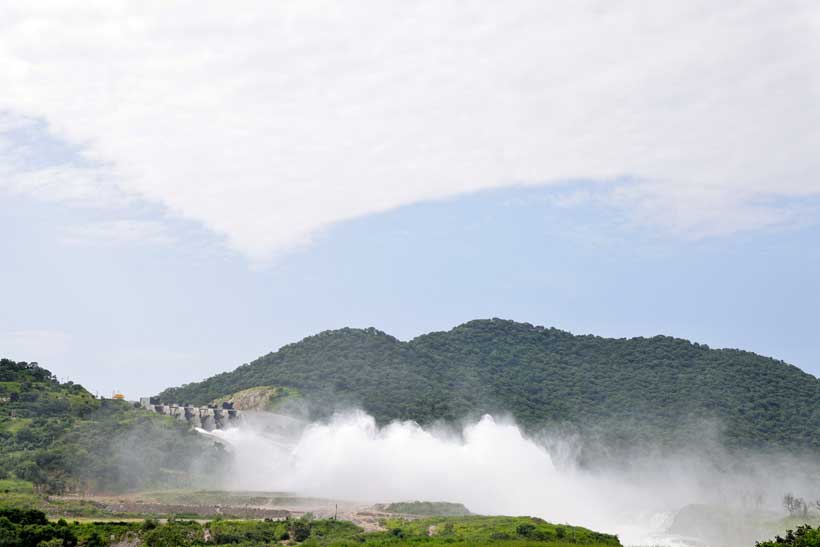
The People’s Republic of China possesses a broad network of geopolitical and economic interests in the Horn of Africa, a region of vital importance to Chinese interests. This gives it significant and direct leverage over Ethiopia. While Beijing traditionally adheres to a policy of non-interference, its recent summits and joint statements with Egypt (affirming the Nile Basin countries’ commitment to international law and not harming Egypt’s water security) suggest the possibility of leveraging this leverage to resolve the dispute. China recently declared clear political support for Egypt’s water rights and acknowledged the vital importance of the Nile River as a major lifeline. However, Beijing prefers quiet diplomacy to playing a direct and public role as a mediator in the Grand Ethiopian Renaissance Dam (GERD) crisis. China’s position on Egyptian water security is characterized by its recognition of the Nile’s importance. A joint statement between Egypt and China affirmed China’s acknowledgment that the Nile River is Egypt’s primary lifeline and its right to protect its water and food security. With China’s emphasis on adherence to international law, it has called on Nile Basin countries to abide by international rules, including avoiding harm to downstream countries like Egypt. This rapprochement reflects a development in China’s diplomatic stance and a notable shift in its approach to Egypt’s water security issue, a result of ongoing diplomatic efforts.
Although China does not present itself as a direct or explicit mediator in the complex negotiations between Egypt and Ethiopia, to avoid becoming embroiled in politically sensitive disputes, its shared interests in Ethiopia give it influence over decision-making centers in Addis Ababa. Ethiopia holds substantial debts to China and has major Chinese investment projects in Addis Ababa. Beijing also views Ethiopia as a vital center of influence in the Horn of Africa, a region crucial to Chinese interests. Given China’s significant investments and strong ties with Ethiopia, it prefers discreet communication and supporting stability in the Horn of Africa rather than overt pressure. Here, positions are coordinated between Cairo and Beijing through the Comprehensive Strategic Partnership and African Cooperation platforms without harming China’s relations with other parties to the conflict. Within this framework, China’s most prominent leverage over Ethiopia includes the following:
1) The issue of Ethiopia’s sovereign debt to China and China’s potential rescheduling of this debt. China can leverage Ethiopia’s accumulated debt to pressure the Abiy Ahmed regime in Ethiopia to resolve the Grand Ethiopian Renaissance Dam (GERD) crisis with Egypt:
– China is Ethiopia’s largest creditor, financing the majority of its infrastructure projects. China can use this leverage to pressure Ethiopia to resolve the GERD crisis with Egypt. Addis Ababa is facing a severe economic crisis and a critical shortage of foreign currency. Ethiopia constantly needs Chinese flexibility to reschedule or alleviate its debt burden, which gives Beijing unconditional political influence to pressure Ethiopia and its Prime Minister, Abiy Ahmed, to make diplomatic concessions to Egypt.
Stay ahead of the geopolitical week.
MD Briefing delivers expert analysis across five global fronts — the Indo-Pacific, energy, geoeconomics, European security, and the Middle East — every Monday morning. Free.
– This highlights a key tool of China’s debt diplomacy against Ethiopia, which could be leveraged to Egypt’s advantage. Ethiopia’s massive debt to China can be used as political pressure to break the deadlock over the Grand Ethiopian Renaissance Dam (GERD) in Egypt’s favor. This is based on several factors, including China’s significant economic influence in Ethiopia, given that Ethiopia is China’s largest creditor. China finances the lion’s share of Ethiopian infrastructure projects, such as railways, dams, and industrial zones. Meanwhile, Ethiopia is suffering from a severe economic crisis, a critical shortage of foreign currency, and high inflation, making it unable to make regular debt payments to China.
– Here, China’s pressure mechanism on Ethiopia could work in Egypt’s favor by rescheduling Ethiopian debt in exchange for a more flexible Ethiopian political stance on the GERD crisis, within the framework of conditional flexibility. Here, Ethiopia constantly needs Beijing’s approval for debt rescheduling or extended grace periods to avoid default (Default).
– Chinese diplomacy can play a role in this by linking these economic concessions to Ethiopia, contingent on Addis Ababa demonstrating greater flexibility in negotiations with Cairo and signing a legally binding agreement for the filling and operation of the dam.
– Here, China and its policymakers must balance China’s shared interests in both Egypt and Ethiopia. Regarding Egyptian-Chinese relations, Cairo and Beijing are bound by a strong strategic and economic partnership, exemplified by investments in the Suez Canal Economic Zone. China desires to maintain Egypt’s political and security stability as a crucial regional ally. However, the Chinese side must also consider that preserving Chinese investments in Cairo necessitates resolving the outstanding issues and crises surrounding the Grand Ethiopian Renaissance Dam (GERD) with Ethiopia. Failure to resolve the dam crisis could lead to a major military conflict between Egypt and Ethiopia or regional instability, which would threaten billions of dollars in Chinese investments in the Horn of Africa and East Africa, regions vital to China’s interests and investments. Therefore, Chinese pressure on Ethiopia to resolve the crisis with Egypt also ensures the protection of Beijing’s interests.
2) China’s use of direct investments and infrastructure projects as leverage, given its position as Ethiopia’s primary trading partner, to pressure the Abiy Ahmed regime into negotiating with Egypt regarding the Grand Ethiopian Renaissance Dam (GERD) crisis:
– China is Ethiopia’s largest foreign investor and second-largest trading partner. These Chinese investments are concentrated in vital sectors such as telecommunications, railways (e.g., the Addis Ababa-Djibouti line), and industrial zones. China could exert pressure on Ethiopia by threatening to slow down new investments or freeze technical support for future projects, posing a direct threat to Ethiopia’s development plans and economic growth.
– The issue of China using its massive investments in Ethiopia as leverage to push the Abiy Ahmed government to negotiate with Egypt over the GERD is a complex strategic matter, intertwined with economic interests, geopolitical alliances in the Horn of Africa, and China’s Belt and Road Initiative. Although China is Ethiopia’s largest trading partner and investor, and despite Chinese statements supporting Egypt’s right to its water security and calling for adherence to international law, the extent to which Beijing can exert hard pressure on Addis Ababa is subject to several key constraints. These include the degree of Chinese economic influence in Ethiopia, particularly in terms of financing and infrastructure projects. Chinese companies control the largest share of infrastructure, road, telecommunications, and industrial zone projects in Ethiopia. It’s also worth noting that Chinese banks and companies finance crucial technical and electrical aspects related to the Grand Ethiopian Renaissance Dam (GERD), including supplying turbines and technical equipment to Ethiopia and financing power transmission lines worth approximately $1.2 billion. China holds significant leverage over Ethiopia in this regard, given that roughly half of Ethiopia’s external debt is owed to Beijing, and the government of Abiy Ahmed relies almost entirely on extending or restructuring these loans to avert economic collapse.
– However, on the other hand, there are constraints preventing China from using direct pressure on Ethiopia. Despite Beijing possessing economic tools, transforming these tools into a political pressure tactic to force Abiy Ahmed’s government to make concessions to Egypt still faces fundamental obstacles within Chinese political doctrine. These include the principle of non-interference, as Chinese diplomacy is based on the principle of non-interference in the internal affairs of states. China avoids imposing overt political conditions in exchange for its investments, thus remaining the preferred partner for African regimes compared to the West. Furthermore, Addis Ababa holds strategic importance for China. Beijing views Ethiopia as a key gateway to its influence in East Africa and a central hub in its Belt and Road Initiative. Damaging relations with Abiy Ahmed’s government could push it towards other international powers or jeopardize existing Chinese investment projects.
– Here, Beijing prefers a quiet mediation approach rather than pressure tactics like halting Chinese investments in Addis Ababa. This suggests China’s reliance on soft, discreet diplomacy for several reasons, including maintaining a balance with Egypt. China also enjoys significant strategic and economic relations with Egypt (with trade volume exceeding $25 billion in 2026), compelling Beijing to find a balanced formula that protects its interests in both Cairo and Addis Ababa. Therefore, through its special envoy to the Horn of Africa, East Africa, and Ethiopia, Beijing seeks to bridge the gaps and find compromise solutions that ensure regional stability. Any outbreak of military conflict or political instability would jeopardize billions of dollars in direct Chinese investments in both countries.
– From this, we can understand precisely that China theoretically possesses significant economic leverage against Abiy Ahmed’s regime in Ethiopia, but it prefers to use this leverage as a soft power to facilitate dialogue and quiet mediation rather than resorting to harsh pressure. This is to ensure the protection of its interests and investments without appearing to be taking sides in the Grand Ethiopian Renaissance Dam (GERD) crisis.
3) China’s Role in Technical and Electrical Financing Related to Dams and Power Transmission Networks and Its Use as a Tool to Pressure Ethiopia to Negotiate with Egypt Regarding the Grand Ethiopian Renaissance Dam (GERD) Crisis:
– Although Ethiopia relies on self-financing to construct the GERD, Chinese companies and banks have provided substantial loans exceeding $3 billion to finance turbines, infrastructure development, and power transmission lines from the dam to Ethiopian cities and neighboring countries. Consequently, China can exert pressure on Ethiopia by potentially freezing technical maintenance contracts or refusing to finance future dam projects that Ethiopia plans to construct on the Blue Nile.
– Here, China plays a crucial and decisive role in the technical and electrical financing related to the GERD and its infrastructure. Despite this extensive economic influence, Beijing adopts a policy of pragmatic neutrality and avoids using this financing as a blatant and direct tool of pressure on Ethiopia. This comes as a way to maintain a delicate balance and shared strategic interests that bind it to both Cairo and Addis Ababa.
– The extent of Chinese technical and financial support for the Ethiopian electricity grid, and the limitations of its use as leverage, can be summarized in the (volume of Chinese technical and electrical financing for the Grand Ethiopian Renaissance Dam). While Ethiopia bore the direct construction costs of the dam through national bonds and donations, China focused on the project’s technical and electrical lifeline through Chinese financing of power transmission lines. In 2013, China provided a $1.2 billion loan to build high-voltage electricity transmission networks and transformers to connect the dam to major Ethiopian cities and neighboring countries. Furthermore, in addition to China’s role in developing Ethiopia’s energy infrastructure, Beijing pledged an additional $1.8 billion loan in 2019 to modernize and expand the electricity grid and renewable energy infrastructure associated with the Grand Ethiopian Renaissance Dam project. Several Chinese state-owned companies also participated in supplying Ethiopia with the equipment and turbines needed for the Grand Ethiopian Renaissance Dam (GERD), including:
(Sinohydro, Gezhouba, Voith Hydro Shanghai Group)
These Chinese companies were directly involved in supplying and installing the turbines and electromechanical equipment necessary for power generation at the dam.
– However, there are several limitations to using Chinese financing as leverage in negotiations with Ethiopia regarding the Grand Ethiopian Renaissance Dam (GERD) crisis with Egypt. While China theoretically possesses considerable leverage as Ethiopia’s largest creditor and the developer of its electricity grid, employing this leverage faces complex constraints, including:
(China’s approach of non-interference. Chinese foreign policy is based on not explicitly interfering in the internal affairs of allied countries to avoid losing its economic influence. China also has geopolitical considerations regarding its relationship with Egypt and Ethiopia. Ethiopia is the headquarters of the African Union and a key hub in China’s Belt and Road Initiative in East Africa and the Horn of Africa. Egypt is a major strategic ally and a gateway for Chinese trade to Europe. Furthermore, the dam’s logistical nature means that once construction is complete, Chinese pressure on the electrical and technical aspects will be merely a technical maneuver, not a means to halt the project entirely.
– On the other hand, Egypt possesses several economic leverage points to pressure China into playing a favorable role with Ethiopia through activating its comprehensive strategic partnership with Beijing. Egypt seeks to capitalize on the current golden age of relations with Beijing to encourage it to adopt a quiet and effective mediating role in the Grand Ethiopian Renaissance Dam (GERD) crisis with Ethiopia. Furthermore, China’s investments in the Suez Canal Economic Zone and the massive volume of trade between China and Egypt serve as incentives for Beijing to consider Egyptian water security. Here, Egypt can benefit from China’s role in technical mediation regarding the management of the GERD crisis with Ethiopia. China can utilize its expertise in managing large dams to offer solutions for water sharing and drought management during turbine operation.
– As an internationally renowned Egyptian academic and expert on Chinese politics, I suggest that Chinese decision-makers adopt a more proactive approach (a Chinese mediation scenario, rather than pressuring Ethiopia to resolve the Grand Ethiopian Renaissance Dam (GERD) crisis with Egypt). China could intervene as a technological and developmental mediator to resolve the escalating crisis between Egypt and Ethiopia by proposing regional alternatives that guarantee:
(The safety of technical operation, through China providing engineering solutions to Ethiopia that ensure electricity generation using Chinese turbines without harming water flows to Egypt and Sudan. Furthermore, regional connectivity is crucial in addressing the GERD crisis through China’s Belt and Road Initiative. China could support parallel development projects in Egypt to compensate for water or energy deficits, such as continental electricity grids and regional railways, thus mitigating the geopolitical conflict between Egypt and Ethiopia.
4) China’s Diplomatic Cover in the UN Security Council through the Use of the Veto and International Legitimacy Resolutions to Resolve the Grand Ethiopian Renaissance Dam (GERD) Crisis Diplomatically and Internationally Between Egypt and Ethiopia:
– Ethiopia has historically relied on Chinese (and Russian) support within the UN Security Council to obstruct any Egyptian and Sudanese resolutions or efforts to internationalize the dam crisis or impose sanctions under Chapter VII of the UN Charter. However, the relative shift in China’s tone and its public affirmation of Egypt’s water rights represent a clear signal to Addis Ababa that diplomatic cover in international forums is not a blank check and that Beijing may abstain from voting or support internationally binding negotiating tracks for Ethiopia to resolve the GERD crisis with Egypt. China’s diplomatic cover for Ethiopia in the UN Security Council is no longer a blank check but rather is governed by Beijing’s complex calculations regarding its growing interests with Egypt and Arab and African countries.
– This diplomatic landscape and this shift can be analyzed by understanding the historical context and the use of the veto as a tool for obstruction and rejection of internationalization. Ethiopia has historically relied on the consistent principle of China (and Russia) in foreign policy: non-interference in the internal affairs of states and rejection of internationalizing regional conflicts. This has prevented the issuance of any binding resolution against Addis Ababa under Chapter VII of the UN Charter. China, for its part, favors the principle of an African framework for resolving the Grand Ethiopian Renaissance Dam (GERD) crisis and other African conflicts. Beijing has consistently pressured to keep the crisis within the African Union, a path Ethiopia has exploited to buy time and impose a fait accompli through successive filling phases of the dam.
– At the same time, we must understand the reasons for the relative shift in the Chinese position towards supporting Egypt’s legitimate right to protect its water and food security, given the strategic partnership between China and Egypt. Here, China views Egypt as a key gateway to its global Belt and Road Initiative in the Middle East and Africa, and it does not want to lose a strategic ally like Egypt, which controls the Suez Canal. Furthermore, Arab-Chinese diplomacy plays a crucial role in resolving conflicts and adopting common positions. China has expanded its influence in the Arab region, as evidenced by the Arab-Chinese summits, and has found that its unconditional support for Ethiopia threatens its relations with a vital international bloc that supports the Egyptian and Sudanese positions. On the other hand, Beijing understands that any military escalation or security breakdown in the Horn of Africa and the Nile Basin will harm regional stability and directly jeopardize the massive Chinese investments in both Egypt and Ethiopia.
– Finally, we must consider the potential scenarios for China’s future diplomatic cover regarding the Grand Ethiopian Renaissance Dam (GERD) crisis between Egypt and Ethiopia. If the matter is brought before the UN Security Council again, China’s position will not necessarily be a decisive veto in favor of Ethiopia. Instead, it could take the following forms:
China might abstain from voting in favor of Addis Ababa, allowing Chinese-backed resolutions to pass within the Security Council, urging a binding solution to the GERD crisis without directly embarrassing Addis Ababa. Furthermore, China could exert behind-the-scenes pressure, pushing Ethiopia towards signing a legally binding agreement with Egypt that regulates the rules for filling and operating the dam while ensuring that Egypt’s water security is not compromised).
– The following table, designed by the Egyptian researcher for Chinese decision-makers, can guide them in balancing their interests between Cairo and Addis Ababa regarding a solution to the GERD crisis between Egypt and Ethiopia:
| Comparison Points | Strategic Weight in Egypt | Strategic Weight in Ethiopia |
| Location and Geopolitics | Control of the Suez Canal (a key component of China’s Belt and Road Initiative) | The heart of the Horn of Africa and the headquarters of the African Union |
| Investment Volume | Massive investments exceeding $12 billion (Suez Canal Economic Zone, New Administrative Capital) | Largest foreign investor and financier of infrastructure and energy networks |
| Military Cooperation | Very growing (Civilization Eagles maneuvers and joint drone manufacturing) | Traditional and limited cooperation compared to the economic and developmental aspects |
Based on the analysis and the preceding table, which the Egyptian researcher designed specifically for Chinese decision-makers, we understand the paramount importance of Chinese interests with Egypt in international maritime affairs (the Suez Canal) and major industrial investments. This may gradually push Beijing to abandon its policy of absolute neutrality and instead exert quiet pressure on Ethiopia to accept a legally binding agreement to resolve the Grand Ethiopian Renaissance Dam (GERD) crisis with Egypt, thus preventing an escalation of tensions in a region where China seeks to maintain the stability of its investments through its Belt and Road Initiative.
