


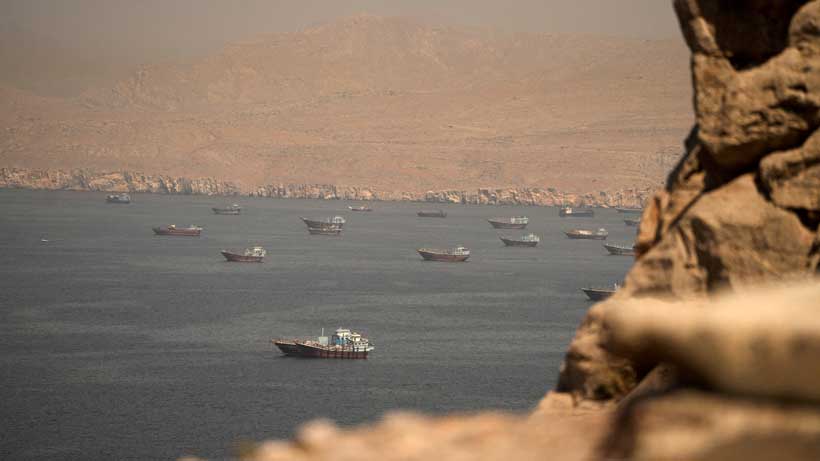
The Iran conflict and the closure of the Strait of Hormuz have disrupted a major global oil supply route, forcing Asian importers to look for alternative sources. Oil producers across the Americas, from Canada to Argentina, have benefited by increasing exports and capturing market share previously held by Middle Eastern suppliers.
The shift has been driven by necessity rather than long term planning, but it has exposed the vulnerability of relying heavily on a region affected by geopolitical tensions and critical maritime chokepoints.
Americas Gain Global Oil Market Share
Crude exports from the Americas reached a record average of 11.7 million barrels per day in 2026, compared with 10.3 million barrels per day in 2025. The United States remains the largest exporter in the region, followed by Brazil.
Much of the additional supply has been absorbed by Asia, where imports of Western Hemisphere crude are expected to reach record levels. This growing trade relationship could gradually reshape established global energy flows.
Stay ahead of the geopolitical week.
MD Briefing delivers expert analysis across five global fronts — the Indo-Pacific, energy, geoeconomics, European security, and the Middle East — every Monday morning. Free.
US Shale Drives the Energy Shift
The foundation of the Americas’ growing influence lies in the expansion of US shale production over the past decade. The shale revolution transformed the United States into the world’s largest oil producer and significantly increased the amount of crude available for export.
This production growth has given Washington greater influence in global energy markets while providing Asian consumers with another source of supply during periods of geopolitical disruption.
Brazil, Guyana and Argentina Expand Production
The transformation is not limited to the United States. Brazil is increasing offshore production, while Guyana has emerged as one of the world’s fastest growing oil producers.
Argentina is also expanding output from the Vaca Muerta shale formation, while Canada continues to increase oil sands capacity. Together, these producers are strengthening the Americas’ position as an increasingly important source of global crude.
Asia Looks Beyond the Middle East
For decades, Middle Eastern producers benefited from their geographic proximity to Asian markets. Gulf crude could reach Asian refineries faster and more cheaply than supplies from the Western Hemisphere.
The Iran conflict has challenged that assumption. Asian importers are now demonstrating a greater willingness to pay higher transportation costs to diversify their supply chains and reduce exposure to geopolitical disruptions in the Gulf.
Energy Security Comes at a Higher Cost
Switching to American crude does not come without costs. Longer shipping routes from Brazil, Guyana and the United States to Asia require more tankers and increase freight expenses.
Tanker rates have therefore surged as more crude travels longer distances. Yet Asian refiners appear willing to absorb these additional costs because diversification provides a form of protection against future supply shocks.
The Americas Offer Diverse Oil Supplies
Another advantage for Asian buyers is the variety of crude available across the Western Hemisphere. Producers offer different grades, ranging from US light crude to Canadian heavy oil and Brazilian, Guyanese and Argentine supplies.
This diversity gives refiners greater flexibility in managing their supply chains and reduces dependence on a limited number of Middle Eastern producers.
Middle East Still Holds a Structural Advantage
Despite the Americas’ rapid growth, the region cannot completely replace the Middle East. Gulf producers possess substantially larger reserves, lower production costs and a geographic advantage in supplying Asian markets.
Even if exports through the Strait of Hormuz eventually return to normal, however, Asian buyers may be reluctant to return completely to their previous dependence on Gulf supplies.
A New Era of Energy Diversification
The crisis has demonstrated that energy security is increasingly being viewed not simply in terms of price and efficiency but also in terms of geopolitical resilience.
For Asian economies, maintaining relationships with suppliers across different regions may become an insurance policy against future wars, sanctions, blockades and disruptions to maritime trade.
What Happens Next
If production growth in the United States, Brazil, Guyana, Argentina and Canada continues, Asian refiners could retain a larger share of Western Hemisphere crude even after the Iran conflict ends.
The Middle East is likely to remain indispensable to global oil markets, but its dominance over Asian energy supplies could gradually weaken as consumers pursue greater diversification.
Analysis
The most significant consequence of the Iran conflict may therefore extend beyond the immediate disruption to oil markets. It has demonstrated that energy security is becoming inseparable from geopolitical security.
For decades, the global oil system was structured around the economic advantages of Middle Eastern production and the strategic importance of Gulf shipping routes. The disruption of the Strait of Hormuz has exposed the weakness of that model. Asian consumers are now paying a premium to diversify their supplies, effectively treating higher transportation costs as an insurance cost against geopolitical risk.
This could strengthen the strategic position of the Americas. The United States, Brazil, Guyana, Canada and Argentina are not simply benefiting from a temporary supply shortage; their expanding production capacity gives them the opportunity to become more deeply embedded in Asian energy markets.
The result could be a structural diversification of global oil trade. The Middle East will remain central because of its enormous reserves and low production costs, but its ability to dominate Asian markets may gradually decline. If Asian importers continue to diversify even after the conflict ends, the Iran war could ultimately mark a turning point in the geography of global energy security.
With information from Reuters,
