


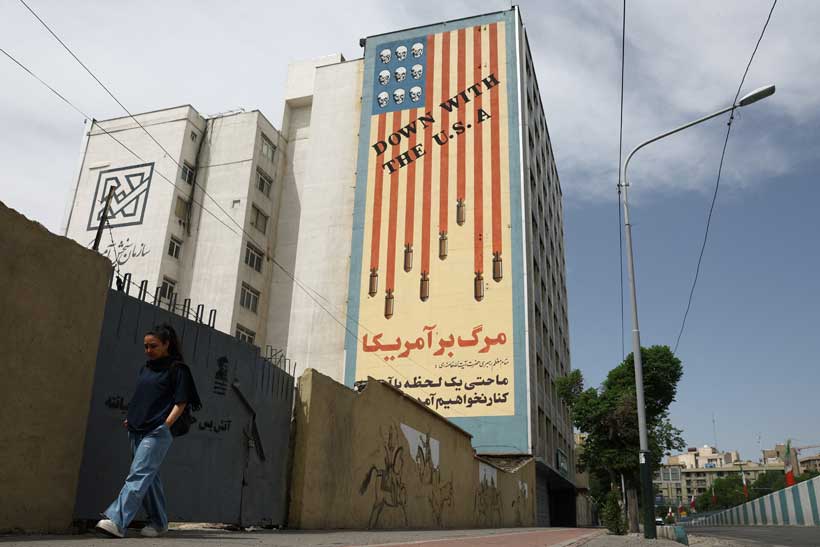
The latest escalation comes as the six month conflict between the United States, Israel and Iran enters a more uncertain phase. Washington has increasingly shifted from direct military action toward economic pressure and sanctions, while Iran has sought to preserve its ability to retaliate and maintain leverage over regional energy routes.
The Strait of Hormuz has become a central flashpoint because it normally carries around a fifth of global crude oil and liquefied natural gas shipments. Any prolonged disruption could have significant consequences for global energy markets and further increase pressure on an already fragile international economy.
Kharg Island’s Strategic Importance
Kharg Island is particularly significant to Iran’s economy. Before the war began on February 28, the island handled around 90% of Iran’s oil exports. Any confirmed attack on the facility could therefore severely disrupt Iran’s energy revenues and intensify pressure on an economy already weakened by sanctions and the prolonged conflict.
Iranian officials rejected President Donald Trump’s claim that the island was being destroyed, saying conditions there remained calm and oil operations were continuing. The dispute over Kharg highlights the importance of the island not only as an energy facility but also as a critical source of economic leverage for Tehran.
Stay ahead of the geopolitical week.
MD Briefing delivers expert analysis across five global fronts — the Indo-Pacific, energy, geoeconomics, European security, and the Middle East — every Monday morning. Free.
Fresh Military Escalation
Tensions escalated after U.S. forces struck two Iranian launchers on Larak Island, around 660 km east of Kharg. Washington said the strikes were carried out after Iranian Revolutionary Guards forces were observed preparing to launch rockets and sea mines into the Strait of Hormuz.
The U.S. Central Command described the operation as limited and precise, saying the Iranian forces posed an imminent threat to shipping in the strategic waterway.
Iran responded by attacking two U.S. bases in Jordan, according to Iranian media. Iran’s military also claimed it had struck the Al Minhad air base in the United Arab Emirates, although the UAE denied the report. The UAE later said its air force had engaged a drone that had entered its territorial waters from Iran.
Trump’s Kharg Claim
The confrontation was further complicated by Trump’s claim on Sunday that Kharg Island was being “blown to smithereens”. The U.S. president provided no details or supporting evidence and accompanied his post with a video showing dramatic explosions.
Reuters determined that the video was most likely synthetically generated using AI manipulation software. There was no immediate evidence that Kharg Island had been attacked.
Iran’s state oil company chief Hamid Bovard dismissed Trump’s statement as “laughable”, saying conditions on Kharg were calm and that oil operations had continued. He also said workers were repairing earlier damage and modernising facilities.
The episode adds another dimension to the conflict, as competing claims and AI generated material increasingly complicate efforts to distinguish confirmed military developments from information intended to influence public perceptions.
Iran Vows to Respond
Iranian President Masoud Pezeshkian said Tehran was not seeking war but would respond decisively to any aggression.
Iran’s Revolutionary Guards also claimed to have shot down a U.S. drone that crashed in Gulf waters. Iranian state television separately reported that a supertanker caught fire and was brought to a complete halt after being struck by two naval mines in the southern Strait of Hormuz.
The Guards said the tanker had attempted to pass through the waterway illegally, although details about the vessel and its crew were not immediately provided.
The developments demonstrate how quickly military confrontation can spill into the maritime domain, particularly around the Strait of Hormuz, where even limited attacks or threats to shipping can have consequences far beyond the immediate battlefield.
Struggle Over the Strait of Hormuz
The Strait remains one of Iran’s most important sources of strategic leverage. The waterway normally carries nearly one fifth of global crude oil and liquefied natural gas shipments, making its security critical to international energy markets.
Since the beginning of the war, the strait has been effectively blocked, while Iran’s Revolutionary Guards have rejected Trump’s repeated claims that the waterway remains open.
Shipping activity has consequently fallen sharply. The number of visible commodity vessels transiting the strait dropped to around five a day over the weekend, according to shipping data, although the actual figure could be higher because some vessels have switched off their automatic identification systems.
UAE presidential adviser Anwar Gargash said targeting Gulf Arab states and Jordan would not provide Iran with a sustainable solution. He called for de escalation, political negotiations and the restoration of normal shipping through the waterway.
Growing Economic Pressure
The renewed hostilities come as Washington intensifies economic pressure on Tehran. Trump has yet to achieve the objectives he established at the beginning of the war, including dismantling Iran’s nuclear programme, weakening its ability to attack regional rivals and creating conditions for political change inside Iran.
The administration has therefore increasingly relied on sanctions rather than direct military action. U.S. Treasury Secretary Scott Bessent said Washington was likely to introduce new secondary sanctions on a weekly basis, initially focusing on banks and financial institutions linked to Iran.
The strategy aims to restrict Iran’s access to international financial networks and further reduce the economic resources available to its government.
However, Iran has survived previous rounds of severe sanctions and continues to rely on international commercial relationships to sustain parts of its economy. This makes the effectiveness of Washington’s latest pressure campaign uncertain.
Wider Regional and Global Risks
The renewed confrontation threatens to deepen instability across the Gulf while increasing risks for international shipping and global energy markets. A sustained disruption in the Strait of Hormuz could push oil prices higher and intensify inflationary pressures worldwide.
The dispute over Kharg Island also demonstrates the broader stakes of the conflict. For Washington, pressure on Iran’s energy infrastructure and financial networks is intended to weaken Tehran’s capacity to sustain the war. For Iran, protecting its oil exports and retaining the ability to disrupt shipping remain crucial sources of leverage.
With military confrontation resuming alongside intensified sanctions, the conflict is increasingly becoming a contest between economic pressure, military deterrence and control over strategic energy routes. The absence of a clear diplomatic breakthrough leaves the region vulnerable to further escalation, particularly if either side miscalculates the other’s willingness to retaliate.
With information from Reuters.
