


Nepal Seeks Stronger Cooperation With China
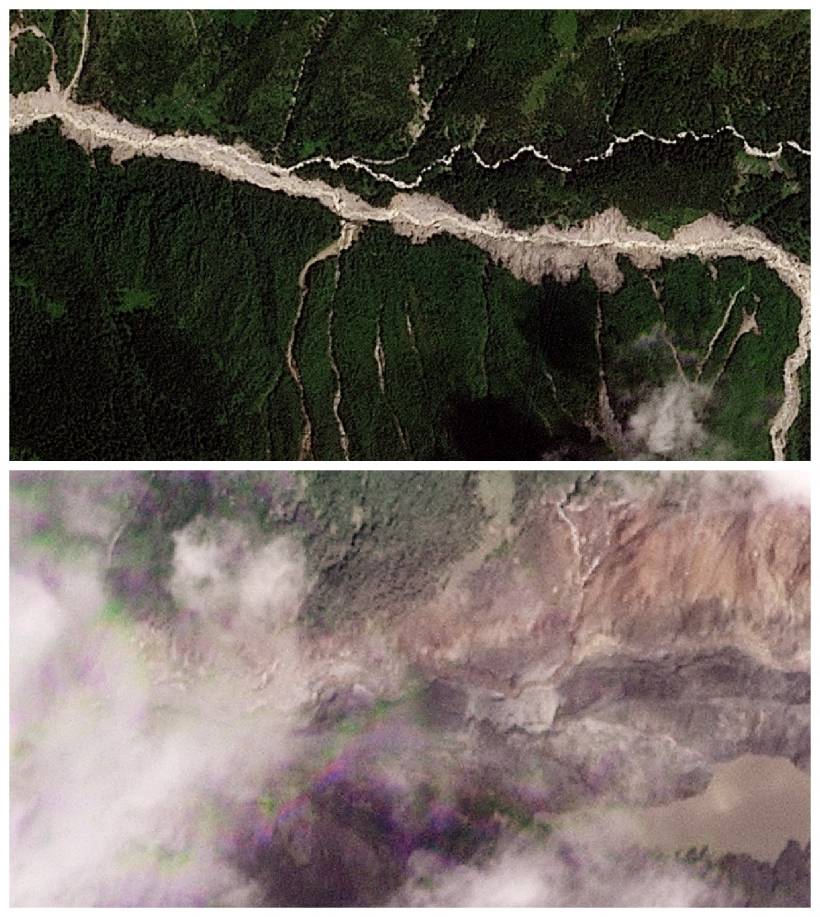
Nepal is renewing calls for greater cooperation with China on disaster monitoring and early warning systems after a devastating Himalayan flash flood killed hundreds and left thousands missing along the Nepal China border.
The disaster has highlighted longstanding concerns over the limited exchange of information between the two countries about glaciers, glacial lakes, landslides and river conditions in the remote Himalayan region.
Three months before the disaster, Nepali and Chinese officials met in Kathmandu to discuss cooperation on floods, weather and glacier related hazards. The May 27 meeting included officials from Nepal and China’s Tibet region, with discussions focusing on joint risk reduction measures, including inventories of glacial lakes and hazard mapping.
However, Nepali officials told Reuters that they did not receive as much information as they had hoped for after the meeting, particularly regarding early movements of glaciers and changes in water levels.
Stay ahead of the geopolitical week.
MD Briefing delivers expert analysis across five global fronts — the Indo-Pacific, energy, geoeconomics, European security, and the Middle East — every Monday morning. Free.
Data Sharing Remains a Major Challenge
Nepali hydrologists say they need more frequent and detailed information from the Chinese side because several major rivers flowing through Nepal originate in Tibet.
Sauhardra Joshi of Nepal’s Flood Forecasting Division said authorities wanted to receive information about early glacier movements and other developments that could signal an approaching disaster.
Another Nepali hydrologist, Binod Parajuli, said Chinese officials at the May meeting indicated that they did not have the authority to sign an agreement covering Nepal’s requests and called for further discussions.
China’s embassy in Nepal has rejected suggestions that it failed to share information, saying the two countries have remained in close contact and made substantial progress on cross border disaster information sharing.
Beijing said Chinese and international experts face significant challenges monitoring hazards in the remote Himalayan environment and that important information had been shared with Nepal in a timely manner.
China Had Issued a Weather Warning
China did provide Nepal with a warning before the disaster.
Twelve days before the catastrophe, China’s World Meteorological Centre informed Nepali officials that a monsoon depression was expected to affect the region and warned of enhanced rainfall as well as potential secondary hazards, including landslides and flash floods.
However, Nepali officials say the information mainly concerned rainfall forecasts rather than real time monitoring of glaciers, avalanches, water levels or other sudden hazards.
This distinction became critical when the disaster struck.
A Disaster With Little Warning
Around 8:32 a.m. Nepal time, surveillance footage showed a massive torrent of water, mud and debris hitting a border crossing in Tibet.
Twenty six minutes later, Nepali disaster authorities were alerted to flooding on the Trishuli River. Monitoring systems were already failing, with one border station no longer transmitting data and downstream stations also becoming unavailable.
Nepal’s disaster authorities eventually issued a public alert to mobile phone users at 9:13 a.m.
By then, the flood had already travelled downstream.
At least four monitoring stations were destroyed, while the torrent travelled around 168 kilometres through Nepal, carrying an estimated 57.4 million cubic metres of water.
Infrastructure Devastated
The flooding caused extensive destruction across the region.
Nineteen bridges and around 40 kilometres of highway were damaged, while more than 10% of Nepal’s power generation capacity was knocked out, according to an assessment cited by the Stimson Center.
Entire settlements were swept away as huge volumes of water, mud and rocks moved through valleys.
The disaster also demonstrated the vulnerability of infrastructure connecting Nepal with Tibet, including transport and trade routes that link Kathmandu with Lhasa.
The Himalayan Climate Risk Is Growing
The disaster comes amid growing concern over the impact of climate change on the Hindu Kush Himalayas.
The region contains thousands of glaciers and provides water to hundreds of millions of people across South and Central Asia. Changes in temperature, snowfall and glacier conditions are increasing the risks associated with glacial lake outburst floods, landslides and sudden changes in river flows.
A 2023 study by the International Centre for Integrated Mountain Development warned that accelerating glacier melt and changing snowfall patterns could increase the risks facing mountain communities.
For Nepal, this makes cross border monitoring increasingly important because many hazards originate upstream in areas beyond its territory.
Nepal Wants Real Time Information
Nepali authorities now want to establish a more comprehensive data sharing arrangement with China.
Parajuli said Nepal plans to propose an agreement similar to the one it has with India, allowing more frequent information on precipitation and river levels rather than relying primarily on high rainfall forecasts.
Nepal is seeking data at intervals of around 10 minutes.
The objective is straightforward: improve the country’s ability to issue warnings before floods, landslides or glacial events reach vulnerable communities.
A Geopolitical Dimension
The issue extends beyond disaster management.
The Himalayas are divided among several states, including Nepal, China and India, and contain strategically important rivers, glaciers and mountain passes.
China controls the Tibetan plateau, where many rivers originating in the Himalayas begin, while Nepal and India depend heavily on downstream water systems.
This makes environmental data increasingly important to regional security and diplomacy.
The limited exchange of information between China and Nepal therefore illustrates how climate risks can intersect with geopolitical boundaries. Even when countries share an interest in preventing disasters, access to environmental information can be affected by institutional limitations, strategic sensitivities and the geography of the region.
Analysis
The disaster highlights a fundamental weakness in Himalayan disaster preparedness: natural hazards do not respect political borders, but early warning systems often do.
Nepal’s demand for more frequent Chinese data is therefore not simply a technical request. It reflects the growing importance of transboundary environmental cooperation in a region where glaciers, rivers and weather systems connect countries that have different political and strategic interests.
China possesses significantly greater technological and financial capacity for satellite monitoring and high altitude environmental observation. Nepal, meanwhile, faces greater exposure to downstream risks but has more limited resources for monitoring hazards originating beyond its borders.
The central challenge is therefore how to turn existing diplomatic contact into a formal, predictable and real time data sharing mechanism.
The disaster also carries a wider climate security implication. As climate change accelerates glacier melt and makes extreme weather more unpredictable, Himalayan disasters could increasingly threaten energy infrastructure, transport corridors, tourism, water security and cross border trade.
For Nepal, cooperation with China is particularly important because warnings from upstream areas can provide crucial minutes or hours for downstream communities to evacuate. At the same time, India has a direct interest in stronger Himalayan monitoring because rivers originating in Tibet and Nepal eventually flow into India.
Ultimately, the tragedy demonstrates that early warning is becoming a form of regional security infrastructure. Nepal’s proposed data sharing agreement with China could become an important step toward building that infrastructure, but its effectiveness will depend on whether information is shared consistently, rapidly and in sufficient detail to allow communities to act before the next disaster strikes.
With information from Reuters.
