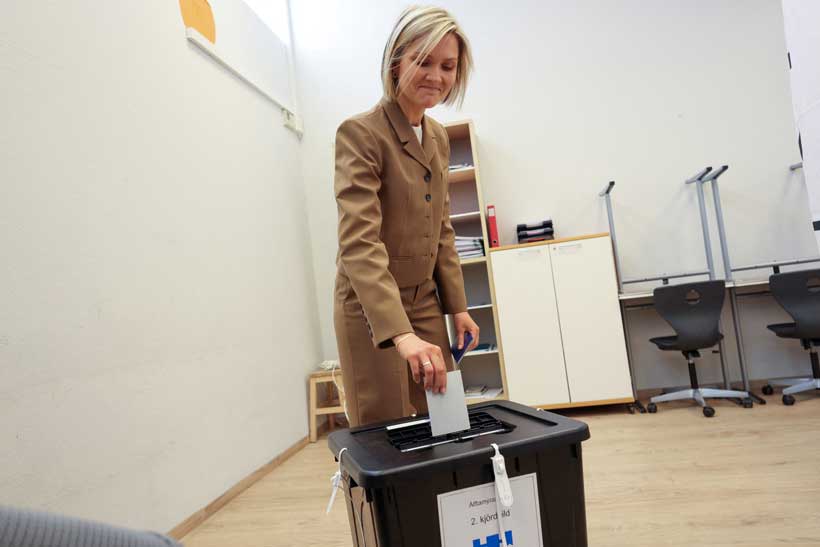
Icelanders voted on Saturday on whether to reopen membership talks with the European Union. The public is divided on this issue, with a recent poll showing a slight majority against the government’s proposal for renewed negotiations, though previous surveys indicated support for talks. Proponents of joining the EU argue that it could help lower high interest rates and provide more security, especially given current global tensions. In contrast, opponents fear that EU membership would compromise Iceland’s sovereignty and control over its fishing waters.
Prime Minister Kristrun Frostadottir expressed the day’s significance, noting the long-awaited opportunity for a public vote. She emphasized that her government would continue its work regardless of the vote’s outcome. If voters choose “yes,” it would only open discussions with Brussels, and a second referendum would be necessary to decide on actual membership, which could take years to occur.
Iceland first applied to join the EU in 2009 during a financial crisis, but talks ended in 2013. Renewed global conflicts have brought urgency to this ongoing debate. Younger voters like 19-year-old Iwo Egill Macuga Arnasson expressed that joining the EU could greatly impact their lives.
The debate heavily centers around economic issues, including high inflation and interest rates. Supporters believe EU membership may provide economic relief by possibly adopting the euro, as Iceland currently has an 8.00% central bank rate compared to 2.25% at the European Central Bank. However, opposition leaders argue that these economic troubles are local issues needing local solutions, not ones that joining the EU could resolve.
Fishing rights remain a major concern, with doubts about whether the EU would allow Iceland to maintain control over its waters. A foreign ministry memo suggests that if the vote favors negotiations, talks could begin by the end of 2026 and last 18 to 24 months. Results from the vote are expected early on Sunday.
With information from Reuters