


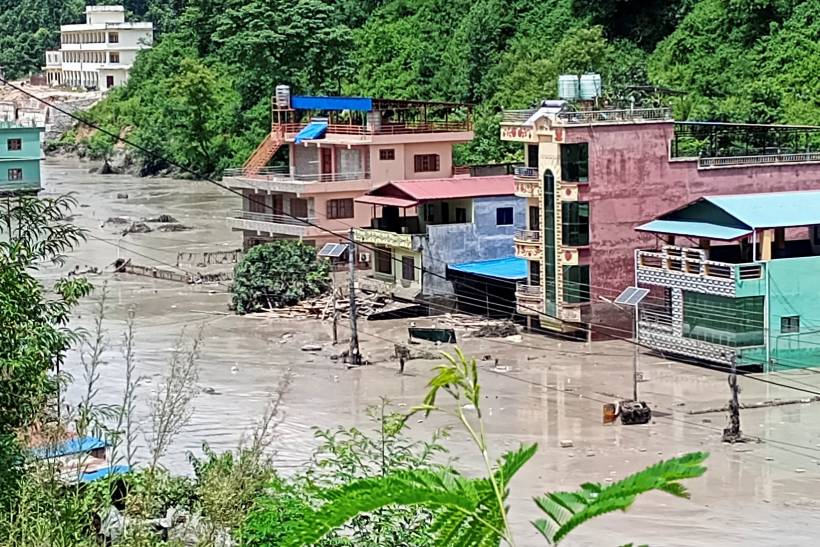
Nepal Says It Can Manage Rescue Operations
Nepal has declined offers from several countries to send search and rescue teams following the devastating Himalayan flash floods, saying its own security agencies have sufficient capacity to manage the ongoing rescue operation.
The disaster has killed nearly 500 people, destroyed settlements and damaged hydropower infrastructure in areas including Rasuwa near the Chinese border. Hundreds of foreign nationals remain missing.
South Korea Pushes for Access
South Korea, which has nationals among those missing, said it is continuing negotiations with Nepal over whether its rescue personnel can enter the affected areas.
Seoul has already sent a response team to Nepal and pledged $1 million in humanitarian assistance through international organisations. Nine South Koreans working at a hydropower plant were reported missing, while 10 others were stranded.
Stay ahead of the geopolitical week.
MD Briefing delivers expert analysis across five global fronts — the Indo-Pacific, energy, geoeconomics, European security, and the Middle East — every Monday morning. Free.
Several Countries Offer Assistance
India, China, the United States, Britain, Japan, South Korea, Sri Lanka and Bangladesh have reportedly offered search and rescue assistance.
Despite these offers, Nepal’s Foreign Ministry said foreign teams were not currently required.
Foreign Ministry spokesperson Lok Bahadur Chhetri said Nepal’s security agencies were conducting the rescue operation and that there was no immediate need for outside assistance.
Border Sensitivity Raises Questions
The decision has raised questions because some of the worst affected areas are located near the sensitive Nepal China border.
Former Nepali ambassador to the United Nations Dinesh Bhattarai suggested that the location of Rasuwa may have influenced the government’s decision, given its proximity to China’s Tibet region.
Nepal’s Foreign Ministry rejected that interpretation, saying the decision was based on its assessment that domestic rescue teams could handle the operation.
A Difficult Rescue Environment
The rescue effort is taking place under extremely difficult conditions. Floodwaters and landslides have destroyed roads, bridges and communications infrastructure, while thousands of people remain stranded and hundreds are still missing.
The situation has also been complicated by the formation of a landslide lake that threatens additional flooding in already devastated areas.
Analysis
Nepal’s refusal to accept foreign rescue teams reflects a delicate balance between national control, sovereignty and urgent humanitarian needs.
On one hand, Kathmandu may want to demonstrate that it retains control over its territory and can manage a national disaster without relying heavily on foreign military or rescue personnel. This becomes particularly significant in Rasuwa because of its proximity to the Chinese border.
On the other hand, the scale of the disaster could make international assistance increasingly difficult to avoid. With hundreds missing, damaged infrastructure and the continuing risk of secondary flooding, additional specialised search and rescue capabilities could significantly expand Nepal’s response capacity.
The disagreement with South Korea is therefore more than a humanitarian coordination issue. It highlights how disaster response in strategically sensitive border regions can become intertwined with sovereignty, security and regional geopolitics.
With information from Reuters.
