



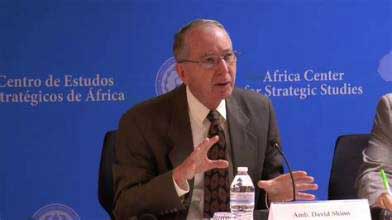
With geopolitical situation heightening, the world’s players are strategically expressing their interest in Africa, and African countries are also choosing their development partners. Many researchers, often, say Africa is currently experiencing the ‘second political re-awakening’ as foreign players aggressively partition the continent. Natural resources are at the centre of Africa’s partnership collaborations, and with limitless desire to ensure the continent’s economic sovereignty. Professor David Shinn from the Elliott School of International Affairs at George Washington University, in a quick conversation, expresses his thoughts and observations on the current profound changes and emerging challenges, and Africa’s future outlook. Follow the interview excerpts here.
How has Africa changed during the past few years, in your opinion? Is geopolitics the main factor shaping this change in the continent?
Professor David Shinn: The most important change has been the impact of multipolarity advocated strongly by China and to some extent by Russia. Most African leaders have taken advantage of multipolarity in an effort to seek advantage from all the external actors in Africa: traditional colonial powers, other Europeans, North Americans, India, Japan, South Korea and relatively new actors such as Turkey, the Gulf States, and Brazil. As some of the traditional partners draw back from Africa, others have stepped forward, providing Africans with more options. This is an important geopolitical change that is currently reshaping the continent, at least over the short term.
What regions are doing better than others, and any concrete reasons for this transforming trends? But multitude of challenges still remain there on the continent?
Stay ahead of the geopolitical week.
MD Briefing delivers expert analysis across five global fronts — the Indo-Pacific, energy, geoeconomics, European security, and the Middle East — every Monday morning. Free.
Shinn: It is difficult to single out a region that is doing well as every region has at least one country that is dragging it down. The most troubled regions are central Africa, the Sahel, and the Horn of Africa. Southern Africa, West African coastal countries, North Africa, and members of the East African Community are doing relatively better but they all have poor political and/or economic performers.
Geopolitical players are expressing their interest in the continent, and African countries are also choosing their development partners. How would you characterise or assess this situation across the Africa? Is this also the ‘second re-awakening’ for Africa?
Shinn: Interest shown by external players in Africa tends to shift from year-to-year or at least decade-to-decade. Some outside countries more than others appreciate the importance of Africa’s growing population and its economic potential. Many European countries and the United States have pulled back, but this could change with new governments in those countries. China has been riding high throughout this century, but will this continue after Xi Jinping? Russia is trying to take advantage of security challenges in the Sahel, but has not yet shown that it has the tools to make a difference. How long will it continue to spend limited resources in Africa? The Gulf States are already focusing more on the situation in the Middle East due to the impact of the war with Iran and show signs of pulling back from Africa. In addition, the war brought a quick end to Iran’s recent effort to renew ties in parts of Africa. Turkey has been unusually active in Africa for the past fifteen years, but will this continue after the departure of Recep Tayyip Erdogan? India and Japan could well increase their engagement on short notice and be major surprise actors in the near future. My point is that what we observe today about external players will definitely change and, in some cases, it will be sooner rather than later.
