


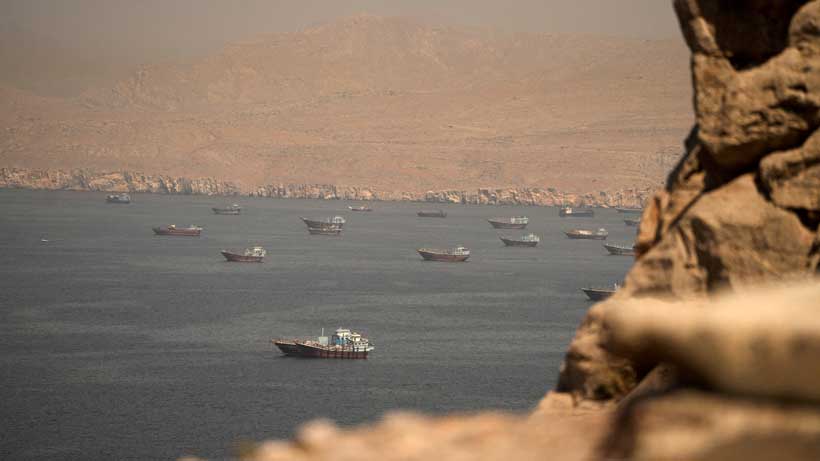
Shipping traffic through the Strait of Hormuz rose slightly on Wednesday, but remained well below normal levels as uncertainty continued over the future of the strategic waterway and talks between Iran and Oman. Kpler data showed 10 visible commodity vessel transits, up from eight on Tuesday, but still below the 10 day average of around 15 vessels.
Two medium range fuel tankers, a liquefied petroleum gas carrier, a Panamax sized tanker and three Handymax tankers entered the strait from the Gulf of Oman. A medium range fuel tanker, a bitumen tanker and a bulk carrier exited toward the Gulf of Oman.
The modest increase does not yet indicate a meaningful recovery in shipping activity. Traffic remains far below the levels seen before the U.S. and Iran conflict, when more than 130 vessels crossed the waterway each day. Earlier this month, traffic had at times fallen to only a handful of vessels as attacks and competing claims over control of the strait discouraged commercial shipping.
Iran and Oman Seek a Temporary Arrangement
The market is closely watching negotiations between Iran and Oman over arrangements for shipping through the Strait of Hormuz. Iranian and Omani officials have been discussing a possible temporary corridor designed to restore safer navigation, but significant details remain unresolved.
Stay ahead of the geopolitical week.
MD Briefing delivers expert analysis across five global fronts — the Indo-Pacific, energy, geoeconomics, European security, and the Middle East — every Monday morning. Free.
An Iranian source said on Wednesday that no final agreement had yet been reached. This followed claims by Iran’s Revolutionary Guards that Tehran and Muscat had reached an understanding over control of parts of the waterway and the distribution of related revenues. Omani officials have expressed hope that practical arrangements for a temporary corridor can soon be announced.
The negotiations are particularly significant because the Strait of Hormuz carried roughly one fifth of global oil and liquefied natural gas shipments before the war. Prolonged disruption has therefore placed continued pressure on global energy markets.
Tanker Incident Highlights Continuing Risks
Despite the slight improvement in traffic, the security environment remains fragile. A tanker was hit by an unidentified projectile in the Strait of Hormuz early Thursday, causing a fire that was later extinguished. The incident underlines the risks still facing commercial vessels attempting to use the waterway.
The situation is further complicated by the fact that some ships may be moving with their transponders switched off. As a result, Kpler’s visible vessel counts may underestimate the actual number of vessels passing through the strait.
Bab el Mandeb Traffic Also Declines
The disruption is not confined to Hormuz. Traffic through the Bab el Mandeb Strait, another crucial maritime route, also slowed for a second consecutive day.
Nineteen commodity vessels passed through Bab el Mandeb on Wednesday, compared with 24 the previous day. The decline highlights the broader uncertainty affecting shipping routes across the Middle East, where security risks continue to influence commercial decisions.
Analysis
The slight rise in Hormuz traffic is an encouraging but weak signal rather than evidence of a full reopening. The gap between 10 visible transits and the 10 day average of 15 shows that shipping activity remains constrained. More importantly, the continuing security incidents mean that commercial operators still face significant risks.
The Iran Oman negotiations could provide the most practical route toward restoring traffic. However, the absence of a finalized agreement means the waterway remains vulnerable to further disruption. Until a durable navigation arrangement is reached and shipping companies regain confidence in the security of the route, global energy markets are likely to remain sensitive to even small changes in vessel traffic.
The key issue is therefore not whether traffic rises from day to day, but whether the increase becomes sustained enough to signal a genuine normalization of one of the world’s most important energy corridors.
With information from Reuters.
