


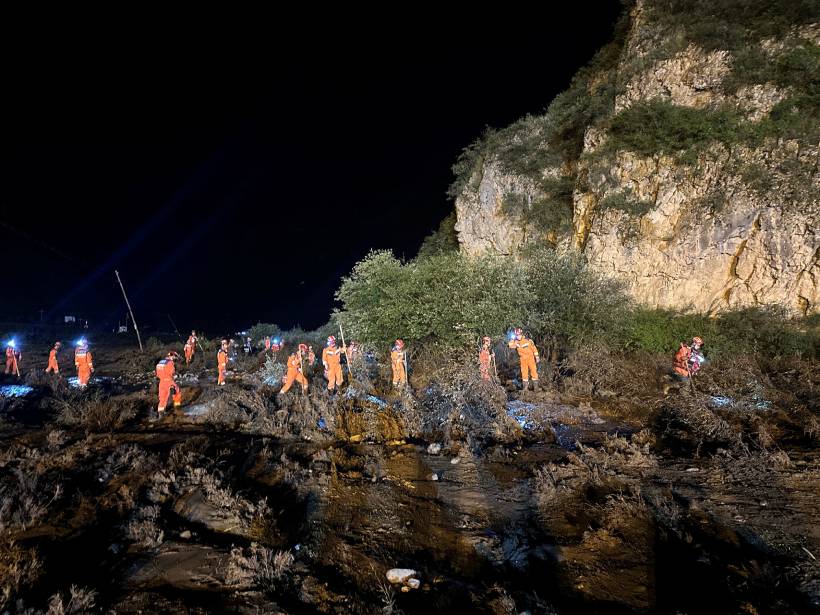
Severe flooding has intensified across southern China as heavy rainfall from Typhoon Narra submerged homes and businesses and forced tens of thousands of people to evacuate, while another storm system moved toward Japan and Taiwan, raising concerns about further disruption across East Asia.
Authorities in Chongzuo, in China’s Guangxi region, evacuated more than 15,000 people after river levels exceeded a record set in 2008. Across Guangxi, the number of people relocated because of flooding has reached about 54,000, according to Chinese state television.
The flooding highlights the growing vulnerability of densely populated communities across southern China to extreme rainfall and tropical storms. The latest disruption comes as authorities are already preparing for another typhoon that could bring additional heavy rain to parts of the region.
Record flooding forces mass evacuations
Typhoon Narra has remained over the Beibu Gulf, also known as the Gulf of Tonkin, for several days, bringing persistent and intense rainfall to Guangxi as well as neighbouring Hainan and Guangdong provinces.
Stay ahead of the geopolitical week.
MD Briefing delivers expert analysis across five global fronts — the Indo-Pacific, energy, geoeconomics, European security, and the Middle East — every Monday morning. Free.
In Chongzuo, floodwaters have spilled into urban areas, with water reaching the rooftops of some buildings and threatening electricity infrastructure.
Authorities have ordered businesses and tourism operations to suspend activity and warned evacuated residents not to return to areas considered dangerous.
The scale of the evacuations reflects the severity of the rainfall. More than 50,000 people have already been moved to safer locations across Guangxi as authorities attempt to prevent further loss of life.
Heavy rainfall is expected to continue through Wednesday across parts of southern China and Vietnam. Guangxi, Guangdong, Hainan and Fujian are forecast to experience particularly heavy rainfall.
The continuing precipitation means that even areas that have already flooded could face further pressure as rivers and drainage systems struggle to absorb additional water.
Another typhoon approaches Japan and Taiwan
While southern China deals with Narra, Typhoon Saudel is moving toward southern Japan and northern Taiwan.
Japan’s weather agency has warned of destructive winds as Saudel approaches the southwestern Okinawa islands, with high seas and extremely strong winds expected.
Taiwan is also preparing for the storm. Saudel is expected to pass north of the island before bringing heavy rainfall to northern areas from Thursday into Friday.
Taiwan’s Central Weather Administration said the storm is expected to weaken gradually, but uncertainty remains over the timing and intensity of the rainfall.
The potential impact comes after Taiwan has already suffered significant flooding from a separate tropical system.
Taiwan faces its own flooding emergency
Authorities in southern and eastern Taiwan reported one death and four people missing following severe rainfall that caused flooding in Tainan and Kaohsiung.
Kaohsiung recorded almost one metre of rain over three days from Sunday through Tuesday.
Authorities said the rainfall exceeded the amount recorded during Typhoon Morakot in 2009, one of Taiwan’s most destructive recent storms. Morakot killed about 700 people and caused billions of dollars in damage.
The comparison illustrates the extraordinary scale of rainfall affecting the island, even before Saudel arrives.
With another storm approaching, authorities face the challenge of managing already saturated ground and infrastructure while preparing for another potential wave of heavy precipitation.
Why the storms matter beyond immediate flooding
The latest weather events demonstrate how tropical systems can create cascading risks across East Asia.
Flooding can disrupt transportation, electricity supplies, agriculture, tourism and industrial production. Southern China is particularly important to regional manufacturing and trade, meaning prolonged disruption could affect supply chains beyond the directly affected communities.
The risk is also compounded when successive weather systems arrive before infrastructure and communities have had time to recover.
In China, the immediate priority is protecting residents in flood-prone areas and preventing further casualties. In Taiwan and Japan, authorities are preparing for Saudel while monitoring how the storm develops.
The combination of record-level flooding, mass evacuations and multiple approaching weather systems leaves parts of East Asia facing a prolonged period of extreme weather risk.
With information from Reuters.
